Friday, February 24, 2023

Gardening for Senior Citizens - Making It Easier


This is the second in my series on gardening for senior citizens. 

I wrote about my grandparents gardening in an earlier article, Gardening For Senior Citizens - Thoughts of Grandparents In Their Gardens. I didn’t mention it at the time, but they mostly cultivated traditional gardens planted in native soil and laid out in rows. But, in their last few years they began thinking there must be easier ways. I remember well some of their books and magazines that promised just that. Ruth Stout’s books on “no-till” gardening, as well as their Organic Gardening and Farming magazines were among their collection.

I’ve always been a fan of raised bed and “square foot” gardening. But as I’m now seeing a trail of years behind me, I’m thinking about how we can make future gardening activities easier on ourselves. My thoughts on the subject might be useful to others.

Start small.

Face it; sometimes desire is greater than ability. It’s kind of like when the eyes are bigger than the stomach. We can put more on our plates than we can actually eat. Big ideas might lead us to attempt too much, so start with a few pots or window boxes of select bush-type vegetables and herbs. City-dwellers might be limited to a just a few containers, anyway.

Suitable vegetables might include chard, mustard greens, leaf lettuce, bush beans, compact tomato varieties, radishes, beets, peppers, garlic, chives, green onions and such. Herbs might include thyme, basil, rosemary, and oregano, for example.

Choose containers that are easy to move about. Size matters. Obviously, larger ones will be heavier. But materials will also make a difference. Terracotta will require greater strength to move than plastics or fiberglass. Those that might need to be moved about for winter protection or for a change of scenery should be lightweight.

If ability and space allow, add more pots, larger boxes, or even a few raised beds.

Make it accessible.

Mobility and flexibility will be limited as we age. Distances can be harder to travel, so gardens should be as close to living quarters as possible. Working outward from windowsills, container gardens can be placed on porches or patios, closer in the yard or along walkways.

“Low-hanging fruit” might become too difficult to bend over to reach, so raised beds or table gardens could fill the bill. Raised garden beds as tall as 32” are now on the market. They’ll undoubtedly make gardening much easier for folks with limited flexibility.

Choose crops that are easy to grow.


What might they be? How about plants that are well-suited to the climate, adaptable to available sun or the limitations of shade, drought-tolerant, disease and insect resistant? This will require some research. If published material isn’t available, or too difficult to access, contact your nearest Cooperative Extension Service office for help. Your tax dollars are supporting it. Use it.

Select tools that are easy to use.

First of all, shop for tools that are of good quality and well-made. This means you’ll probably spend more for them in the beginning, but you’ll spend far more replacing flimsy, broken implements over time.

Tools and gloves should fit the hands that will use them and be relatively lightweight. Test secateurs to see if they’re easy enough to squeeze. Buy no-kink water hoses that retract or can be easily coiled, hung or reeled to avoid tripping hazards.

Success is only as good as the soil.

Purchase the best potting or garden soils as you can afford. These will be peat-based and possibly contain perlite or vermiculite. Some might boast water-retentive and fertilizer additives. Buy them.

Bagged fertilizers should be in smaller, lightweight bags for easy use. Water-soluble fertilizers should come with measuring spoons. Provide wide-mouth soft plastic cups and watering cans.

With these few tips in mind, the benefits of gardening can be enjoyed for many more years.

Return to GoGardenNow.com.

Saturday, February 18, 2023

Gardening for Senior Citizens - Thoughts of Grandparents In Their Gardens.

 Elderly lady gardening. Image by marinabridger from Pixabay

Some of my most cherished memories are of my grandparents working in their gardens. Even when I was a child, I was impressed by their energy and commitment. I’ll grant you that they had lived through tough times of pandemic, financial depressions and wars, so they were used to gardening of necessity. But even when current events had settled down, they kept at it. I believe that gardening kept them young in mind, even if they all didn’t live into their 90s. Even so, they remained keenly interested in their gardens and continued working them until the end.

They would’ve laughed at the notion of working out in a gym. Gardening was their exercise. It kept them moving with a purpose – putting healthy food on the table. Working outdoors built flexibility, strength, stamina and cardiopulmonary capacity. They weren’t pounding the pavement or pumping iron, either. Theirs was what you might call “low-impact” exercise.

Besides working their muscles, they were also soaking up sunshine. Yes, the men-folk wore their hats, grandmothers wore their bonnets, and all wore long-sleeved shirts, but they were getting enough exposure to produce Vitamin D, build immunity and strong bones. None suffered from osteoporosis.

I remember well the strength in my grandparents hands – the way they’d grab my arm to stop me from  hurting myself or hold my hand to help me keep up. The grandfathers taught me to firmly shake the hands of others, look them in the eye and say, “Pleased to meet you, Sir.” I reckon their strong hands came from hours of shoveling, raking, hoeing and pulling, shelling peas and beans.

“High self-esteem” was not something they thought much of for “pride goeth before a fall”, but I’m sure they were well-satisfied with their handiwork. What better way to gain a sense of accomplishment than working and seeing the garden grow a cornucopia of produce? How beautiful were those rows and rows of canned vegetables in glass jars.

My grandparents had many concerns, but gardening certainly relieved a lot of stress. After a few hours among the vegetables and flowers, they had worked out a lot of their frustrations and replaced them with the sense of jobs well-done. Not only that, the exercise helped them sleep better.

Getting their hands dirty in the well-manured garden was the healthy thing to do. As my Uncle Paul (a Dutchman) used to say, “Dat is goed spul!” Translation: “That’s good stuff.” Scientists have even discovered beneficial bacteria in the soil, one of which is Mycobacterian vaccae. Maybe he knew about that intuitively.

But strong muscles and bones, dexterity, improved mental health and well-being were not the only benefits of gardening for those senior citizens. There was also the benefit of saving money, which they thought so much about. They saved string! In these uncertain times, all of these benefits might come in real handy.

Return to GoGardenNow.com.


Saturday, February 11, 2023

February Garden Tasks?


Just when you think of sitting down and resting until spring, February rolls around. The month of February might be one of the busiest months for gardeners. Before you get too comfortable, let's review some of February's garden tasks.

To make it easier, we're organizing them by region.

Northeast States: Prune dormant deciduous trees, shrubs, vines. Avoid removing spring flower buds. Inspect those indoor plants around you for disease and insects. Refill your bird feeders. Shop plant and seed catalogs. Don't forget those nursery web sites. Order spring flowering bulbs, onion sets, strawberries, rhubarb and asparagus, if you haven’t already. Check bulbs and roots in cool storage; throw out rotten ones. Clean and oil garden tools.

Mid-Atlantic States: Prune dormant deciduous trees, shrubs, vines; but avoid removing spring flower buds.  Inspect your houseplants for disease or insect problems. Feed the birds. Browse seed catalogs in print and online. Order onion sets, strawberries, rhubarb, asparagus and spring flowering bulbs, if you haven’t already. Do you have bulbs and perennial roots in cool storage? Inspect them and throw out rotten ones. Add mulch to planting beds, if needed. Begin planting bare-root trees and shrubs. Sow warm-season annual and vegetable seeds in cold frames. Clean and oil garden tools. Take soil samples to your local Cooperative Extension Service for analysis. Adjust pH, if necessary.

Mid-South States: Continue pruning dormant deciduous trees, shrubs, vines.  Avoid removing spring-blooming flower buds. Prune and fertilize rose bushes. Spray dormant oil on dormant fruit trees, if you haven’t done so yet. Refill bird feeders often. Add mulch to planting beds, if needed. Take soil samples to your local Cooperative Extension Service for analysis. Adjust pH, if necessary. Sow warm-season annuals and vegetables in cold frame. Plant bare-root trees and shrubs. Plant perennial vegetables such as asparagus and rhubarb. Clean and oil garden tools.

Lower South and Gulf States: Cultivate garden soil. Sow root crops directly in your garden. Continue pruning dormant deciduous trees, shrubs, vines. Spray dormant oil on dormant fruit trees, if you haven’t done so yet.  Continue planting and transplanting broad leaf and evergreen trees and shrubs, perennials and ground covers. Begin irrigating shrubs and trees as long as weather is above freezing. Fertilize trees and shrubs when dormant, if you haven't done it yet. Add mulch to planting beds, if needed. Take soil samples to your local Cooperative Extension Service for analysis. Adjust pH, if necessary.

Plains and Rocky Mountain States: Follow the same regimen as for Northeast States.

Pacific Southwest and Desert States: Follow regimen for Lower South and Gulf States. Sow root crops directly in your garden.

Pacific Northwest States: Follow the same regimen as for Mid-Atlantic States.

Return to GoGardenNow.com.

Wednesday, February 8, 2023

What is this strange thing?


I asked that question about 40 years ago of a retired County Agent. "I dunno", he said. Then he commenced to cut it up into tiny pieces with his secateurs.

Sad.

This is a pair of Praying Mantis egg cases. You might find them hidden in your shrubs, small tree branches or vines. Some folks find them in their Christmas trees. They don't present a danger to yourself or your family. They are dangerous to other insects, and that can be a good thing.

The name, Praying Mantis, is derived from their prayer-like posture. While they are considered beneficial insects by humans because they hunt and eat insect pests, they are an unholy terror to little creatures. Not only will they eat other insects, they will even eat small lizards, tiny birds and other beasts small enough to be grasped in their strong forelegs. 

Here are some more interesting facts about Praying Mantis:

They are solitary, stealthy, lightening fast hunters. When waiting for prey, they either remain motionless or slowly stalk until the target is within reach. Then, like a flash, they seize it with their strong forelegs and eat it alive!

They can rotate their heads 180 degrees.

They are cannibalistic. Females will eat males during or after intercourse. Not surprising, then, that the females live longer than males. As you can see below, females are larger than males.


Praying mantis couple
Poor unsuspecting fella.

 Photo Credit: I, Zwentibold, CC BY-SA 3.0 <http://creativecommons.org/licenses/by-sa/3.0/>, via Wikimedia Commons

They have one ear on their stomachs, and they can hear ultrasound.

They assume a threatening pose before approaching danger by rearing up on their hind legs, spreading their wings and displaying their forelegs.

They are distantly related to roaches.

They are not native to the United States, but were introduced in the Northeast over a century ago for agricultural pest control.

Some Chinese martial arts strategies are based upon praying mantis hunting techniques.

Some folks keep Praying Mantis as pets.

What should you do if you find egg cases? That depends. If you find them outdoors, leave them alone. Know that the the hatchlings will come to your aid when the weather warms and reduce the excess pest population. If you find them on plants brought indoors - like your Christmas tree - snip off the branch where they are deposited and place them outdoors somewhere out of the way. If left to hatch indoors, you might find dozens of little hunters around the house. It's okay to pick them up. They won't hurt YOU.

Return to GoGardenNow.com.

Wednesday, December 7, 2022

It’s December. Is it too late in the year to plant bare root perennials and ground cover vines?


Bare root daylilies

It depends on whether you’re covered up with snow or the soil is frozen. If that’s the case, then you’ve missed the boat. You’ll have to wait until the snow melts and you can get a shovel into the ground.

However, if those considerations don’t apply, then it’s not too late to plant. If a plant is known to be cold-hardy in your area, it should survive inclement weather until spring.

There is one distinct advantage of planting in fall or winter. Once planted, the roots will begin to establish in the soil. Though you likely won’t see any top growth, the roots will be busy advancing down there out of sight. When spring arrives, your perennials and vines will have a head start and will likely out-perform similar plants installed during warmer weather.

Other considerations still apply. For example, if the soil around plants such as Hedera species should dry between watering, delay planting until dryer weather to prevent root rot.

If you wish to protect your newly installed plants against possible winter damage, you could cover with a thin layer of mulch. Don't forget to remove it when spring arrives.

Return to GoGardenNow.com.

Monday, October 24, 2022

Unmitigated Disasters: Why Celebrated Tree Planting Projects Fail


Tree planting project


Image by Drukpa Publications Pvt. Ltd., CC BY-SA 3.0 via Wikimedia Commons

 Fred Pearce wrote an excellent article published at the Yale School of the Environment pointing out "High-profile initiatives to plant millions of trees are being touted by governments around the world as major contributions to fighting climate change. But scientists say many of these projects are ill-conceived and poorly managed and often fail to grow any forests at all."

Two named examples - in the Philippines and India - demonstrated the disastrous results. Researchers found little evidence that government-led, taxpayer-funded projects "resulted in more tree cover, carbon uptake, or community benefits." In other words, they were wastes of money, productive time and energy.

Pearce quotes Lalisa Duguma of World Agroforestry, "an international research agency" in Africa and comments. "Every year, 'millions of dollars' are spent on reforesting landscape. Yet 'there are few success stories.' Typically only a minority of seedlings survive, he says, because the wrong trees are planted in the wrong places, and many are left untended, in part because ownership and management of trees is not handed over to local communities."

"Too often, argues Duguma, tree planting is 'greenwashing' aimed at grabbing headlines and promoting an image of governments or corporations as environmentally friendly. Tiina Vahanen, deputy director of forestry at the UN’s Food and Agriculture Organization, noted recently that many projects end up being little more than 'promotional events, with no follow-up action.'"

Pearce also exposes the "carbon credit" scheme. Large corporations buy carbon credits purported to be offset by the "carbon capture" of forests, so the entities don't actually have to reduce their own carbon emissions.

Is there a better method of reforestation? Yes, there is. "Forest ecologists say creating space to allow nature to do its thing is usually a better approach to restoring forests than planting." Imagine that. Nature itself, if left alone, might do a better job.

It's a fascinating article. Read the whole thing HERE.

Return to GoGardenNow.com.

Friday, October 21, 2022

Have you visited an All-America Selections Display Garden?


All-America Selections Display Gardens are wonderful resources for gardeners such as yourself. Whether you're a professional horticulturist, avid gardener or beginner, AAS Display Gardens present you with great ideas, gardening inspiration and pleasant visits. Even "brown thumbs" will be enthralled. 

The AAS website notes, "The network of nearly 200 dedicated AAS gardens includes 55 locations that have served for 25 years or longer. The earliest AAS Display Garden, Norseco, Inc. of Quebec Canada became an AAS garden in 1962."

There's probably one near you. Even if it's not the "growing season" in your area, locate one today and put it on your calendar to visit when the time is right for you. You can find one here.

Return to GoGardenNow.com.

Friday, August 26, 2022

Yarrow – The Herb for Wounded Soldiers

WHILE tyrants sit enthron'd in state,

With trophies at their feet,

And fawning courtiers round them wait,

With adulation sweet!

Informing them in pompous strain,

Of feats achieved in war,

That will immortalize their reign,

And spread their fame afar.

Ah! little reckon they the woe

To many thousands wrought,

Who bleed and die, to crown their brow

With laurels dearly bought!

                       - Christian Milne (1773-1816)


When strolling through gardens or working in them, the sight and fragrance of particular herbs often bring to mind some associated musings. Yarrow conjures images in my mind of wounded warriors who suffer for the folly of others.

Because Yarrow was well known for its ability to staunch the flow of blood, Linnaeus named it Achillea, after Achilles the famous warrior, for it was he who famously used a common herb to treat the wounds of his soldier, Patroclus. But it’s not only for fighters.

The property that makes Yarrow so useful is its astringency. “Astringent” means “to bind fast.” Yarrow, when applied, causes tissue to draw tight and stops bleeding. Not surprisingly, Yarrow is sometimes called Staunchweed, Soldier's Woundwort or Herbe Militaris,

Yarrow grows wild worldwide, so it’s readily available in many locales. However, a patch of Yarrow in your own garden makes it much more accessible.

Purchase good quality plants in small containers.

Yarrow has deep roots, so they need a minimum of 8” of topsoil. If your landscape only has a thin layer, plant in raised beds or terracotta pots. Adjust pH to test between 6 and 8.

Cultivating deeply, removing all traces of weeds. Add enough soil to raise the bed at least 4" above the surrounding ground level. This will promote good drainage. Add compost or 5-10-15 fertilizer at the rate of 2 lbs. per 100 square feet into the top 4" to 6" of soil. Do not allow synthetic fertilizer to contact the plant.

Plant Yarrow 1' to 2' apart. The planting holes should be a little less deep than the depth of the container your plants came in. Tuck the plants into the holes and back-fill, watering as you go. The tops of the root balls should remain slightly exposed. Add mulch around the plants, not on top of them, about 1" deep.

Yarrow will soon be a valued addition to your outdoor “medicine cabinet.”

Return to GoGardenNow.com.

Monday, August 8, 2022

A push toward wind energy threatens to kill more eagles.


A compelling article by Tate Watkins published in "Reason Magazine" takes note of the fact that wind turbines do more damage to birds than we imagine. "The Case for Tradeable Permits in Dead Birds" argues, "Many politicians and conservationists have high hopes of replacing fossil fuels with clean energy, but from a bird's eye view, wind turbine blades are deadly. The U.S. Fish and Wildlife Service estimates that wind turbines kill almost 328,000 birds each year." Imagine how dangerous it could be to fly through the chopping action of a wind turbine farm.

"Earlier this year, one of the largest renewable energy companies in the country was fined $8 million for unintentionally killing 150 bald and golden eagles at wind farms in eight states over recent years. But, if the company had held a permit from the service, it would not have been penalized. A smarter, market-based permitting approach could motivate wind developers to conserve eagles even as the sector expands."

Read more.

Friday, June 17, 2022

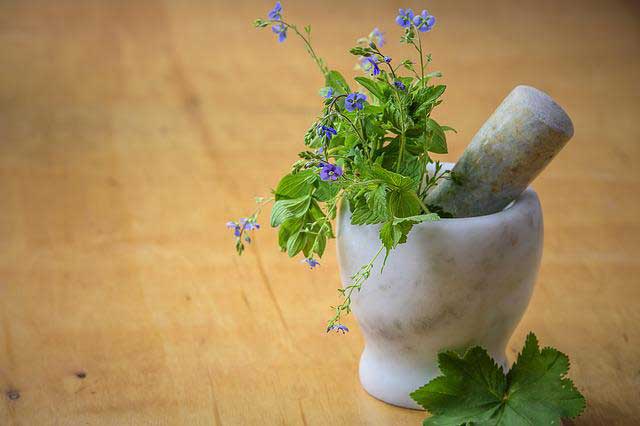
A Few Plants For Prepping Your Medicinal Herb Garden

Natural medicine Image by Photo Mix from Pixabay


You’ve probably noticed that the prices of many commodities have gone up and their availability has diminished. The problems didn’t just begin with COVID lockdowns and the war in Ukraine. Those factors have contributed, but our economic problems have been building up for a long time. We’re now beginning to feel the result of many years of government and central bank mismanagement. As a result, people like us are thinking about how we can prepare for more inflation, recession and supply chain shortages.

Among the necessities of life are food, fuel and medicine. Thankfully, we can supplement them to some extent ourselves. Consider medicine, for example. Many commonly grown garden plants are beneficial for good health and treating what ails us. Can we do without our pharmacies? Absolutely not. Should we try to self-medicate without a doctor’s supervision? Again, the answer is “NO.” Some medicinal plants such as Gelsemium can be dangerous if taken without professional guidance. But it’s good to know that we can cultivate some of them in our own gardens, if only for the pleasures of growing them, satisfying our curiosity and for their ornamental value. Beauty is therapeutic. Is it not?

Consider the following few examples, and please follow the links to other interesting and useful information.

Achillea millefoliumYarrow, Staunch-Weed – has been used since ancient times to stop bleeding, to sedate and treat anxiety, cure liver and urinary problems, improve digestion and reduce high blood pressure.

Ajuga reptansBugleweed is a traditional remedy to stop bleeding and bruising, mend broken bones, soothe throat irritation and mouth ulcers.

Aloe vera is well known for its healing properties for soothing superficial cuts, burns, insect bites and abrasions. I recently mentioned this to a medical professional who was sunburned. He was skeptical. “There are no studies proving Aloe’s efficacy in treating sunburns,” he said. “That’s an argument from silence,” I replied. I’ve applied it myself to burns to prevent blistering and scarring, and I know of many more who swear by it.

Basil is delicious and nutritious, as we all know. But it also contains antioxidants such as lutein and beta-carotene. These help to fight free radicals in the body. Free radicals can come from the foods we eat. Though they don’t last long, they can lead to cell damage and contribute to other conditions such as cancer, heart disease, arthritis, and diabetes.

Campsis radicans - Trumpet Creeper is useful for promoting perspiration and for treating wounds.

Dandelions are seldom welcome in our lawns and gardens, but they deserve to live. The botanical name, Taraxacum officinale, points to its traditional medicinal use as an anti-inflammatory herb. It has long been used as a purifying tonic, but it’s claimed to be effective in treating skin conditions, diabetes, liver and digestive disorders, among other ailments. Instead of eradicating it, plant it on purpose. It’s easy to grow. The leaves can be added to salads and dried for tea. The roots can be dried, ground, and used as a coffee substitute. Don’t expect it to taste like coffee, though.


Echinacea purpurea
– Coneflower – is a lovely perennial that’s native to North America. It was long used by indigenous tribes to support the immune system. It also contains antioxidants for treating infections of the skin, fevers, and a host of related health issues. In addition to its medicinal value, it is very ornamental. It attracts birds and pollinators. Echinacea is an absolute MUST-HAVE for your medicinal garden.

Gelsemium sempervirensCarolina Jessamine. I mention this
one because it’s sometimes seen as an ingredient in homeopathic preparations, but it’s not to be prepared at home. Leave that to the Naturopaths. Naturalmedicinalherbs.net states,”The roots are analgesic, antispasmodic, diaphoretic, febrifuge, hypnotic, mydriatic, nervine, sedative and vasodilator. A powerful depressant of the central nervous system, deadening pain and reducing spasms. It is said to suspend and hold in check muscular irritability and nervous excitement with more force and power than any known remedy. Whilst it relaxes the muscles, it also relieves all sense of pain. It is used internally in the treatment of neuralgia, migraine, sciatica, toothache, severe pain (especially in terminal illnesses or accidents) and meningitis. Externally it has been used as a folk remedy for cancer. The root is best harvested in the autumn and dried carefully for later use. Extreme care is advised with the use of this plant, it should only be used under the supervision of a qualified practitioner. Excessive doses cause respiratory depression, giddiness, double vision and death. It should not be prescribed for patients with heart disease, hypotension or myasthenia gravis. See also the notes above on toxicity. The fresh root is used to make a homeopathic remedy. It is used in the treatment of a variety of complaints, including fevers, flu and headaches.” Enough said. Grow it as an ornamental or for sake of curiosity, but don’t try self-medicating. You might not even live to regret it.


Hemerocallis fulva
– Common daylily. I wrote in another blog article about eating daylilies. They saying, “Let food by thy medicine” is attributed to Hippocrates. Well, here you go. Daylily is also used in medicine to increase urine flow, as a laxative, to reduce fever, stop vomiting, reduce muscle spasms, reduce pain and sedate. Daylily tubers are said to be antimicrobial and able to kill some internal parasites.

Heuchera micranthaAlum Root, Coral Bells. The root is antiseptic, astringent, reduces inflammation and fever, and has been used to treat eye infections. A tea has been used to treat liver problems and sore throats. Chewing a piece of root, cleaned and peeled, soothes sore gums.

Hypericum sppSt. John’s Wort. Naturalmedicinalherbs.net states, “

St. John's wort has a long history of herbal use. It fell out of favour in the nineteenth century but recent research has brought it back to prominence as an extremely valuable remedy for nervous problems. In clinical trials about 67% of patients with mild to moderate depression improved when taking this plant. The flowers and leaves are analgesic, antiseptic, antispasmodic, aromatic, astringent, cholagogue, digestive, diuretic, expectorant, nervine, resolvent, sedative, stimulant, vermifuge and vulnerary. The herb is used in treating a wide range of disorders, including pulmonary complaints, bladder problems, diarrhoea and nervous depression. It is also very effectual in treating overnight incontinence of urine in children. Externally, it is used in poultices to dispel herd tumours, caked breasts, bruising etc. The flowering shoots are harvested in early summer and dried for later use. Use the plant with caution and do not prescribe it for patients with chronic depression. The plant was used to procure an abortion by some native North Americans, so it is best not used by pregnant women. See also the notes above on toxicity. A tea or tincture of the fresh flowers is a popular treatment for external ulcers, burns, wounds (especially those with severed nerve tissue), sores, bruises, cramps etc. An infusion of the flowers in olive oil is applied externally to wounds, sores, ulcers, swellings, rheumatism etc. It is also valued in the treatment of sunburn and as a cosmetic preparation to the skin. The plant contains many biologically active compounds including rutin, pectin, choline, sitosterol, hypericin and pseudohypericin. These last two compounds have been shown to have potent anti-retroviral activity without serious side effects and they are being researched in the treatment of AIDS. A homeopathic remedy is made from the fresh whole flowering plant. It is used in the treatment of injuries, bites, stings etc and is said to be the first remedy to consider when nerve-rich areas such as the spine, eyes, fingers etc are injured.”

Whether other species are as beneficial, I don’t know.

Lamiastrum galeobdolonYellow Archangel suppresses muscle spasms, tightens tissues, promotes urine production, helps to discharge mucus, and expectorant, stops bleeding and tightens blood vessels.

Lavandula angustifolia – Lavender. Lavender is best known for its soothing aroma. But it is also a useful medicinal herb. It soothes the nerves, can be applied to the skin to help heal wounds, burns, and prevents scar tissue. It’s antiseptic, sweetens the breath, and improves kidney function. Rubbing lavender oil on the temples is said to cure headaches.

Liriope spp. – Liriope aka Lilyturf root has been used as an anti-inflammatory agent, an aphrodisiac, a treatment for allergies, and as a stimulant. Sometimes the roots have been candied and eaten as a snack.

Lysimachia nummularia – Creeping Jenny, Moneywort has been used to treat scurvy, diarrhea and internal bleeding. It increases urine production and is astringent.


Nepeta spp
. – Catmint, Catnip. Everyone knows what it does to most cats, but it also has many medicinal uses. Tea from the leaves is useful for treating digestive disorders, reducing fevers, soothing colds and flu. It calms muscle spasms and coughs, relieves gas and increases perspiration.

Ophiopogon japonicus – Snakebeard, Mondo is a cough suppressant and expectorant, sedative, fever reducer and treatment for dry mouth. It has also been used as an aphrodisiac and cure for anxiety. (I guess if you think it works something amazing happens.) 

Black-Eye Susan - Rudbeckia hirta has been used to treat earaches, sores, colds, and even dropsy.

Thymus spp. – Thyme. In addition to culinary uses, thyme can be used in deodorant. It is also antiseptic and disinfectant.

This is by no means an exhaustive review of medicinal plants, but should give you something as you begin prepping. The next thing to research will be about how to use them.

Return to GoGardenNow.com.

Saturday, June 11, 2022

Yes, you can eat daylilies!


Daylilies have been cultivated for over four thousand years beginning in China where they were popular for food and medicine. They were imported into Europe around the 16th century mostly for their ornamental value. Nowadays, we hardly even think of them as food. Each flower blooms for a day and then it's gone. What a shame to let them go to waste when they could be eaten.

Daylily blossoms can be enjoyed raw, steamed, dried, stir-fried and deep-fried in tempura batter. Serve them with noodles, rice and with other mixed vegetables.

Not only are the flowers edible, but all parts of the plant are succulent as well. Daylily leaves and tubers can be chopped and stir-fried along with mushrooms, squash, onions and many other vegetables. Daylilies aren’t only for summer eating when the flowers are produced. The tuberous roots can be harvested any time of year. Collect them when you dig the overgrown clumps to divide them.

With the rising cost of food and shortages of some items, thanks to the ineptitude of our politicians, you might be looking for something new and affordable to add to your table. Does your unreasonable HOA not allow you to grow a vegetable garden in your front yard? Grow edible flowers. If you forage in the footsteps of Euell Gibbons, add daylilies to your basket. You may find the common ditch lily (Hemerocallis fulva) growing wild in fields and, um, ditches. (Make sure you rinse them well.)

Hemerocallis fulva growing roadside

A few words of caution are in order. As with any food, some folks might have sensitivities or allergies. Nibble at first with caution. In addition, know that we’re discussing daylilies (Hemerocallis), not true lilies (Lilium species). You shouldn’t get them confused.

Hemerocallis


Lilium

The folks at Prepsteaders.com produced a fine video a few years ago titled How To Eat Daylilies. Christa Swartz did a very good presentation. I recommend it. So, enjoy the video, then order some daylilies. 


Return to Daylilies at GoGardenNow.com.

Friday, June 10, 2022

Four Reasons Why You Should Grow Daylilies


Have you ever wondered whether you should grow daylilies? Here are four reasons why you should.

Daylilies have been cultivated for over four thousand years. That’s right. The plants we now know as daylilies were prized by Chinese people for medicine and food. It was not until they were imported into Europe around the 16th century that they were grown for their ornamental value. They are now among the most popular of garden perennials worldwide for their beauty and low maintenance.

Each day brings something new. Though each flower lasts only one day, many more follow. The name – Hemerocallis – is the combination of two Greek words meaning “beautiful for a day.” The color palette used to be limited to yellow, orange, and red. Thanks to dedicated gardeners and plant breeders, available colors range from white, yellow, orange, red, pink, purple, vivid combinations, soothing pastels, and various color patterns. There’s always something fresh.

There are differences in sizes and forms. In addition to the vast range of eye-popping colors, daylilies come in many sizes and forms. There are tall ones, short ones, gigantic flowers, tiny flowers, ruffled and doubled blossoms. By carefully choosing from the many varieties, you can vary the height, color and texture in your perennial border.

Daylilies are easy to find, cultivate and propagate. If a friend has a few in her garden, you can simply ask for a division, stick in in your pocket and plant it at home. You can also purchase them online and in garden shops. Daylilies thrive in most soil types without fertilizer, insect or disease control. Don’t believe it? They can even be found growing in roadside ditches with no care whatsoever. They usually multiply each year forming clumps, so you can look forward to daylilies for many years. The daylily is the perfect perennial for every garden.

Return to GoGardenNow.com

Ditch lilies


Monday, May 23, 2022

Behind The Garden Wall: Kate Gleason Memorial Park, Beaufort, South Carolina


If you’ve spent fretful hours in a hospital bed or visited there with a sick friend or loved one, you might have taken time to rest in a hospital garden for meditation and reflection. But more than likely you didn’t even know one was on campus. When I was confined to hospitals a few years ago for a serious illness, the “wellness” gardens were immensely comforting to me. What was before unnoticed I now greatly appreciate.

Laken Brooks published an article in the May 29, 2021 issue of Forbes, Why Hospitals Are Planting Gardens, explaining the marvelous benefits of making nature accessible to patients and to those who attend them. In summary, “...medical professionals have found that as the plants grow, so too does the mental wellness of their patients.” I recommend it to you.

She notes, “A review in the International Journal of Environmental Research and Public Health states, ‘Viewing nature has been repeatedly demonstrated to provide a range of benefits for human health and well-being. Benefits include reduced anxiety, reduced stress, shorter hospital stays, lower heart rate, and increased directed attention.’ That same review explains, ‘It has repeatedly been shown that the sounds of nature such as wind, water, and animals, are preferred over anthropogenic sounds such as traffic, recreational noise, and industrial noise ... Nature sounds have been used therapeutically to relieve stress.’” This is accomplished through gardens and horticultural therapy on site.

Since my healing, I’ve taken time to visit these nearly secret gardens in appreciation of the thoughtfulness of those who have taken care to establish and maintain them.

I recently visited the Kate Gleason Memorial Park on the campus of Beaufort Memorial Hospital, Beaufort, South Carolina. Though it’s not easily accessible to patients, it could be with some modification. In its current state, it does afford a peaceful place for visitors and hospital staff.

Beaufort Memorial Hospital was founded in 1944 and is situated on a bluff above the Intracoastal Waterway and the Beaufort River. That in itself presents a fabulous view from benches and picnic tables of the river, marsh and the town of Beaufort in the distance. Follow me to see what lies behind the garden wall.


Return to GoGardenNow.com.

Friday, May 20, 2022

Decoration Day: A Time For Remembrance


Cemetery flowers

Within mere months following the end of the War Between The States, citizens set aside special days to remember their fallen heroes. The earliest known date for Union soldiers was May 1, 1865 when thousands of freed slaves and white missionaries gathered at the Washington Race Course and Jockey Club in Charleston, South Carolina to commemorate the deaths of those who fought to obtain their liberty.

Other ceremonies popped up around the country during which thankful Americans met for reminiscing, prayers, singing and decorating the memorials of their loved ones. The first nationally recognized event occurred at Arlington National Cemetery on May 30, 1868 to honor the fallen. It was known as Decoration Day. Though the day has since become known as Memorial Day and declared a national holiday beginning in 1971, decorating the graves of loved ones, friends and noble strangers has remained the central activity.

Many wars have come and gone; millions have died. Some in military service, many more in civil service, or simply in service to their families. If you’ve spent past Memorial Days at the beach, picnicking, or otherwise making merry, consider taking some time this holiday to visit a local cemetery to tidy, plant flowers or flags, and decorate a resting place before going about the rest of your day.

Return to GoGardenNow.com.

Saturday, March 12, 2022

Vine Recommendations For Privacy Fencing On Chain Link Fences


 Do you have a chain link fence but would like to have greater privacy? A vine might fill the bill. To grow on chain link, the vine should have a twining habit. For reliable privacy, the it should be evergreen. These are among the best choices, and they're all native. One caveat, though. Make sure you plant them only on your fence!

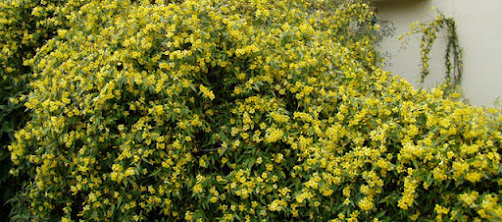
Carolina Jessamine – Gelsemium sempervirens. (Pictured above) It’s native from Virginia to Texas and southward. Because it’s evergreen, it provides a dense privacy screen year around. Carolina Jessamine is cold-hardy in USDA climate zones 7 through 9. It flowers best in full sun, but will grow in full sun or shade in well-drained soil with average to poor fertility. Recommended soil pH covers a wide range: from 5.5 to 8.5. Plants are drought tolerant when established, and deer resistant. Flowers are fragrant.


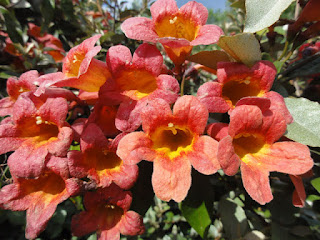
 Crossvine – Bignonia capriolata. This one’s a vigorous vine that’s native to the southeastern United States. It climbs by tendrils which cling to anything for support. It thrives in many different soil types, but prefers rich, organic, well-drained soil. While it grows in sun or shade, more flowers are produced if grown in full sun. Crossvine is cold-hardy to USDA climate zone 6a.


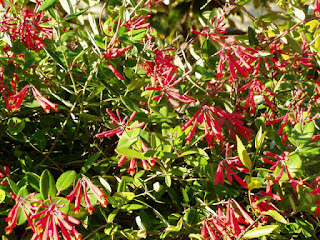
Trumpet Honeysuckle – Lonicera sempervirens. Here’s another vine that’s native to the eastern United States. Red, yellow or coral colored, trumpet-shaped flowers are produced intermittently on evergreen vines from spring to fall. It thrives in acidic soil in USDA climate zones 5 to 10.

All three of these vines flower prolifically, grow quickly, fill in densely, and require very little maintenance. 

Return to GoGardenNow.com.