Showing posts with label native plants. Show all posts

Tuesday, May 5, 2026

The Venus Flytrap: America’s Native Hunter and How to Grow It Well

There are plants that behave, and there are plants that hunt.

The Venus flytrap—Dionaea muscipula—belongs to the latter camp. It does not merely sit and wait like a polite garden subject. It watches, measures, and snaps shut with a speed that still startles first-time growers. If any plant can turn a casual observer into a collector, this is the one.


 Photo credit:  Image by Dugeot from Pixabay
 

Where Venus Flytraps Come From

Despite their exotic reputation, Venus flytraps are not tropical curiosities from distant jungles. They are native to a very small patch of the American Southeast—principally within about a 100-mile radius of Wilmington, North Carolina, with a bit of spillover into South Carolina.

They grow in coastal bogs, savannas, and wet pinelands, where the soil is:

  • acidic
  • sandy or peaty
  • low in nutrients
  • consistently moist, often saturated

It’s a harsh, lean environment. Most plants would starve there. The flytrap took another path—it learned to eat.

 What Makes Them Special

The trap itself is a marvel of design. Each leaf forms a hinged jaw lined with “teeth.” Tiny trigger hairs inside act like tripwires. Touch them twice in quick succession—and the trap snaps shut.

It’s not a mindless reflex. It’s a calculated response. The plant “counts” stimulation to avoid wasting energy on raindrops or debris. Once closed, it seals tight and digests its prey over several days.

But don’t get carried away with feeding it scraps from the table. This is still a plant, not a pet.

Its true charm lies in the combination:

  • primitive, almost mechanical movement
  • elegant rosette form
  • seasonal rhythm, including winter dormancy
  • endless variation in cultivated forms

Once you’ve grown one, you begin to notice the differences—trap size, coloration, tooth shape, growth habit. That’s where collecting begins.

How to Grow Venus Flytraps

The old mistake is to treat them like houseplants. That’s how they die.

Treat them like bog plants with teeth, and they’ll reward you.

Light
They demand strong light—no compromises.

  • Outdoors: full sun, at least 6 hours daily
  • Indoors: the brightest windowsill you have, preferably south-facing
  • Supplemental grow lights are often necessary indoors

Weak light produces weak plants. Strong light produces red traps and vigorous growth.

Water
This is where most people go wrong.

  • Use rainwater, distilled water, or reverse osmosis water only
  • Never use tap water unless you know it’s very low in dissolved minerals
  • Keep the soil consistently moist
  • Best method: set the pot in a shallow tray of water

Think swamp edge, not desert.

Soil
Forget potting soil.

Use a nutrient-poor mix such as:

  • sphagnum peat moss + perlite
  • or long-fiber sphagnum

No fertilizer. Ever. It will burn the roots.

Feeding
They do not need your help outdoors.

Indoors:

  • occasional small insects (gnats, flies) are fine
  • do not overfeed
  • never feed meat or processed food

Too much feeding weakens the plant rather than strengthening it.

Humidity
They tolerate a range, but prefer moderate to high humidity.

  • Outdoors: natural humidity is fine
  • Indoors: avoid very dry air if possible

That said, they are tougher than their reputation suggests if other conditions are right.

Dormancy
Here’s where many well-meaning growers fail.

Venus flytraps require a winter dormancy of about 3–4 months:

  • cooler temperatures (35–55°F)
  • reduced growth
  • some dieback is normal

Without dormancy, they decline over time. It’s not optional—it’s part of their nature.

Growing in Small Spaces

Yes, you can grow them on a windowsill—but you must respect their needs.

For apartments and indoor setups:

  • place in the brightest window available
  • consider a simple LED grow light if sunlight is insufficient
  • use a tray system for watering
  • ensure some seasonal cooling period (a cool room, garage, or refrigerator dormancy method if needed)

A single healthy flytrap on a windowsill will draw more attention than a dozen ordinary houseplants.

Collecting Venus Flytraps

This is where the slope gets slippery.

There are now dozens—really hundreds—of named cultivars:

  • giant traps
  • deep red forms
  • sawtooth “teeth”
  • bizarre mutations with fused leaves or unusual growth

Collectors don’t just grow them—they study them, compare them, and quietly accumulate them.

A word of caution: always buy from reputable growers. Wild populations are protected, and rightly so. The plant’s native habitat has shrunk, and poaching has done real harm.

Better to build your collection honestly, one well-grown specimen at a time.

Why People Fall for Them

It begins with curiosity—“Does it really close?”
Then fascination—“Why is this one redder than the other?”
Then, before long, you’re arranging trays, comparing cultivars, and watching for new growth like a man checking the tide.

There are easier plants. There are cheaper plants. There are even prettier plants, if we’re being honest.

But few have the same pull.

Bring One Home

If you’ve never grown a Venus flytrap, you’re missing one of the most engaging plants you can keep. It asks for a bit of discipline—but gives back something far more interesting than a passive green ornament.

Start with a healthy plant. Give it sun, pure water, and the conditions it expects. Watch it wake, hunt, rest, and return again with the seasons.

And if you’re ready to begin—or to add something uncommon to your bench—take a look at the selection at GoGardenNow.com. There’s a fine line between owning a flytrap and collecting them.

Most people cross it sooner than they expect.

Monday, February 16, 2026

Native Wildflower Seeds — Let the Land Remember Itself

 Wildflower meadow

There is a curious modern habit: we import plants from the ends of the earth, pamper them like porcelain, then wonder why they faint in July. Meanwhile, the plants that actually belong here — the ones that watched bison, burned with lightning fires, and survived Southern summers long before sprinklers were invented — are dismissed as “weeds.”

A native wildflower meadow is not landscaping in the suburban sense.
It is restoration. It is also, quite frankly, easier.

You are not forcing nature to behave. You are giving it permission.


Why Plant Native Wildflowers?

1. They thrive where you live

Native plants evolved in your exact rainfall pattern, soil chemistry, and heat. Humidity does not alarm them. Clay soil does not offend them. A dry August is not a crisis — it is Tuesday.

They grow deeper roots than turfgrass — often 6 to 15 feet deep. That means:

  • far less watering

  • almost no fertilizing

  • better drought survival

  • improved soil structure

Your lawn survives by irrigation.
A native meadow survives by memory.


2. They feed what the modern landscape starves

Butterflies, native bees, moths, and songbirds cannot live on ornamental imports. Many insects are host-specific. Monarch caterpillars, for example, can eat only milkweed. No milkweed — no monarchs. It’s that blunt.

A wildflower patch quickly becomes:

You will see goldfinches, swallowtails, skippers, bumblebees, and predatory wasps that quietly eliminate garden pests better than any chemical ever bottled.


3. They are beautiful in the old sense

Not the rigid beauty of trimmed hedges and clipped spheres.

Native meadows are seasonal beauty — waves of bloom:

A lawn is a green carpet.
A meadow is a calendar.


When to Sow Native Wildflower Seeds

Best Time: Fall (October–December in the Southeast and Deep South)

Here is the secret many seed packets never explain:

Most native wildflowers require winter.

They need cold and moisture — a natural process called stratification. If you sow in fall, nature performs the germination preparation for you. Spring planting works, but germination is often slower and patchier.

Think of fall sowing not as planting — but as setting the clock.


Site Selection

Choose a place with:

  • full sun (6–8+ hours daily)

  • open soil

  • minimal tree roots

Avoid rich garden beds. Wildflowers prefer lean soil. Fertile soil grows grass — and grass is their primary enemy.


Soil Preparation (This Is the Most Important Step)

Wildflowers fail not because of bad seed, but because of competition.

You are not planting flowers.
You are removing lawn dominance.

Do this:

  1. Kill existing grass and weeds

    • Smother with cardboard for 4–6 weeks

    • or solarize with clear plastic

    • or carefully strip sod

  2. Loosen the top 1–2 inches of soil

  3. Do not till deeply (you will wake a thousand weed seeds)

You want bare earth — not fluffy garden soil.


How to Sow Native Wildflower Seeds

Wildflower seed is tiny — almost dustlike — and people bury it too deep. That is the chief mistake.

Steps:

  1. Mix seed with sand (1 part seed to 10 parts sand)

  2. Broadcast evenly by hand

  3. Walk the area twice in different directions

  4. Press seed into soil (step on it or roll it)

  5. Do NOT cover with soil

Seeds need sunlight to germinate.
If you can’t see them, you planted them correctly.


Watering

After sowing:

  • Keep soil lightly moist for 2–3 weeks if rain is absent

After establishment:

  • watering becomes largely unnecessary

By the second year, native meadows typically require no irrigation except in extreme drought.

Deep roots change everything.


Fertilizing (Almost Never)

This surprises people:

Do not fertilize native wildflowers.

Fertilizer feeds grass and weeds far more than prairie flowers.
Rich soil creates tall floppy growth and fewer blooms.

Native plants are adapted to poor soil. Leave them hungry — they will reward you with flowers.


Mowing — Yes, Mowing

A meadow is not abandonment. It is management.

First Year

Mow to 6–8 inches whenever growth reaches 12–15 inches.
This suppresses weeds while young wildflowers establish roots.

After Establishment (Year Two and Beyond)

Mow once annually:
Late winter (February–early March)

This:

  • removes dead stems

  • prevents woody invasion

  • exposes soil to sun

  • triggers germination

You are mimicking the natural prairie fire — with less drama and fewer insurance claims.


What to Expect (Important)

Year one: mostly leaves
Year two: flowers
Year three: abundance

Native meadows are not instant. They are permanent.


The Hidden Benefit: Soil Repair

Native plant roots:

  • break hard clay

  • add organic matter

  • absorb runoff

  • reduce erosion

A lawn sheds rainwater.
A meadow drinks it.

You are not just growing flowers — you are rebuilding land.


Common Mistakes

• Planting into existing lawn
• Over-watering
• Adding fertilizer
• Burying seed
• Giving up after the first year

Patience is part of the method.


Where to Use Native Wildflowers

  • sunny front yard alternatives to turf

  • orchard understory

  • roadside edges

  • around ponds

  • pollinator gardens

  • difficult slopes

  • large open acreage

They also pair beautifully with fruit trees and vegetable gardens by increasing pollination and reducing pest outbreaks.


Final Thought

The American landscape once ran on flowers — miles of them. Early travelers described spring fields so bright they looked painted. What we now call “natural areas” were once ordinary.

A native meadow does something a normal garden never quite manages:

It does not merely decorate your property.
It restores it.


Call to Action

Ready to trade mowing for blooming?

Plant once. Watch for years.

Choose a regionally appropriate Native Wildflower Seed mix and let your land work with you instead of against you. Visit GoGardenNow.com and start a patch this season — even a small one. A corner becomes a bed, a bed becomes a meadow, and before long you will notice something unmistakable:

The birds find it first.

Sunday, January 11, 2026

The Three Sisters: Corn, Beans, and Squash

 Antique postcard with three sisters companion planting

An old agricultural covenant that still keeps its word.

Long before extension offices, fertilizers in bags, or gardening “hacks,” Indigenous farmers across North America practiced a system so elegant it hardly looks like science at all. They called it the Three Sisters—corn, beans, and squash grown together, not as competitors, but as kin.

This wasn’t symbolism. It was survival. And it still works.


The Origin of the Three Sisters

The Three Sisters system was developed and refined by Indigenous peoples of the Americas—particularly in the Northeast, Great Lakes, and Southeast—centuries before European contact. It spread because it worked in real soil, under real weather, with real consequences if the harvest failed.

Each crop had a role:

  • Corn provided structure

  • Beans provided fertility

  • Squash (or pumpkins) provided protection

Together, they formed a living system that fed people nutritionally and agriculturally. Corn gave carbohydrates. Beans supplied protein. Squash offered vitamins, calories, and long storage. Field, kitchen, and cellar were all considered at once.

That kind of thinking is rare today.


Why the Three Sisters Still Make Sense

Modern gardening tends to isolate plants—one crop per row, one problem per solution. The Three Sisters ignore that habit entirely.

Here’s why the method still earns its keep:

1. Natural Support

Corn grows tall and sturdy, forming a natural trellis. Pole beans climb the stalks instead of sprawling across the ground. No cages. No plastic. No fuss.

2. Built-In Fertility

Beans are legumes. They fix nitrogen from the air and share it with the soil. Corn is a heavy feeder. The beans quietly pay the bill.

This isn’t theory. It’s chemistry that predates textbooks.

3. Weed and Moisture Control

Squash spreads wide, shading the soil with broad leaves. This:

  • Suppresses weeds

  • Keeps soil cooler

  • Reduces moisture loss

It’s mulch that grows itself—and occasionally bites back with prickly stems.

4. Resilience Through Diversity

Pests, drought, or disease rarely hit all three crops equally. If one struggles, the others often compensate. Diversity spreads risk, just as it always has.


How to Plant the Three Sisters (The Traditional Way)

This system works best when done deliberately, not hurriedly.

Step 1: Prepare the Mounds

Traditionally, crops were planted in mounds, not flat rows.

  • Build mounds about 12 inches high and 3–4 feet across

  • Space mounds 4–6 feet apart

  • Amend soil well with compost—this is a hungry trio

Mounds warm faster in spring and drain better in heavy rain.


Step 2: Plant the Corn First

Corn must lead.

  • Plant 4–6 corn seeds in the center of each mound

  • Space seeds about 6 inches apart

  • Wait until corn is 6–8 inches tall before planting anything else

If corn is weak, the whole system fails. Don’t rush this step.


Step 3: Add the Beans

Once corn is established:

  • Plant pole beans (not bush beans) around the corn

  • 4–6 seeds per mound, spaced evenly

  • Beans will climb naturally—no tying required

They’ll take a week or two to start working underground. Be patient.


Step 4: Plant the Squash or Pumpkins

Finally, plant squash or pumpkins around the outer edge of the mound.

  • 2–3 seeds per mound

  • Choose vining varieties, not compact bush types

They’ll spread outward, guarding the soil like living ramparts.


Practical Tips for Modern Gardens

  • Use field corn, not sweet corn, if possible—it’s sturdier

  • Choose traditional pole beans, not modern dwarf hybrids

  • Pumpkins, winter squash, or semi-wild summer squash work best

  • Water deeply—this system rewards consistency

  • Don’t overcrowd; abundance comes from balance, not density

Raised beds can work, but the system shines best in open ground.


Final Thought

The Three Sisters are not a novelty planting. They are an agricultural philosophy: cooperation over competition, patience over force, and systems over shortcuts.

In a time when gardening often means buying more inputs to fix more problems, the Three Sisters quietly demonstrate another way—one that fed entire civilizations without exhausting the land.

Plant them together, and you’re not just growing vegetables.

You’re entering into an old agreement—one that still honors its side of the bargain.

Return to GoGardenNow.com.

Wednesday, March 27, 2024

Why not start a native plant garden?

Native Gelsemium
Native Gelsemium

Nature flourishes all around us. It’s no wonder. The native plants and wildlife are well-adapted to thrive in our localities. Native plants proliferate because the soil, climate and moisture meet their exact needs, and they have natural defenses against pests and diseases. Native wildlife and plants “grew up together”, so to speak. They have natural affinities. Native plants provide those things which wild things need for continuing existence: food, shelter, and places to reproduce. They’ve been prospering together for millenia.

Yet, we often struggle to grow non-native plants in our gardens. Why work so hard? Start a native plant garden. Because they are naturally adapted, they don’t need the care that many non-native plants require.  Furthermore, landscaping with native plants benefits the local environment and its wildlife, too.

Native plants are those which exist naturally in the environment and were not introduced by humans.  How do you tell, though, which are native plants, and which are not? Sometimes it’s hard to determine, especially when invasive non-native species have taken over.

Begin by observing your surroundings. Check out the soil, moisture levels, sun exposure, trees, shrubs, vines, forbs, and grass-like things. Even the “weeds.” Write stuff down, especially noting flowers, attractive seeds, leaves, branches and bark, and where plants are growing.

If you can’t identify your native plants, get a book on the subject from your local library, or buy one. I have several texts on native plants of the southeastern United States. No doubt there are similar books for your region. There are probably smartphone apps to aid in plant identification. The National Wildlife Federation has a neat tool, Native Plant Finder, that allows you to enter your zip code to discover appropriate plants.

As with any garden, determine the correct location, or use whatever limited area is available to you. Take the soil type, sun exposure, and moisture level into account, then choose your plants accordingly.

Prepare the soil as you would for any garden or landscape. Begin with a soil test. Add amendments and cultivate it, if recommended. You might remove existing grasses and weeds, unless some of the weeds are native and desirable.

Principles of garden design are pretty much the same for a native plant garden as for any other. Install plants with similar requirements together. Stagger bloom times and other seasons of interest so you always have something lovely going on in your space.

To incorporate your native plant garden into the landscape, consider using locally sourced elements that say something about your region to give a sense of place. These might include shells and stone, boulders, sculptures, farm implements, or historical features.

Over time, you should find that your native plant garden requires less care than conventional plantings because the inhabitants actually belong there!

Return to GoGardenNow.

Saturday, March 12, 2022

Vine Recommendations For Privacy Fencing On Chain Link Fences


 Do you have a chain link fence but would like to have greater privacy? A vine might fill the bill. To grow on chain link, the vine should have a twining habit. For reliable privacy, the it should be evergreen. These are among the best choices, and they're all native. One caveat, though. Make sure you plant them only on your fence!

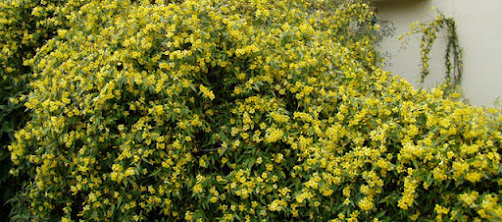
Carolina Jessamine – Gelsemium sempervirens. (Pictured above) It’s native from Virginia to Texas and southward. Because it’s evergreen, it provides a dense privacy screen year around. Carolina Jessamine is cold-hardy in USDA climate zones 7 through 9. It flowers best in full sun, but will grow in full sun or shade in well-drained soil with average to poor fertility. Recommended soil pH covers a wide range: from 5.5 to 8.5. Plants are drought tolerant when established, and deer resistant. Flowers are fragrant.


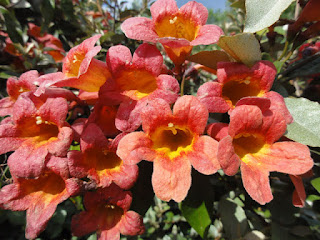
 Crossvine – Bignonia capriolata. This one’s a vigorous vine that’s native to the southeastern United States. It climbs by tendrils which cling to anything for support. It thrives in many different soil types, but prefers rich, organic, well-drained soil. While it grows in sun or shade, more flowers are produced if grown in full sun. Crossvine is cold-hardy to USDA climate zone 6a.


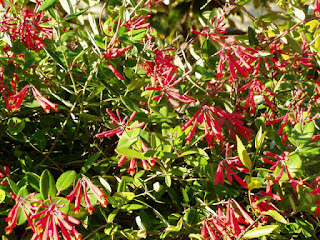
Trumpet Honeysuckle – Lonicera sempervirens. Here’s another vine that’s native to the eastern United States. Red, yellow or coral colored, trumpet-shaped flowers are produced intermittently on evergreen vines from spring to fall. It thrives in acidic soil in USDA climate zones 5 to 10.

All three of these vines flower prolifically, grow quickly, fill in densely, and require very little maintenance. 

Return to GoGardenNow.com.

Saturday, November 6, 2021

Echinacea And Natural Immunity


Echinacea flower

For some reasons during the pandemic crisis du jour, the advantage of natural immunity seems largely ignored, or worse. That’s tragic. In our household, however, do what we can to build our immunity. In our view, we are responsible for our own health to the extent that we are able.

I start most days with a few squirts of liquid Echinacea (E. angustifolia, and E. purpurea) extract from fresh herbs. Echinacea (aka Coneflower) is native to eastern and central North America, and has been used for generations to improve health.

Here are a few snippets gleaned from Healthline.com:

“Native Americans have used it for centuries to treat various ailments.

“Today, it’s best known as an over-the-counter herbal remedy for the common cold or flu. However, it’s also used to treat pain, inflammation, migraines and other health issues.

“Both the plant’s upper parts and roots are used in tablets, tinctures, extracts and teas.

“Echinacea plants contain an impressive variety of active compounds, such as caffeic acid, alkamides, phenolic acids, rosmarinic acid, polyacetylenes and many more.

“In addition, studies have linked echinacea and their compounds to many health benefits, such as reduced inflammation, improved immunity and lower blood sugar levels.“

MedicalNewsToday says, “Echinacea plants contain a complex mix of active substances. Some of these compounds may have antimicrobial and antiviral properties, while others may support the immune system in other ways.

“Like many other plants, all types of Echinacea contain phenols. Phenols control the activity of a range of enzymes and cell receptors.

“They protect the plants from infections and ultraviolet radiation damage, and they may have beneficial antioxidant properties.”

But MNT includes the caveat, “Few scientific findings support the use of Echinacea in any treatment.” On the other hand, apparently some scientific findings DO support the use of Echinacea, we’re just not informed of them.

Being a native American plant, you’d expect Echinacea to be relatively easy to grow. So it is. A few years ago, I spotted a white variety of Echinacea purpurea thriving in the median strip of a street in Blacksburg, VA. If it’ll flourish there, it will probably grow in your garden.

For tips on planting and care, go to GoGardenNow.blogspot.com.

Also, check out Echinacea at GoGardenNow.com.


Echinacea and butterfly


Wednesday, May 20, 2020

Have you considered growing a pollinator garden?


Photo by Ersin Aslan from Pexels


Have you ever considered making a place in your landscape specifically for native pollinators? Doing so can help preserve those that are struggling to exist. You might not think of pollinators such as bees,  wasps and butterflies as being under threat, but many are. We usually blame overuse of insecticides as being the culprit, but there are others. Diseases, parasites and predators take their toll. By providing a pollinator-friendly habitat, you help them thrive, as well as enjoy their presence. You also gain a sense of pride in doing good for the environment.

You don't need much space to establish a pollinator garden. A few plants on your deck or patio can attract them. If you have a large area available, by all means, use it.

Pollinators have three basic needs, common even to you and me - food, water, and shelter for places to hide and begin their little families.

Food Sources - Host Plants

We picture bees and butterflies feeding on nectar from flowers, but juvenile pollinators don't do that. Young ones feed on stems and foliage, and not always of the same plants. Proper food supplies should include both.

To determine exactly which you'll need to plant may require a bit of study on your part. Good plants for pollinators include aromatic herbs, annuals, perennials, and even some weeds. GoGardenNow.com features plant collections for butterflies and other pollinators. Plant a wide variety. Select species that will provide blooms throughout the growing season. Research the species of pollinators commonly found in your area, then provide the foods they enjoy.

Remember that native pollinators often prefer native plants, so be sure to include some in or around your garden. It's not a good idea to gather plants from the wild. Some may be endangered and protected. Sow seed where possible. For mature plants, search for those nurseries that specialize in native species. There are a growing number of them. Native Plant societies can help you find sources.

Water

Pollinators need water. You'll often find bees gathered along the edges of bird baths. Butterflies will cluster around mud puddles, birdbaths, and even dung. Be sure to provide water sources for them. Still, shallow water is best. You needn't provide the dung.

Shelter, Nesting Sites and Materials

You'd be surprised at how resourceful little creatures can be when it comes to establishing homes.


That aside, pollinators will burrow in plant stems, hide in flower pots, small brush piles, and even nest in bundled drinking straws. Dryer lint, cotton balls, and the mud from puddles will be used for building materials.

After providing for your pollinators' needs, please be careful not to lure them to destruction. By that I mean, avoid using pesticides and herbicides in or around your pollinator garden. Both organic and synthetic pesticides can be harmful. Herbicides can kill the very plants you provided for pollinators' benefit.

Pollinator gardens fascinate young and old, but especially the young. Remember how enthralled you were as a child while watching butterflies and bees? Pass the feeling along to your own children, grandchildren, or even to kids in the neighborhood. You and they will be delighted that you did.

Return to GoGardenNow.com.


Wednesday, March 20, 2019

Strolling Around To Discover Deer Resistant Plants

Big honkin' buck captured by my game cam

I'm frequently asked about deer-resistant plants. A customer who lives on Skidaway Island, Georgia declared that "deer eat absolutely everything" in her yard. (I'm sure they don't, for I've explored Skidaway Island since my youth, and the island is far from denuded.) Of course she wanted to know what deer won't eat.

The first thing anyone needs to understand is that very hungry deer will eat practically anything. They're almost proverbial billy goats. They won't eat tin cans, but goats don't either.

I was on Kiawah Island working on another project. Kiawah is much like Skidaway, so, inspired by her query, I decided to take a stroll to see what plants deer hadn't touched.

Viburnum odoratissimum

The first ornamental shrub I spotted was Viburnum odoratissimum, aka Sweet Viburnum. There was nary a nibble from it. V. odoratissimum is native to Asia. It is evergreen, grows to about 20' high, and as wide, and is at home in USDA climate zones 7-9. I don't know why it was untouched. Perhaps it smells better than it tastes.

Palm frond

Then there were palms. Lots and lots of palms of various species. Some were native; some were not. Palms are wonderful ornamentals, from the lowly Serenoa repens - aka Saw Palmetto - to the stately Roystonea regia - aka Royal Palm. Palms are typically considered to be for tropical to semi-tropical climates, but the Rhapidophyllum hystrix - aka Needle Palm - is cold-hardy to zone 6a. I suppose palms are deemed inedible by deer because they are stringy and hard to chew.

Persea borbonia

Redbay - Persea borbonia - was untouched even though deer reportedly like it. I didn't spy any damaged by ambrosia beetle, either. Redbay isn't often used as an ornamental, but it could be. The leaves are fragrant when crushed. It's a small, evergreen tree. Folks used to use the leaves for seasoning. American Indians used the leaves as a medicine to induce vomiting. I would guess that deer know of that effect, so avoid it unless needing an emetic.

Ilex vomitoria berries

Moseying along, I came upon a stand of native Yaupon holly - aka Ilex vomitoria. It was unmolested, perhaps because it is also a strong emetic. A beverage of the leaves will make you vomit. It appears, however, throughout the South as an ornamental shrub or small tree in compact, multi-stemmed, and weeping forms. The berries are very appealing.

Cycas revoluta

Sago Palm - aka Cycas revoluta - is practically ubiquitous in these parts. It's native to Japan, but you'd think it was native to the Southeastern United States. It's not a palm. It is a cycad, related to the deer-resistant native Zamia integrifolia or Coontie. No wonder deer don't eat it; it's poisonous.

Farfugium japonicum

Farfugium japonicum - aka Ligularia, Ragwort, Leopard plant, Leopard's Bane - has grown in popularity in recent years. It's a fine perennial plant for partial shade to full shade. It was obvious to me that deer don't like it, perhaps because they somehow intuit that the plant contains tumorigenic alkaloids. Glossy, evergreen leaves - sometimes spotted - are gorgeous. The yellow flowers are mighty attractive and daisy-like. It's in the  Asteraceae family.

Juniperus conferta

Soon I spied some juniper ground cover - Shore Juniper (Juniperus conferta). It's an ideal choice for a coastal garden because of its salt-tolerance. Deer will eat junipers, especially Eastern Red Cedar (Juniperus virginiana). You can see evidence of that as you travel along interstate highways. But Shore Juniper has awl-like foliage which can put a hurtin' on the tongue.

Daniella tasmanica

Dianella tasmanica (Variegated Flax Lily) was uneaten. I don't know if it's supposed to be deer-resistant, but it certainly appeared so. It appears with growing frequency in perennial borders.

Cortaderia selloana

Cortaderia selloana, commonly known as pampas grass, was untouched. I understand exactly why. The sharp leaf edges will discourage anyone or thing from intruding. It's a stately grass, and certainly deserving of a place in the large landscape. It tolerates a wide range of temperatures, and is requires very little maintenance. Good thing, too. It's too sharp to handle without gloves, long-sleeves and trousers.

Illicium parviflorum

I saw some Illicium parviflorum - Yellow Star Anise - that had been abused, but not by deer. It's a fine shrub, and grows to a large size. The leaves are fragrant when crushed. Unfortunately, these individuals were planted in a hedge, expected to remain compact, and the foliage had been chopped up by a hedge-trimmer. Large-leaved plants do not look good when eaten up by a hedge-trimmer.

Yucca spp.

Yucca had not been touched. Understandably so. The sharp-pointed and fibrous leaves render it inedible for deer. It's a fine ornament, though, especially when in bloom.

Loropetalum chinense

Loropetalum chinense is a fairly new introduction to the landscaping community. It seems that new ones are released every year. It is known to be deer-resistant. This planting was no exception.

Eleagnus spp.

One of my least favorite landscape shrubs was undisturbed by deer - Eleagnus. I've hated it since I was a child. My mother made me prune hers into large globes, and I swear I could hear them growing as I walked away. I must say, however, that I did enjoy eating the fruits when no one else seemed to care. I've seen Eleagnus planted beside highway overpasses and in cloverleafs, probably to stop runaway traffic. They'll do that, for sure.

Parthenocissus quinquefolia

Virginia Creeper (Parthenocissus quinquefolia) was ignored by hungry deer. Though considered by some folks to be a nuisance vine, it makes a nice ground cover. It also covers stone walls very well. The scarlet fall foliage is gorgeous.

Afternoon shadows were lengthening. It was time for my saunter to end. I hoped that my impromptu discovery hour turned up a few plant choices for my friend to consider.

Return to GoGardenNow.com.


Thursday, January 31, 2019

Eastern Monarch Butterfly Population Increases

Monarch Butterfly (Danaus plexippus)

BREAKING NEWS

"The yearly count of monarch butterflies overwintering in Mexico, released today, shows an increase of 144 percent from last year’s count and is the highest count since 2006", according to The Center for Biological Diversity. "That’s good news for a species whose numbers had fallen in recent years, but conservationists say the monarch continues to need Endangered Species Act protection", it continues.

"Today’s count of 6.05 hectares of occupied forest is up from 2.48 hectares last winter. The increase is attributable to favorable weather during the spring and summer breeding seasons and during the fall migration. Monarchs have lost an estimated 165 million acres of breeding habitat in the United States to herbicide spraying and development", the report, Eastern Monarch Butterfly Population Rebounds, states.

“This reprieve from bad news on monarchs is a thank-you from the butterflies to all the people who planted native milkweeds and switched to organic corn and soy products,” said Tierra Curry, a senior scientist at the Center.

But let's not be lulled into complacency by the good news. They expect it's only temporary. The crisis must continue, and as Stanford economist Paul Romer said, “A crisis is a terrible thing to waste.” Expanding on the principle, Rahm Emanual noted, "And what I mean by that it's an opportunity to do things you think you could not do before."

So, if you never thought you could let your yard grow up in weeds, you can now. In my recent article, Got Milkweed? Feeding Hungry Monarch Butterflies, I recommended milkweed, in particular. Throw caution to the wind along with milkweed seeds and let them grow!

If you receive a threatening notice from your not-so-friendly HOA or local municipality, assume a more sanctimonious posture, and declare that you are saving the monarchs!

Got thoughts? Share them with us in the comment section.

Return to goGardenNow.com.

Tuesday, January 22, 2019

Behind A Garden Wall: Edith J Carrier Arboretum at James Madison University

Edith J Carrier Arboretum entrance

In 1964, James Madison University Botany Professor, Dr. Norlyn Bodkin, began using a wooded area of the campus as a convenient place for faculty and students to do botanical field studies. Meanwhile, Dr. Bodkin conceived the idea of establishing an arboretum in the woods. After many years of planning and promoting, it was finally opened to the public in 1989. It was named the Edith J. Carrier Arboretum to honor the wife of then University President Ronald Carrier.

I recently visited for the first time. Follow me to see what grows behind the garden wall.

Upon entering, a trail to the right leads to a labyrinth on a hill. I gave it a miss.

The best place to begin your visit will be at the Frances Plecker Education Building. Maps, a library, exhibits are available. A fair portion of the arboretum is in view of the terrace.

View from the terrace

Visitors with limited time, small children in prams or having physical challenges will enjoy the accessible trails around the pond and to the pavilion.

Exhibits along the way include:

Monarch dinner menu
  • Viette Perennial Garden - donated by André Viette, noted horticulturist, featuring daylilies (Hemerocallis), irises (Iris) and peonies (Paeonia) in seasonal bloom;
  • Drury Planting - Includes weeping bald cypress (Taxodium distichum 'Cascade Falls'), bigleaf magnolia (Magnolia macrophylla), Japanese maple (Acer palmatum 'Bloodgood', redbud (Cercis canadensis 'Forest Pansy'),  dogwood (Cornus florida 'Cherokee Sunset'), and spirea (Spiraea x bumalda 'Dolchica', flowering from April to June;
  • Smith Shale Barren - "Perhaps the most unique of the arboretum’s gardens, this man-made shale barren is the only one of its kind in a public garden in Virginia and displays over a dozen strict endemic perennials that make their home in extreme conditions: harsh, direct and prolonged sunlight and high temperatures, in flower March to July";
  • Wetlands Garden - featuring aquatic and bog plants typical to that environment;
  • Hall Garden - featuring a large green ash tree (Fraxinus pennsylvanica), bluebells (Hyacinthoides spp.), Jack-in-the-pulpits (Arisaema triphyllum), ferns (Pteridophytes) and foamflowers (Tiarella cordifolia), yellow magnolia (Magnolia x 'Butterflies') and various native shrubs; 
  • Monarch Waystation - "A pollinator garden providing habitat for a variety of insects, including butterflies like Monarchs, that require host plants for caterpillars and nectar plants that support the nutrient needs for their migration", including a handy menu for the hungry pilgrims to make their selections.
Those who have more time, or are not confined to a paved pathway, will enjoy other trails through the woods to visit:

  • Fern Valley (which needs no explanation);
  • Dale Hybrid Azalea Experimental Planting - best viewed from April to July;
  • MacDonald Azalea and Rhododendron Garden - best viewed from March to July;
  • Mid-Atlantic Chapter of the American Rhododendron Society Native Azalea Garden - also best viewed from March to July;
  • Wood Wildflower Garden - flowering April and May;
  • Bodkin Oak-Hickory Forest;
  • Herb Garden;
  • Sycamore Flat - a wildflower meadow and swale with stream and native plants.
Swinging bridge over the stream

My favorite is the Children's Garden. I love to teach kids about plants and nature. This area in the oak-hickory forest features whimsical sculpture and novel exhibits to make the educational experience easy and fun.

Fun things to do in the Children's Garden

The Carrier Arboretum is easily accessible, only 3 minutes from Interstate Highway 81 at Exit 245 in Harrisonburg, Virginia. Whether you live in the area, or are just passing by, I hope you'll visit throughout the year. Something interesting is always "in season".

Return to GoGardenNow.com, or see more photos from the Edith J Carrier Arboretum!

Sculpture (Some are for sale!)

Meandering stream

Woodland walk

Sculptures

Making good use of a rotting tree trunk

Sculptured benches

Educational station to explore tree roots

Entrance to Children's Garden

Whimisical sculpture from tree roots

Red twig dogwood

Carrier Arboretum banner

Edith J Carrier Arboretum entrance

Arum italicum

Fragrant Edgeworthia chrysantha