Showing posts with label low maintenance vines. Show all posts

Thursday, February 19, 2026

Callisia repens — Turtle Vine, Bolivian Jew, Creeping Inch Plant


Callisia repens Image by hartono subagio from Pixabay

There are plants that behave like dignified shrubs — standing upright as if posing for a portrait — and then there are plants that behave like water. Callisia repens flows. It spills. It wanders. Give it a ledge and it will leap; give it a pot and it will escape. The Victorians adored such things for drawing rooms and conservatories, and they were right: a house feels inhabited when something green insists on living there with you.

Origins — a plant of warm wind and limestone

Callisia repens is native to the tropical and subtropical Americas: Mexico, Central America, the Caribbean islands, and down into parts of South America. It grows in bright woodland edges, rocky slopes, and thin soils where moisture comes and goes quickly. In other words — a survivor, not a pampered greenhouse aristocrat.

Those small round leaves, stacked like shingles on a roof, are not merely ornamental. They are a drought strategy. The plant expects lean times and stores just enough moisture to endure them.


Climate Zones

  • USDA Zones: 9b–11 outdoors

  • Below Zone 9: grown as a houseplant or seasonal container

A light frost will blacken it. A hard freeze will erase it. Yet here is the trick: it roots so easily that one surviving stem is enough to rebuild the colony. Old gardeners knew this — they passed pieces from porch to porch like sourdough starter.


Light Requirements

Turtle Vine is happiest in bright filtered light.
Not cave-dark. Not desert-sun.

  • Indoors: near an east or bright north window, or a few feet back from south exposure

  • Outdoors: dappled shade, porch railings, or beneath high-branching trees

Too much shade → long, pale, stringy growth
Too much sun → bleached leaves and crisp edges

It prefers the light of a woodland clearing — the kind of light that moves during the day.


Soil & pH

This is where many people overthink and kill it.

It does not want rich, heavy potting soil.

It wants air.

Ideal soil:

  • Fast-draining mix

  • Potting soil + perlite + coarse sand (or pine bark fines)

Preferred pH:
6.0–7.2 (slightly acidic to neutral)

In dense soil the stems rot quickly, and the owner blames himself. The fault was the mud, not the gardener.


Watering Needs

The rule is simple:

Water thoroughly — then let it almost dry.

Turtle Vine hates constant wet feet more than it hates thirst.

Typical rhythm:

  • Summer: every 4–7 days

  • Winter indoors: every 10–14 days

Leaves will soften slightly when thirsty. That is the plant asking politely. Yellowing and mushy stems are not a request — they are a death notice.


Fertilizer Needs

Another place enthusiasm causes harm.

This plant evolved in poor soil. Heavy feeding produces:

  • oversized leaves

  • weak stems

  • short life

Feed lightly:

  • Half-strength balanced liquid fertilizer

  • Once monthly in spring and summer

  • None in winter

If you fertilize it like a tomato, it will grow like a tragedy.


Where to Grow It

Indoors

  • Hanging baskets

  • Shelf edges

  • Window boxes

  • Terrariums (excellent)

Outdoors (warm climates)

  • Porch planters

  • Mixed containers

  • Underplanting for potted trees

  • Rock gardens (in frost-free areas)

It makes a particularly fine companion beneath potted citrus or figs — it shades the soil, keeps moisture steady, and looks as though it belongs there.


Uses

  1. Ornamental groundcover (warm climates)

  2. Trailing container accent

  3. Terrarium plant

  4. Living mulch in large containers

  5. Propagation teaching plant — almost impossible to fail

Break off a piece, press it onto moist soil, and in a week it has roots. This plant does not so much propagate as multiply by determination.

Some keepers also grow it as a pet plant for reptiles and small herbivores — tortoises, in particular, relish it (hence “turtle vine”).


Maintenance & Pruning

Here is the secret to a handsome specimen:

Cut it often.

If left alone, stems become woody and sparse in the center. Trim regularly and re-stick the cuttings into the same pot. The plant renews itself. An old pot can live indefinitely this way — the Ship of Theseus in botanical form.


Common Problems

  • Leggy growth: not enough light

  • Rotting stems: soil too wet

  • Tiny leaves: starvation or severe shade

  • Spider mites indoors: dry air and neglect

It does not die suddenly. It fades when ignored and collapses when smothered with care — a curious combination.


Why Gardeners Keep It

Because it behaves like companionship rather than decoration. A fern sits politely. A ficus negotiates. Callisia repens moves in, takes over the windowsill, and forgives mistakes.

It is a porch plant, a grandmother plant, a cutting-jar plant — the kind passed to neighbors, church friends, and children starting their first windowsill garden.

And perhaps that is its real virtue:
You never truly own Turtle Vine. You merely keep it for a while before giving it away.


Try one yourself. Start a basket on the porch or a pot in the kitchen window. One cutting is enough — and soon you will have more than you know what to do with, which is precisely how a garden ought to begin.

Return to GoGardenNow.com.

Wednesday, March 12, 2025

How to Grow Perennial Vinca (Vinca minor & Vinca major)

Vinca major 'Variegata'
 

Perennial vinca, also known as periwinkle, is a hardy, low-maintenance ground cover that thrives in a variety of conditions. There are two common species: Vinca minor (lesser periwinkle) and Vinca major (greater periwinkle). Both produce attractive glossy green leaves and small purple-blue flowers, making them excellent choices for erosion control, shady areas, and low-maintenance landscaping.

Step 1: Choosing the Right Vinca Variety

• Vinca minor: Smaller leaves and flowers; more cold-tolerant (zones 4-9). Ideal for shady or semi-shady areas.

• Vinca major: Larger leaves and flowers; thrives in warmer climates (zones 7-10). More vigorous growth but less cold-hardy. Variegated foliage may be available.

Step 2: Selecting the Planting Site

Vinca is adaptable, but it grows best under these conditions:

• Light: Prefers partial to full shade but can tolerate some sun.

• Soil: Well-draining soil rich in organic matter is best, but vinca can adapt to a variety of soil types.

• Moisture: While drought-tolerant once established, it prefers moist (but not soggy) soil during the initial growth phase.

Step 3: Planting Vinca

Planting from Potted Plants or Transplants

1. Timing: Plant in early spring or fall when temperatures are moderate.

2. Spacing: Space plants 12 to 18 inches apart to allow for spreading.

3. Planting Depth: Dig a hole slightly deeper than the root ball, place the plant in the hole, and cover with soil.

4. Watering: Water thoroughly after planting.


Planting from Cuttings

1. Take 4- to 6-inch cuttings from a healthy vinca plant.

2. Remove the lower leaves and plant directly in moist soil or start in water until roots develop.

3. Transplant to the desired area once roots are well-formed.


Step 4: Caring for Perennial Vinca

Watering

• Water regularly during the first few weeks to help establish roots.

• Once established, vinca is drought-tolerant and requires only occasional watering.

Mulching

• Apply a 1- to 2-inch layer of mulch around plants to retain moisture and suppress weeds.

Fertilizing

• Vinca generally does not require much fertilization.

• If desired, apply a balanced, slow-release fertilizer in early spring to encourage lush growth.

Pruning & Controlling Growth

• Trim back in early spring to encourage new growth.

• If vinca spreads too aggressively, cut back runners to keep it contained.

Step 5: Dealing with Common Problems

Pests

• Generally pest-resistant, but occasionally affected by aphids or spider mites. Use insecticidal soap if needed.

Diseases

• Can be prone to fungal diseases in overly wet conditions. Ensure good air circulation and avoid overwatering.

Step 6: Enjoying Your Vinca!

Once established, perennial vinca requires minimal care and provides year-round greenery with seasonal flowers. It’s an excellent choice for low-maintenance landscaping, erosion control, and adding beauty to shady garden areas.

Important note: All parts of Vinca major and Vinca minor are toxic if ingested.


Monday, March 10, 2025

Creeping Fig - Of the House of Stranglers

 One of every five of the species in this genus are stranglers. But this one is civilized. 

Ficus pumila is a fast-growing plant, making it ideal for quickly covering unsightly areas, walls, fences, and trellises. It can be used as a ground cover or even as a container plant. Its dense, evergreen foliage and climbing habit add beauty and greenery to vertical surfaces, creating a lush and natural look. It is a resilient plant that requires minimal care, making it suitable for busy gardeners or those with less experience. Ficus pumila is generally considered deer-resistant, making it a good choice for areas where deer are a problem. It's no wonder, then, why it is such a popular choice for southern gardens.


Return to GoGardenNow

Saturday, March 12, 2022

Vine Recommendations For Privacy Fencing On Chain Link Fences


 Do you have a chain link fence but would like to have greater privacy? A vine might fill the bill. To grow on chain link, the vine should have a twining habit. For reliable privacy, the it should be evergreen. These are among the best choices, and they're all native. One caveat, though. Make sure you plant them only on your fence!

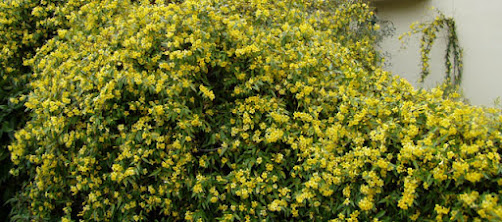
Carolina Jessamine – Gelsemium sempervirens. (Pictured above) It’s native from Virginia to Texas and southward. Because it’s evergreen, it provides a dense privacy screen year around. Carolina Jessamine is cold-hardy in USDA climate zones 7 through 9. It flowers best in full sun, but will grow in full sun or shade in well-drained soil with average to poor fertility. Recommended soil pH covers a wide range: from 5.5 to 8.5. Plants are drought tolerant when established, and deer resistant. Flowers are fragrant.


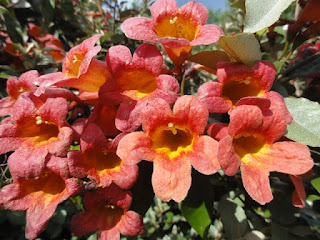
 Crossvine – Bignonia capriolata. This one’s a vigorous vine that’s native to the southeastern United States. It climbs by tendrils which cling to anything for support. It thrives in many different soil types, but prefers rich, organic, well-drained soil. While it grows in sun or shade, more flowers are produced if grown in full sun. Crossvine is cold-hardy to USDA climate zone 6a.


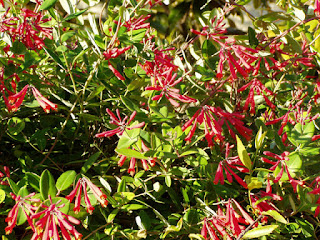
Trumpet Honeysuckle – Lonicera sempervirens. Here’s another vine that’s native to the eastern United States. Red, yellow or coral colored, trumpet-shaped flowers are produced intermittently on evergreen vines from spring to fall. It thrives in acidic soil in USDA climate zones 5 to 10.

All three of these vines flower prolifically, grow quickly, fill in densely, and require very little maintenance. 

Return to GoGardenNow.com.

Thursday, August 5, 2021

How To Grow Ivy (Hedera spp.) Indoors


Ivy is one of the most adaptable plants that can be grown indoors. For some plant enthusiasts, indoors might be the best place for it.

A matter of perspective

Let’s face it. Ivy can be a wonderful ground cover, or the bane of one’s existence. It depends on perspective. When I refer to Ivy, I’m speaking of the Hedera species. These include Algerian Ivy (H. algeriensis, aka H. canariensis), Persian Ivy (H. colchica), English Ivy (H. helix), Irish Ivy (H. hibernica), Nepal Ivy (H. nepalensis), Russian ivy (H. pastuchovii), and Japanese ivy (H. rhombea). Of these, the first three species are most readily available. Within the species, there are several varieties each.

What’s good about it?

Ivy is known for glossy green foliage, few maintenance requirements, drought tolerance, climate adaptability, deer resistance, pest resistance and ground cover potential. It’s hard to kill. Ivy does what a ground cover is supposed to do; it covers ground. For those reasons, English Ivy was brought from Europe by early settlers. Though it’s ubiquitous, it’s not native to these shores.

What’s not good about it?

That Hedera is such a tough plant – i.e. it’s hard to kill – along with its ground cover potential can make it undesirable. But let’s get this straight; English ivy does not kill trees. It is not parasitic. However, the sheer weight of ivy in a tree that is dead or dying can certainly bring it down.

Enjoy ivy indoors

If you want to enjoy the best of ivy’s attributes and avoid its liabilities, grow it indoors as a houseplant. It’s not difficult to do if you meet its basic needs.

  • Bright light. Hedera species need plenty of light, though not necessarily full sun. Windows facing any direction will work, though you might want to draw your plants away from direct sun. Not that ivy can’t take it outdoors, but plants grown indoors tend to lose some of their ability to withstand harsh sunlight. If grown in too little light, plants tend to get “leggy.”
  • Appropriate moisture. Ivy does not like wet soil. If soil is constantly wet, your plants will rot. Allow your plants to dry between watering. The pot should provide excellent drainage.
  • Fertilizer. Use a slow-release or water-soluble fertilizer once per month during the growing season, e.g. spring through summer. Follow label instructions.
  • Good hygiene. Remove dust from foliage with occasional wiping or brief showers. This will also help prevent any pests that might come along. If grown outdoors, occasional rains will wash dust and insects from the leaves. When grown indoors, you’ll have to do the part.

There are very many varieties among the Hedera species. Characteristics include variegation, fancy leaves, and even slower growth rates. Check GoGardenNow.com for some of them. You can also inquire of the American Ivy Society for some of the more unusual varieties.

Indoor ivies are very decorative as topiaries or trailing from containers. The smaller, fancy-leaf varieties are best for topiaries. Growing ivy indoors can become a very rewarding hobby for those of us who just can’t get enough of plants.

Return to GoGardenNow.com.

Friday, March 20, 2020

"I Know A Hill Where Periwinkle Grows"

Just outside my window


Vinca minor closeup


Periwinkle’s evergreen
Periwinkle’s strong,
Under the snow it lives
All Winter long.

When the first thaw come
Periwinkle’s seen
In all its myrtle grace
Clear, dark green.

I know a hill where 
Periwinkle grows,
A little hill that
The morning knows.
- Periwinkle, Louise Driscoll (1875-1957)

Doesn’t that make you want some in your garden? You should consider it. Periwinkle, also known as vinca, is very easy to grow. As I write this in March, periwinkle is blooming up a storm

As noted in Driscoll’s poem, periwinkle is an evergreen ground cover vine. It may be found growing nearly world-wide. Though no one is sure, it’s believed the word, Vinca, is derived from a Latin word meaning "to bind." Vinca is a trailing plant, and the runners root as they extend. The long, tough runners were used in some cultures to form rope.

Mature height as a ground cover is usually from 8" to 18". Flower colors range from blue to white or burgundy, depending upon the cultivar. Vinca prefers moist soil in partial shade to full shade, but will also tolerate sun and drought. It is deer resistant.

There are two species of Vinca commonly available: Vinca major and Vinca minor. Louise Driscoll wrote about V. minor.

Vinca minor is commonly known as dwarf periwinkle, creeping myrtle, or death myrtle. It does contain toxic substances. I’m sure that’s why the name figured in the Harry Potter story with the ghost, Moaning Myrtle.

Vinca foliage is about 3/4" wide and 1" long. Mature height is about 4". Foliage is deep green and shiny. It is hardy in USDA climate zones 4 through 8. Soil pH should range from 6.1 to 7.8.

Find Your USDA Plant Hardiness Zone By Zip Code

Vinca minor on hillsideAs a ground cover, vinca is effective for erosion control on hillsides. If planting it for erosion control, try to mitigate the water flow until the plants are established, otherwise the water might dislodge them.

Periwinkle does well in shallow soil, even where tree roots render it difficult to cultivate. But, if possible, prepare the planting bed by cultivating about 4" deep, removing all traces of weeds. Composted manure may be incorporated into the soil. Plant 6" to 12" apart. If fertilizer is used, incorporate 10-10-10 fertilizer at a rate of no more 2 lbs. per 100 square feet into the top 4" of soil. Avoid synthetic fertilizers contacting any part of your plants.

Periwinkle can be planted any time of year, even bare root plants. Even so, you should water occasionally until the plants become established to avoid drought stress. Maintenance is minimal. Periwinkle has few pest and disease problems, and tolerates poor soil.

Because it is so common, folks often overlook it, unless it’s found growing where they don’t want it. As I’ve often said, “it does what a ground cover is supposed to do; it covers ground.” Periwinkle is popular precisely because it is so effective, attractive, and requires practically no maintenance.

Return to Vinca at GoGardenNow.

Wednesday, July 31, 2019

Here Are 5 Vines That Will Attract Birds To Your Garden


Hummingbird with Trumpet Vine


As I noted in a previous article, bird-watchers who want to see them up close usually attract them with bird feeders, houses and baths. There are, however, other ways of enticing them that shouldn't be overlooked. The landscape can be transformed into a bird sanctuary by including plants that provide food and shelter. Ornamental vines are important components of such a plan.

Here are 5 ornamental vines that birds find irresistible.

A Clarion Call For Hummingbirds 

Trumpet Vine (pictured above) or Trumpet Creeper (Campsis radicans) is a climbing deciduous vine native to the southern United States. Travelers may have noticed it growing up and over fences and signposts along the highway. Large, bright yellow, orange to red trumpetshaped flowers appear from midsummer to fall. Campsis is popular world-wide for its stunning flowers, and because it attracts hummingbirds.

Campsis is cold-hardy in USDA climate zones 4 through 10. For best results, plant in full sun, well-drained soil with average to poor fertility. Plants are drought tolerant when established and heat-loving. It is best planted next to a permanent structure for support.

Carolina Jessamine - Gelsemium sempervirens

Yellow Garlands of Spring 

Gelsemium sempervirens – known as Carolina Jasmine, Carolina Jessamine, Yellow Jasmine, and whatever else comes to the viewer’s mind – is another great native plant that provides nectar for the birds. It’s grown mostly for its glorious early spring flowers. Southerners wax nostalgic about it. Unfortunately, it is cold hardy only in USDA climate zones 7 through 9. The flowers usually appear before the hummingbirds arrive, so is best planted as a nectar source for other species. I’ve written much more about it in a blog article, Carolina Jessamine – The Yellow Garlands of Spring.

Wild and Wonderful 

English Ivy - Hedera helixMost of us think of English ivy and all its varieties as a rampant but boring evergreen covering, or worse. But look closer and you’ll find a plant with lots of interesting variations that can not only provide mass ground- or wall covering, but also shelter and an ornamental food source for birds.

Some folks dislike ivy for it's vigorous growth habit. The very characteristic that makes it a fine ground cover can render it unwelcome; it covers ground. It's true that ivy can be troublesome if completely unchecked, but ivy does not damage trees or sound structures. It isn't a parasite. It cannot harm a mature tree, but it could outlive an old one. It cannot collapse a sound building. Ivy is a major food source for many birds, and the fruits ripen up just in time to fatten them before winter arrives. Hedera ivies also provide abundant shelter.

It Keeps Institutions From Crumbling 

Boston Ivy - Parthenocissus tricuspidataBoston Ivy - Parthenocissus tricuspidata - is native to east Asia, not Massachusetts. Each leaf is composed of three lobes. In juvenile foliage, each lobe is very distinct. It is a vigorous climber, as anyone who has seen it on a wall knows well. Fall brings bright colors of yellow, orange, red or burgundy. The walls it adorns seem draped in a majestic tapestry. It is also widely used to cover trellises, pergolas, and as an ornamental ground cover for erosion control. Small flowers appear in July or August followed by fruits in October or November, and birds love 'em.

Boston ivy grows in any fertile, well-drained soil, and thrives in USDA climate zones 48. In other words, it'll probably perform well in your garden.

A Native With Great Possibilities 

Virginia Creeper - Parthenocissus quinquifolia
Virginia Creeper - Parthenocissus quinquefolia - is native to many parts of North America, from Quebec to Florida, and westward to Colorado. It's a member of the grape (Vitaceae) family. The relationship is easy to see when you look at the flowers and fruits, but I don't recommend them for human consumption. Each leaf is composed of five leaflets. It climbs vigorously. Fall brings bright colors of yellow, orange, red or burgundy. The depth of fall color seems to depend upon available sunlight. Virginia Creeper is widely used as an ornamental ground cover, but its fall color and ability to cover walls, trellises and pergolas makes it popular as well.

Virginia Creeper thrives USDA climate zones 3-9, a broader range than Boston ivy will tolerate. Its fruit and dense growth habit make it very attractive to birds for food and shelter.

These suggested vines, along with many bulbs, perennials, annuals, shrubs and trees will be welcome additions to your landscape from the birds' points of view.

Remember to think outside the bird feeder when you plan to feed the birds.

Return to GoGardenNow.com


Tuesday, March 16, 2010

Asiatic Jasmine - Cover Ground With Southern Style


Asiatic Jasmine ( Trachelospermum asiaticum ), is a marvelous ground cover vine that is well-known throughout the South. Trachelospermum asiaticum means "rough seed from Asia", but it doesn't imply that the plant is without style. Evergreen, leathery leaves with a glossy sheen form a dense, luxurious blanket that adds a touch of class to the landscape.

The species is distantly related to plants such as Vinca, Mandevilla, Carissa, Oleander and Amsonia. Confederate Jasmine (Trachelospermum jasminoides) is a closer relative, and very similar in appearance, but Asiatic Jasmine differs from T. jasminoides by having smaller leaves, being shy to bloom and reluctant to climb.

Asiatic Jasmine is native to Korea and Japan, but is so popular in the southeastern U.S. that you might think it's from around here. In fact, there is a species, commonly called Climbing Dogbane (Trachelospermum difforme), which is native to the U.S.

It must be noted that Asiatic and Confederate jasmines are not among what some consider to be "true jasmine" of the genus Jasminum.

Foliage is about 1" to 2" long. Insignificant star-shaped flowers are about 1" diameter, white to pale yellow. Variegated-leaf forms exist. Mature height as a ground cover is only 6", but vines may extend to 24" when prostrate. If Asiatic Jasmine does take the notion to climb, the vines my grow to 72" or more.

Asiatic Jasmine is cold-hardy in USDA climate zones 7 through 9. It is perfect for full, but will grow in partial- to full shade. Deep shade is not recommended. Plant in average, well-drained soil with pH ranging from 6.1 to 7.8. Plants are drought tolerant when established, and heat-loving.

It's very effective as a ground cover in small to large areas. If grown near a walkway, occasional edging will keep it very neat. Otherwise, maintenance needs are few. Deer won't eat it, and you shouldn't either. The milky sap will irritate sensitive tissue, so keep it out of your eyes and nose.

Prepare the planting bed for Trachelospermum asiaticum by cultivating at least 6" deep, removing all traces of weeds. Compacted soil should be cultivated to 12" deep. Compost may be incorporated into the soil. Fertilizer may be used. If you choose to do so, incorporate 5-10-15 fertilizer at a rate of no more 2 lbs. per 100 square feet into the top 4" to 6" of soil. Avoid synthetic fertilizers contacting any part of your plants.

Plant container-grown jasmine at 18" to 24" spacing. Dig planting holes into the cultivated soil a little less deep than the depth of the growing container. Place the plants into the holes and back-fill, watering as you go. Press soil around the roots. Do not cover the root balls with soil. The tops should be slightly exposed.

Smaller, bare root plants may be spaced 8" to 15" apart. Plant only as deeply as they were previously grown. A slight change in stem color and texture should be visible, indicating the planting depth. Add a top-dressing of mulch around the plants, not on top of them, about 2" deep.

Asiatic Jasmine is one of my favorite ground cover vines. Rich foliage color, glossy sheen and low-maintenance needs make it very popular with many other southern gardeners, as well.

Return to GoGardenNow.com.

Wednesday, July 22, 2009

Jeepers, Creepers! Virginia Creeper and Boston Ivy

Parthenocissus is a genus of woody, creeping plants that, depending upon the species, are native to parts of Asia and of North America. The name comes from the Greek meaning "virgin ivy." Parthenocissus belongs to the grape family.

The plants may grow as ground covers, but will climb if they meet an obstacle. As they ascend, they attach themselves to the surface by small adhesive disks. Mature height may be 40' or more.

The two most common species in cultivation include Virginia Creeper (Parthenocissus quinquefolia) and Boston Ivy (Parthenoscissus tricuspidata).

Virginia Creeper, also known as Woodbine, is native to many parts of the U.S. and Canada. Each leaf is composed of five dark green leaflets. It is a vigorous climber and will cover whatever it grows upon. If allowed to grow over shrubs, its dense foliage can rob the lower plants of sunlight and weaken them. Fall brings bright colors of yellow, orange, red or burgundy. The depth of fall color seems to depend upon available sunlight. Virginia Creeper is widely used as an ornamental ground cover, but its fall color and ability to cover walls, trellises and pergolas makes it popular as well.

Virginia Creeper is cold hardy in USDA climate zones 3 through 9. It prefers average, well-drained soil with pH ranging from 6.1 to 7.8, but is tolerant of poor soils. It will grow in partial shade to full sun, is heat and drought-tolerant. Pests are limited to a few that nibble the leaves. It is disease-resistant. Birds love the fruit, but the berries are toxic to mammals. The plants can cause allergic reactions in sensitive persons.

Boston Ivy, also known as Japanese Ivy or Woodbine, is native to east Japan, Korea and eastern China. Each leaf is composed of three lobes. It is also a vigorous climber. Like Virginia Creeper, fall brings bright colors of yellow, orange, red or burgundy. It is also widely used as an ornamental ground cover, but is used to cover walls, trellises and pergolas. Because it has been very popular in Boston, it bears the name of that city.

Boston Ivy is cold-hardy in USDA climate zones 4 through 8. The foliage colors best in full sun, but it will tolerate partial shade. Plant in well-drained soil with average to poor fertility.

Prepare the planting bed for Parthenocissus by cultivating at least 6" deep, removing all traces of weeds. Compacted soil should be cultivated to 12" deep. Add enough soil to raise the bed at least 4" above the surrounding ground level. This will help to promote good drainage. Composted manure may be incorporated into the soil. Fertilizer may be used. If you choose to do so, incorporate 5-10-15 fertilizer at a rate of no more 2 lbs. per 100 square feet into the top 4" to 6" of soil. Avoid synthetic fertilizers contacting any part of your plants.

Plant Parthenocissus 12" to 36" apart. Dig planting holes into the cultivated soil a little less deep than the depth of the growing container. If you are planting bare root vines, the roots should be spread out in the hole. Do not plant them any deeper than they grew previously. You should be able to see a difference in the plant tissue at the previous soil line. Place the plants into the holes and back-fill, watering as you go. Press soil around the roots. If you are planting container grown stock, do not cover the root balls with soil. The tops should be slightly exposed. Add a top-dressing of mulch around the plants, not on top of them, about 2" deep.

If the plant is stressed during planting, it will usually drop its leaves as a protective measure. While it is unsightly and may be worrisome, maintaining proper soil moisture will encourage new leaves to sprout.

You might wonder whether it can be easily removed from walls, pergolas and such. It depends upon how you go about it. If you just start pulling them off a painted surface, the adhesive pads will probably pull off paint, especially if the paint is flaking. Because they do not attach themselves by means of penetrating roots, they will not damage brick or stone by pulling. The best way I've found to remove them is to sever their vines near the base, or spray foliage within reach with glyphosate herbicide. When the plants die and dry, the vines can be removed more easily.

Both popular species of Parthenocissus cover ground and buildings, and do it well. The fall colors are fantastic, and the plants are basically trouble-free.

Return to GoGardenNow.com.

Tuesday, July 21, 2009

Carolina Jessamine - The Yellow Garlands Of Spring

Our native Carolina Jessamine, Gelsemium sempervirens, is a spectacular ornamental vine that is well-known throughout the South. Its range is from Virginia to Texas and southward through Mexico. Another species, Gelsemium rankinii, also known as Swamp Jessamine, is native to the Southeast. A relative, Gelsemium elegans, also a climbing vine, is native to India, parts of China and Southeast Asia. Gelsemium sempervirens translated from Latin means "evergreen jasmine". The common name, Jessamine, is a variant spelling of Jasmine. "Jasmine" is of Persian origin, meaning "God's gift." It must be noted, however, that Gelsemium species are not among what some consider to be "true jasmine" of the genus Jasminum.

Carolina Jessamine foliage (about 1" to 4" long) is elongated. Whether it is evergreen depends upon the climate. It is semi-evergreen in northern parts of its range. Beautiful fragrant yellow flowers, 1-1/2" long and tubular, appear in early spring and sometimes in fall creating elegant garlands of yellow on arbors and pergolas. Motorists are sure to notice it as they travel along our highways as Jessamine festoons trees and shrubs. Mature height as a ground cover is only 24", but when allowed to climb, it will just keep on going.

Carolina Jessamine is cold-hardy in USDA climate zones 7 through 9. It flowers best in full sun, but will grow in full sun or shade in well-drained soil with average to poor fertility. Recommended soil pH covers a wide range: from 5.5 to 8.5. If planted in shade, it will find something to climb until it enjoys sunlight. Plants are drought tolerant when established, and heat-loving.

Because the flowers are beautiful and abundant, Gelsemium is usually planted with that purpose in mind. Unlike some other ornamental vines, it does not attach itself permanently to its support. Gelsemium ascends by twining around the support. For that reason, if grown on a wall, it will need a trellis to climb upon. If necessary, it can be pruned back drastically in order to maintain supporting walls, trellises, pergolas, arbors, mail boxes and light posts.

Gelsemium can be effective as a ground cover for erosion control in small to large areas. If allowed to grow as a ground cover, it will certainly do so, but will climb the first chance it gets.

It must be noted that in spite of its loveliness, Carolina Jessamine is highly toxic if eaten. So don't. The good news is that it is deer-resistant.

Prepare the planting bed for Gelsemium sempervirens by cultivating at least 6" deep, removing all traces of weeds. Compacted soil should be cultivated to 12" deep. Add enough soil to raise the bed at least 4" above the surrounding ground level. This will help to promote good drainage. Composted manure may be incorporated into the soil. Fertilizer may be used. If you choose to do so, incorporate 5-10-15 fertilizer at a rate of no more 2 lbs. per 100 square feet into the top 4" to 6" of soil. Avoid synthetic fertilizers contacting any part of your plants.

Plant at 24" to 48" spacing. Dig planting holes into the cultivated soil a little less deep than the depth of the growing container. Place the plants into the holes and back-fill, watering as you go. Press soil around the roots. Do not cover the root balls with soil. The tops should be slightly exposed. Add a top-dressing of mulch around the plants, not on top of them, about 2" deep.

To encourage plant density and more profuse bloom, prune Gelsemium occasionally, especially if grown as a ground cover. Edging around the perimeter of the ground cover bed and shearing the top is very effective. Though Carolina Jessamine vines are capable of growing 20' high, they can be grown in containers on trellises of 3' to 4' and maintained by pruning.

Carolina Jessamine is one of my favorite flowering vines. It can be grown high or low, over your mailbox or under it. The deep yellow garlands in the trees drop lovely blossoms on the forest floor below, golden mantles drape garden walls, and the fragrance is wonderful.

Return to GoGardenNow.com.