Showing posts with label florida. Show all posts

Friday, February 9, 2024

Behind the Garden Wall: Mead Botanical Garden, Winter Park, FL

Mead Botanical Garden Entrance

Sometimes hidden gardens present fine rewards. Such is the case with the Mead Botanical Garden in Winter Haven, Florida. Tucked behind a residential neighborhood, Mead Botanical Garden is a modest trove of tropical species.

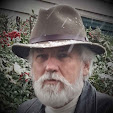
Theodore Mead, age 22

The Garden opened in 1940 in honor of noted horticulturist Theodore L. Mead (1852 – 1936). Mead was a pioneer in breeding new varieties of tropicals such as caladiums, bromeliads, orchids, daylilies, amaryllis and crinums. He was also a butterfly aficionado, apprenticed to William Henry Edwards, author of The Butterflies of North America. Mead is appreciated for discovering more than 20 new species of North American butterflies.


Neoregelia carolinae

Theodore and his wife moved to Oviedo, Florida in 1881. Oviedo was formerly known as the Lake Jesup Community. There he built greenhouses, propagated epiphytes and other tropicals, planted a citrus grove and gardens.

South Florida Railroad Depot

He was a sort of pioneer in the area. This was the “Old Florida” that some of us love to read about. Central Florida was becoming more accessible, thanks to railroads such as Henry Plant’s South Florida Railroad from Sanford to Tampa, with a railroad link to Oviedo. The Steamboat, Volusia, plied the waters weekly from Sanford. Orlando was soon to be re-incorporated.

Florida steamboat

 Considerable interest in citrus production was being promoted. Orchards were being planted. 

Of course, transportation was needed. A historical marker, located at the boat ramp at the end of Black Hammock Fish Camp Rd, east of FL 417 and north of Oviedo, tells of some efforts.  

“The Lake Jesup Steamboat company was incorporated in 1882 by lake area fruit growers by acquiring the steamboat Isis. This shallow-draft flat-bottomed boat sank that same year north of here in Lake George, a part of the St. Johns River...

South Florida Railroad's Oviedo Depot

“In 1888, Oviedo orange growers formed the Oviedo, Lake Charm & Lake Jessup Railroad, with the proposed rails to end at Solary's Wharf. This line never operated, but it did serve as a ploy in forcing the South Florida Railroad to lower unfair rates for hauling fruit.” Theodore Mead, having a degree in Civil Engineering from Cornell University, might have been involved.

After Mead’s death in 1936, his orchid collection was bequeathed to Eagle Scout and protégé, Jack Connery. With the aid of Rollins College Professor Edwin Grover, an effort was begun to create the botanic garden in Winter Park on 40 donated acres, about 15 miles from Oviedo. This is the basis of the garden we enjoy today.

Mead Botanical Garden kiosk

Mead Botanical Garden is a pleasant diversion from the well-known area attractions. Most of it is well-kept. (There’s only so much that volunteers, non-profit corporations and city partnerships can do.) Even so, good camera angles can capture the best features.

The garden is bordered on two sides by Howell Creek and Lake Lillian Marsh. Short strolls provide good views of both. Other points of interest include a camellia and cycad collection, a wildflower garden, rose garden, hummingbird garden, greenhouse, lovely bromeliads and various venues for meetings, lectures and entertainment.

Follow me behind the garden wall.

Mussaenda erythrophylla

Succulent, Euphorbia and palm collection

Billbergia pyramidalis

Livistonia chinensis

Creek view

Boardwalk

Medinilla magnifica

Codiaenum variegatum

Clerodendrum thomsoniae

Bromeliad collection

Neoregelia carolinae

Aglaonema communtatum

Kalanchoe gastonis-bonnieri

Tradescantia spathacea


Creek view

Aristolochia macrophylla

Bletilla striata

 
Clerodendrum trichotomum


Return to GoGardenNow.com.

Thursday, June 5, 2014

The Jacksonville Zoo and Gardens


Jacksonville Zoo and Gardens sign

Greetings from Jacksonville, Florida, home of WAPE - "THE BIG APE" - radio station and the Jacksonville Zoo. When I was a kid, WAPE - "The Mighty 690", was, arguably, the most popular Top 40 AM station in Savannah, Georgia. Jacksonville was also the closest big city to my hometown, and we had relatives there. Our cousins were never shy to remind us that Jacksonville, Jacksonville Beach and local scenery in Florida were superior in all respects to Savannah and Tybee. So our parents occasionally took my brother and me to see the cousins and other animals.

I remember my anticipation of excitement, adventure and dread more than any specific exhibit or events in Jacksonville, excepting Monkey Island. Monkey Island was just that - a hillock surrounded by a moat surrounded by a wall over which amusing visitors applauded simian antics. Feeding the monkeys was not forbidden back then. Some folks would bring grapes to pitch. I recall one ape in particular which, while the others were clamoring nearest clusters of visitors, would scamper alone off to the top of the hillock and wave his arms for attention. He got lots of laughs and collected most grapes.

The Jacksonville Zoo and Gardens has grown up a lot since then, so I returned recently for the first time in about 50 years to see what was new. Almost everything was.

The Jacksonville Zoo endured hard times back in the '60s. Not wanting to close it, community leaders formed a committee to figure out a way to keep it open. The Jacksonville Zoological Society was formed and progress was made.

Today's Jacksonville Zoo is more like a botanical garden with animals. Situated on the Trout River, the park is divided into continental themes with appropriate beasts. There are The Plains of East Africa, Wild Florida, River Valley Aviary, Savanna Blooms Garden and Giraffe Overlook, Great Apes, South America and Range of The Jaguar, Gardens at Trout River Plaza, Save The Frogs and Australian Adventure, Asian Gardens and Komodo Exhibit.

Gardens at Trout River Plaza
Upon entering, you feel like you're going on safari, except you're strolling broad walks among beautifully landscaped gardens. Nevertheless, you can't wait to mosey around the next corner. Plant and animal species are well identified with signage, so visitors can appreciate what they're viewing.

The Jacksonville Zoo and Gardens isn't just for walking. For those who want to see the zoo the easy way or just enjoy the ride, the Zoo Train stops at the Main Camp Entrance and, strategically, the Kids' Shop. Since it's located on the Trout River, Jacksonville Zoo makes kayaks available for those who like to paddle about.

The carousel is one of my favorite rides at any park because you can master the most ferocious beasts, ride them fast and melt into ghee!
Zoos are better designed now than when I was growing up, partly for the animals' sakes, partly for the visitors'. Attractive landscaping is becoming a notable feature. I think, though, that The Jacksonville Zoo and Gardens is unique in its thoughtful combination of a botanical garden with the zoological park.

Following are a few more photographs of my visit:

The Rivers Of Color Garden.


Edible landscaping and raised bed displays.

A portion of the cacti and succulents collection.

Asian Garden scene

Variegated Japanese Yew (Podocarpus macrophyllus var. maki 'Argenteus')

Preening flamingos
Red frangipani (Plumeria spp.).

Elegant patterns of the West African green mamba (Dendroaspis viridis)

Lioness (Panthera leo krugeri) in the shade.

A handsome kudu


Warthog (Phacochoerus africanus) resting confidently in its
self-esteem.


North American Wood stork (Mycteria americana).

So, from here on Monkey Island, I implore you. Subscribe to my blog at GoGardenNow.blogspot.com, follow the GoGardenNow Facebook page, and buy something from goGardenNow.com.

Wednesday, February 5, 2014

The Jacksonville Arboretum and Gardens, Florida


The Jacksonville Arboretum and Gardens is very young, as arboreta go. But it occupies an area that has a long history.Timucuan people had inhabited the territory since perhaps 1100 AD. Spanish explorers arrived to the south in 1513, founding St. Augustine, Florida and spreading everywhere. In 1564, French Huguenots under Jean Ribault established a short-lived settlement at nearby Fort Caroline until the Spanish wiped them out. Confederate and Yankee troops encamped just across the St. John's River at Yellow Bluff from 1862 until the war's end.

Humphreys Gold Mining Company operated mines in this area of Jacksonville from 1944 to 1961 in search of titanium and other useful minerals. Sometime in the early 1970s, the City of Jacksonville, Florida sought to build a waste-water treatment facility on the site, but the EPA required a buffer, probably to prevent accidental pollution of the St. John's River. The city was forced to purchase extra property which remained undeveloped and mostly unused, except for illegal activities like, uh...dumping. Then in 2004, a group of concerned citizens envisioned its use as an arboretum. A lease agreement was worked out with the city, and arboretum development began in 2008. The rest is history.

When Jacksonville Arboretum and Gardens opened, a paved parking area and three walking trails had been established. Trails, benches, board walks, and picnic tables were built by volunteers. Brush clearing is still taking place. Plantings are young.

Camellia sasanqua 'Sparkling Burgundy'

Jacksonville Arboretum and Gardens is an urban woodland consisting of 120 acres. It seems remote, but one must remember the site was heavily disturbed. What visitors see now is a healing scar, as trail walks show.

Lake Ray, Jacksonville Arboretum and Gardens

The .3 mile Lake Loop, one of the first established, features 2-acre Lake Ray, formerly a borrow pit. A borrow pit is a hole that remains when soil is moved to be used elsewhere. Actually, "borrow pit" is a misnomer because the soil is never ever returned. The water in Lake Ray comes from underground sources, direct rainfall and runoff. Water quality is actually pretty good. Most of the new plantings are in this area. The Lake Loop is reasonably picturesque.

A ravine to the south of Lake Ray, spring-fed and beautiful, was also a borrow pit. Two trails, Upper Ravine and Lower Ravine, allow visitors to explore it. Cabbage palms and longleaf pines inhabit the upper ravine; red maples (Acer rubrum), yellow poplar (Liriodendron tulipfera), oaks (Quercus spp.), beautyberry (Callicarpa americana), poison ivy (Toxicodendron radicans), ferns and sedges inhabit the lower.
American Beautyberry, Callicarpa americana
Snoop around in the ravine at the base of the ridge. You'll find yourself in a baygall. Water from runoff and springs collects there, and so do all kinds of interesting plants like bays. These won't be your typical bays like the leaves in your pantry or wreaths on your head, but their fragrances are reminiscent. You'll find sweet bay (Magnolia virginiana), swamp bay (Persea palustris), maybe its besieged relative red bay (Persea borbonia), and loblolly bay (Gordonia lasianthus). Other fragrant species will include sweet gum (Liquidambar styraciflua), wax myrtle (Myrica cerifera), Virginia sweetspire (Itea virginica) and native azaleas (Rhododendron spp.) Beneath them, you'll find lots of ferns.

Jones Creek, Jacksonville Arboretum
Jones Creek, a charming freshwater attraction, begins in a subdivision near Regency Square Mall a few miles south, descends northward to the St. John's River through Jacksonville Arboretum. Creatures that should fascinate any child live in and around it including crayfish, possums, raccoons, salamanders and snakes. Barred owls often survey the scene below.

The Cascades
Jones Creek is accessible via the Aralia Trail, so called because native Devil's Walking Sticks (Aralia spinosa) grow near it. A sign pointing along a short trail spur to The Cascades piques the interest. Keep in mind this is Florida, so don't expect much of a cascade. It isn't. Though the babble and brook are inviting, don't drink the water. Upstream is not pristine.

The .5 mile Live Oak Trail loops through woodland just north of the Lake Loop. The National Champion Loblolly Bay tree lives there. Many of the oaks (Quercus virginiana) are over 100 years old. But a century is not old in these parts.

The Live Oak Trail provides access to the 1 mile Rosemary Ridge Trail. It crosses different native communities including a xeric hammock, rosemary and oak scrub, depression and wetland marshes.

A xeric hammock is like a dry island. The arboretum's xeric hammock is dry because it is sandy. Plant species include palmettos, drought-resistant shrubs such as sparkleberry (Vaccinium arboretum), fetterbushes (Lyonia spp.), scrubby oaks (Quercus spp.), and Reindeer moss (Cladonia rangiferina). Christmas lichen (Cryptothecia rubrocincta) is one of the more colorful appearing as a red and green plaster on the sides of trees.

Depression marsh, Jacksonville Arboretum
The Rosemary Ridge trail also skirts a depression marsh. Depression marshes begin as sinkholes where limestone strata has separated, and clay and sand have slid in. The clay forms a bowl which holds water. The amount of water in a depression marsh varies by season. Grasses dominate during dry season. Aquatic species dominate during wet season. Furthermore, the species grow in concentric rings around the marsh, responding to the amount of available water. Those requiring most water are found in the center. An educational sign posted at this depression marsh indicates the presence of red root (Lachnanthes caroliniana), a pioneer species that colonizes rapidly after human disturbance. That disturbance may have been the result of mining activity. Redroot is yet another indicator that the landscape is a healing scar.

Rosemary Ridge is not named for a lady or the familiar kitchen herb, but for another native genus, Conradina. Though called False Rosemary, it's actually related to Rosmarinus officinalis of culinary fame. It's interesting to note that Conradina, named for botanist, Solomon White Conrad (1779-1831) is usually seen growing almost alone among other plants. That's because Conradina releases chemical compounds called terpenes (think "turpentine") into the soil that inhibit the growth of competing species. Standoffishness has its advantages!

For the record, there is another similar-looking plant called Florida Rosemary (Cerotina ericoides) that's found growing in sandy regions across the southeastern U.S. Inspect it, sniff it, wonder about it, but don't bother trying to cook with it. Florida Rosemary will do you no good.

The Jacksonville Arboretum and Gardens has a lot of potential. If you're visiting Jacksonville, FL, stop by. You'll enjoy it. There's no admission charge, but consider supporting it. You can help by becoming a member, donating money and/or volunteer labor.

Return to GoGardenNow.com.


Friday, September 27, 2013

Washington Oaks Gardens State Park, Florida


In 1936, title to a tract of land known now as Washington Oaks Gardens, a Florida State Park, was received by Louise Powis Clark (1887-1965), a widow with three children. It was to become a winter home for her and her third husband, Owen D. Young (1874-1962), also recently widowed. Both were from New York. Louise owned a lingerie company in the Philippines. Owen had been a lawyer, diplomat, and chairman of the boards of General Electric Company and RCA. But there's very little about Washington Oaks that immediately suggests the owners' wealth.

The area had been home to diverse residents, from aboriginal people to Spanish and English Colonists. In 1818, Jose Mariano Hernandez acquired the tract as an addition to his plantation, Mala Compra (Bad Purchase), to the south. Since it overlooked the Matanzas River, he called it Bella Vista (Beautiful View).

Eventually it passed to heirs, one being George L. Washington. Members of the family lived on “The Washington Place” occasionally from the 1870s to 1890s. The Washington lodge no longer exists.

In 1923, the property was sold to developers to be subdivided into residential lots known as Hernandez Estates. But the financial crash of the ‘20s and the Depression of the ‘30s put an end to that dream.

Louise and Owen discovered the property along old highway A1A in 1935 while visiting her mother in St. Augustine, FL. The developers had failed to pay taxes on some parcels, land values were way down, and the romantic couple from up North had money to spend. Louise acquired title in 1936. She and Owen were married the following year.

Rather than rename the place, they called it “Washington Oaks.” Perhaps they liked the sound of it, or named it so because George L. slept there.

Being a designer with interests in weaving and pottery, Louise went to work designing the house and gardens with an artistic eye. Their home was modest, and took full advantage of the view of the river. She combined native and exotic plants in the garden, and included oriental motifs.

Owen Young was a businessman who took an interest in horticulture, so he planted a citrus grove. Naturally, he set up a fruit stand beside old A1A where he occasionally tended and sold citrus to passersby.

My parents often took us boys to Florida in those days, sometimes traveling that scenic highway. I like to imagine we passed the old man hawking oranges by the road, not realizing he was the co-founder of RCA, NBC, and a consultant to presidents.

The Youngs eventually purchased land across the road, allowing them beach access. Owen built an office on that side so he’d have a quiet place to do business and study.  He built a nice home there for the caretaker, too.

Traffic increased, and road noise began to disturb the Young’s idyll, so they prevailed to have A1A relocated closer to the beach. A quiet, scenic portion of the old road still exists, reminding visitors of those days long gone.

Follow me to see what grows beyond the garden wall by clicking on the links below.

Travelers might have barely noticed Washington Oaks simple coquina gates. Coquina stone is sedimentary rock consisting of coquina shells and sand. It was often used as a building material.

The driveway at Washington Oaks opens to a fine view of the comfortable house and the Matanzas River beyond.

Much of the Young’s home looks as it did in the 1950s and '60s. A vintage television displays recorded episodes of old shows.

The front door of a home on the river always faces the river. Remember that.


Roses ‘Sweet Surrender’, ‘Gold Medal’ and ‘Pope John Paul II’ in the formal rose garden.

Visitors can rest on the garden bench beside the pond.


Curcuma provides pops of color in the tropical garden.

A Bird-Of-Paradise (Strelitzia reginae) flower hides among the foliage.

A sculpture from Asia and koi reflect the Young’s affection for oriental motifs.

In The Compleat Angler, Izaak Walton observed “the Carp is the Queen of Rivers: a stately, a good, and a very subtil fish”. Koi are glorified carp. For bait, Walton instructed, “Take the flesh of a Rabbet or Cat cut small, and Bean-flowre;…and then mix these together, and put to them either Sugar, or Honey, …beat together in a Mortar, …and then make it into a ball, or two, or three…” Since I had none of those things, nor a fishing license, I simply watched them laze about.


A bridge not too far with Clerodendrum speciosum beside.

Ponderosa lemons (Citrus limon) in the citrus grove.

“Now the serpent was more subtle than any other wild creature that the Lord God had made.” (Genesis 3)


Owen Young’s office now houses the gift shop at Washington Oaks Gardens State Park, FL.


Return to GoGardenNow.com.