Showing posts with label polystichum. Show all posts

Thursday, June 3, 2021

Ferns As Groundcovers


Strolling pathways and lanes among magnificent homes on Kiawah Island, I was impressed by the effective use of ornamental groundcovers in the landscapes.

Paths there were many,
Winding through palmy fern, and rushes fenny,
And ivy banks; all leading pleasantly
To a wide lawn, whence one could only see
Stems thronging all around between the swell
Of turf and slanting branches: who could tell
The freshness of the space of heaven above,
Edg'd round with dark tree tops?...
- John Keats - From Endymion: Book I

The ferns were among the loveliest. What makes them so are their rich textures, lush beauty, and low maintenance requirements. Ferns, in fact, could be an elegant answer to your own groundcover needs.

Before delving into the subject of ferns as groundcovers, let's consider the reasons for using groundcovers.

Groundcovers (or ground covers) are going to occur in most climates quite naturally. Just above the soil layer and below native shrubs and trees, herbaceous plants sprout and spread. They are important in the ecosystem for erosion control, providing and balancing plant diversity, conserving soil moisture, and healing the land after some sort of disturbance.

Many natural groundcover species are not all that attractive. Some are harmful; poison ivy comes to mind. Creative gardeners, however, have learned to substitute more desirable plant species to achieve those worthy ends that nature would otherwise accomplish.

So, that brings us back to the subject of ferns as groundcovers. Ferns will not serve as lawn substitutes for they grow too tall and don't survive frequent foot traffic, but it you want plants that do whatever else that groundcovers should do, require minimal maintenance, and are deer-proof, ferns could be your plants of choice.  Choosing the right fern is as simple as identifying the area you want to cover and selecting a suitable species to do it.

Once established, fern groundcovers are very impressive. Here are a few to consider.

Southern Sword Fern


Nephrolepis cordifolia

Nephrolepis cordifolia - aka Southern Sword Fern - is among the most widely used ferns in southeastern U.S. landscapes. They're tough as nails and very easy to grow.  This evergreen species presents upright sword-shaped fronds with closely spaced leaflets. They spread by runners, and tolerate drier, poorer soil than most ferns, especially in shaded areas. They'll also thrive in full sun with sufficient irrigation.

But first, take note. Southern Sword Fern is not native to the U.S., but to Australia and Asia. Therefore, it is sometimes considered to be an invasive species because it competes with native groundcover species - i.e. weeds. But given that it does suppress weeds, it seems like an ideal solution to the weed problem if used judiciously. I'll leave it to you to decide. 

Southern Sword Ferns grows to 18" tall. Recommended soil pH from 5.6 to 7.8. They're cold-hardy only in USDA climate zones 9b - 11, so they're of limited use.

Hay-scented Fern


Dennstaedtia punctilobula

Dennstaedtia punctilobula, also known as Hay-scented fern is a North American native found from Quebec to Georgia, and westward to Missouri and Arkansas. That's USDA climate zones 3 - 8. 

It is deciduous, but the fall foliage turns to a beautiful golden yellow or chartreuse (hay-colored) in fall. Grow it in full shade - not deep shade - to partial shade in soil with average moisture. 

The secret to success with any plant is to approximate it's native habitat in your own landscape. Dennstaedtia thrives in rich, deep, loamy soil with average moisture in deciduous hardwood forests.

Hay-scented fern is best propagated by planting rhizomes in well-prepared soil. It's reasonably drought-tolerant, and, of course, deer won't eat them.

Christmas Fern


Polystichum acrosticoides

This evergreen beauty is one of our most useful native ferns. Polystichum acrosticoides really stands out in winter. Also known as Christmas fern, the glossy foliage has been gathered since colonial times for Christmas greenery. I never fail to point out to my grandchildren that the leaflets are shaped like elves' shoes. 

It can be found growing naturally in shady hardwood forests from Quebec to Florida, and westward to Texas (USDA climate zones 3 - 9). Rich, loamy, slightly moist soil is ideal. Nevertheless, Christmas fern is reasonably drought tolerant. They are often available in 3-1/2 inch pots and as bare root crowns.

Autumn Fern


Autumn Fern - aka Dryopteris erythrosora - is an Asian beauty that is becoming very popular. Evergreen fronds grow 18" to 24", and newly emerging foliage has a burgundy tone. Stunning! It's cold hardy, too, thriving from USDA climate zones 5 - 8. The delicate appearance belies its toughness - so tough, in fact, that it is often used in public gardens, squares and avenue median strips, so long as the site is in partial shade to full shade.

Southern Shield Fern


Dryopteris ludoviciana

So, what if you need a fern for a sunny location? Look no further than Southern Shield fern or Southern Wood fern - aka Dryopteris ludoviciana. This gorgeous North American native is found from Kentucky to Florida, and westward to Texas. That's USDA climate zones 6 - 10. Foliage is evergreen, too. It's a big one, growing up to 48" in height! Average, slightly moist soil with pH ranging from 6.1 to 7.5 will be ideal.

There are, of course, many more ferns that could be mentioned. Some are, in my opinion, a bit too small to serve as effective ground covers. Others are gigantic. Many prefer habitats too specific to be of general interest.

I hope that these ferns I've mentioned will provide you with some inspiring choices for your own ground cover needs.

Return to GoGardenNow.com.

Tuesday, June 2, 2020

Upstairs or Downstairs, Indoors or Outdoors


Photo by Huy Phan from Pexels

Plants for those spaces

Indoor plants are wonderful. Houseplants brighten any room, add a little color, clean the air, and lend a touch of elegance. What’s not to love? Wouldn’t it be great, though, if you could move them about from indoors to the outdoors, and back again any time of year?  You could enjoy a little variety in your décor, and freshen the look of your garden at will.

Unfortunately, most of those sold as indoor plants are native to the tropics, or their ancestors were. They’re simply not suited to growing outdoors in temperate climates. There are, however, very many species that thrive indoors, and are hardy enough to be moved outdoors to the garden, patio or deck. Here are a few to consider:


Carex laxiculmis 'Hobb'

Carex ‘Bunny Blue®’ 

Carex laxiculmis 'Hobb – Bunny Blue® Sedge – is native to Eastern North America. Foliage is evergreen when grown indoors, outdoors in warmer climates and semi-evergreen in the northern states.  This beauty has graceful, arching blue-green to blue-gray foliage, 1/2" wide, 12"-14" long.  Carex Bunny Blue® grows in clumps and spreads slowly to 12"-15" across.  Flowers are yellow but insignificant, and appear in late Spring.  Bunny Blue® will grow in average potting soil, with adequate irrigation, but really thrives in moist to wet soil. You can’t over-water it! Grow it outdoors in USDA climate zones 5-9.


Creeping Fig

Creeping Fig

Creeping Fig – Ficus pumila – is an elegant vine that excels in container gardens, hanging baskets, and topiaries. Evergreen foliage makes it a lovely subject year around. Creeping Fig is hardy in USDA climate zones 8-11.


Christmas Fern


Christmas Fern

Christmas FernPolystichum acrosticoides – is a native, evergreen beauty that brightens the winter landscape with its glossy deep green fronds. For generations fronds were cut and gathered in winter to decorate the home for Thanksgiving and Christmas. Christmas Fern thrives when grown indoors in potting soil with adequate watering, so you can decorate your home for the holidays any time of year. Grow it outdoors in USDA climate zones 3-9.


Hedera helix 'Ivalace'

Ivalace Ivy

Hedera helix ‘Ivalace’! With its curly leaves and compact habit, the American Ivy Society gave it the 2011 Ivy of The Year Award. Despite its beautiful appearance, it's tough. It's great as an indoor houseplant, useful in container gardens, topiaries, and even as a ground cover for small areas outdoors. It’s hardy in USDA climate zones 5-10. If you want an ivy with more vigor, any of the other varieties of Hedera will perform well indoors and out.


Lily-of-the-Valley

Lily-of-the-Valley

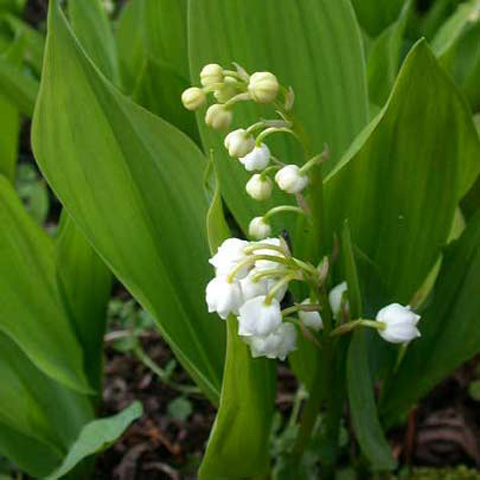
Lily-Of-The-ValleyConvallaria majalis – is very easy to grow from bare-root rhizome divisions. Fragrant, bell-shaped flowers perfume the indoors. It is effective in container gardens, fragrance gardens, and naturalized outdoors in shade gardens and woodland settings. When the outdoor site is to its liking, Lily-Of-The-Valley spreads rapidly. Lily-of-the-Valley is hardy outdoors in USDA climate zones 4-8.

Liriope muscari 'Christmas Tree'

Liriope

Oh, my! There are so many varieties of Liriope muscari to choose from. I prefer the ones with deep green foliage and larger flower spikes for indoor gardens. Those with variegated foliage sometimes lose their color contrast in shady areas. Liriope graces the home with tall, blade-like leaves, adding some height and a nice texture to containers of mixed species. Liriope is generally hardy in USDA climate zones 5-11.


Dwarf Mondo

Mondo

My favorite mondo for container gardens is Ophiopogon japonicus ‘Nana’, or Dwarf Mondo. Short, evergreen blades have the appearance of turf-grass. It thrives in shade. It’s sometimes used as a bonsai subject, or in containers with larger specimens. Mondo is hardy outdoors in USDA climate zones 6-10.

Return to GoGardenNow.com.

Monday, February 16, 2015

What plants do you recommend for cut flowers?

Dahlias and gladiolus in a cutting garden

Q. What plants do you recommend growing for cut flowers? I need something easy to grow, and I want to plant in spring.

A. Depending on your climate zone, try the following bulbs and perennials are recommended for cut flowers:

Anenomes - A. coronaria De Caen and St. Brigid are best.

Caladiums - While they're not grown for flowers, the long-lasting foliage works well in some arrangements.

Callas - These belong to the genus Zantedeschia. The waxy-looking, long-lasting flowers are very elegant.

Dahlias - Dahlias dominate. For inspiration, visit a nearby dahlia society show. They are usually held in September.

Gladiolus - Plant them after danger of frost is past. For a longer season, plant a few corms each week for several weeks.

Ixia - Sometimes called corn lilies, they are excellent for exhuberant country-style arrangements.

Liatris - They are available in blue shades to white, and have a feathery appearance.

Lilies - I'm referring to true lilies in the genus Lilium. There are lots of plants called "lilies", but not all are. For my money, the longer stemmed varieties are the best. The short-stemmed lilies are great for container growing.

Polianthes - The familiar tuberose lends a sumptuous fragrance to elegant arrangements.

Ranunculus - Ranunculus are exceptional in cut flower arrangements.

Many perennials are noteworthy for cutting, including the following:

Achillea - Commonly called Yarrow, the long-stemmed varieties are excellent for fresh and dried arrangements.

Convallaria or Lily-of-the-Valley - Just a few in a small vase are perfect for an intimate table setting.

Coreopsis - The long-stemmed varieties are best.

Daisies - Look for Leucanthemum.

Echinacea - Cone flowers are fine for fresh arrangements, but it doesn't end there. The dried seed heads sans petals are perfect for drying.

Ferns - While there are several species of ferns that will do, evergreen Polystichum acrosticoides - Christmas fern - provides the greenery you need all year long.

Iris - The best include Dutch hybrids (available in the fall as corms) and perennial Siberian iris. I wish the flowers lasted longer.

Kniphofia - These are stunning. You can use the flowers and foliage.

Rudbeckia - Black-eye Susans are excellent.

Scabiosa - Better known as Pincushion flower, plant them in your butterfly garden, too.


Return to goGardenNow.com.

Thursday, September 5, 2013

Must-Have Plants: Christmas Fern

Christmas fern (Polystichum acrosticoides)

Must-have plants are among the best plants for appropriate garden situations. When you need great garden plants for ground cover, naturalizing, wildflower gardens, perennial borders, butterfly gardens, hummingbird gardens, herb gardens, heritage gardens, cutting gardens, woodland gardens, shade gardens, bulb gardens, container gardens, bog gardens, water gardens, rain gardens or xeriscaping, look for the best among our must-have plants. 

This native, evergreen beauty brightens the winter landscape with its glossy deep green fronds. For generations it was gathered in winter to decorate the home for Thanksgiving and Christmas.

Name(s): Polystichum acrosticoides, Nephrodium acrostichoides, Christmas Fern, Dagger Fern, Polystic Faux-acrostiche.

Flower Color: None.

Bloom Time: Not applicable.

Foliage: Evergreen, dark green.

Height/Spread: 12 inches to 24 inches x 18 inches to 24 inches.

Climate Zones: 3, 4, 5, 6, 7, 8, 9

Sun Exposure: Partial shade to full shade.

Soil Condition: Slightly moist, humus, pH 5.6 to 7.5

Features: Drought tolerant, deer resistant, evergreen foliage.

Uses: Naturalizing, woodland gardens, native fern collections, shade gardens, cutting gardens.

Comments: Read more about Christmas Ferns. Who Can Fear The Winter Stern and They'll Fit On Elves' Feet.

Return to Ferns at goGardenNow.com.

Wednesday, June 20, 2012

Behind A Garden Wall: The Cape Fear Botanical Garden


Spring calls for a walk in a garden or wood. The Cape Fear Botanical Garden in Fayetteville, NC provides both. Conceived in 1989, it is fairly young, without the history, grand specimens and patina that older gardens gain with time. Much remains undeveloped, but there is a feeling of freshness. Perfect for a Sunday afternoon in spring.

From the Wyatt Visitors Pavilion, we strolled, garden map in hand, through the Wellons Arbor. Planted with immature vines, it will eventually become very beautiful, though it's not unattractive now. My wife remarked that she wants me to build one like it.

If we had followed the map, we would have turned to the left and taken a clock-wise course around the garden, but we didn't. We passed the fountain, a naturalistic spring set in stone, admired the tulips and viola, and headed toward the river. Along the way, we enjoyed glimpses of Cross Creek, a tributary of the Cape Fear.

I'm drawn to rivers, creeks, lakes and oceans, so the prospect of walking along the Cape Fear River was too much to resist. The Cape Fear was a principal means of transportation into the interior of North Carolina, especially before the advent of railroads. It's still navigable as far inland as Fayetteville.

The walk to the Cape Fear River begins on high banks where wildflowers such as Spring Beauty (Claytonia virginica) and Fawn Lily (Erythronium americanum) were appearing. Then the trail winds through its floodplain, crossing a well-built footbridge. Typical regional species on the forest floor include Purple Dead Nettle (Lamium purpureum), Yellow Buckeye (Aesculus flava), Gray's Sedge (Carex grayi), Mayapple (Podophyllum peltatum) and Cleavers (Galium aparine). There was also a good population of non-native Japanese Stilt Grass (Microstegium vimineum). We saw a good many fiddleheads, including Christmas Ferns (Polystichum acrostichoides) and Southern Lady Ferns (Athyrium asplenoides) as we ascended.

Views of Cross Creek and the Cape Fear River were pretty good that time of year when arboreal foliage was still unfledged. I expect it's different in summer. Perhaps garden plans include providing better vistas without compromising the natural appeal. Apart from the sound of distant traffic, it seemed like the city was far away. But it wasn't.


At the upper edge of the forest, we came into the McLaurin Camellia Garden. Our camellia season in south Georgia was over. Most here were in full bloom: 'Imura', 'Gigantea' (see photo above), 'Pink Perfection', 'Fashionata'. We found a little extra pleasure in the fragrance of Variegated Winter Daphne (Daphne odora 'Aureo-marginata').

Almost every contemporary botanical garden has popular theme gardens: rain gardens, friendship gardens, water-wise gardens, and children's gardens. This one has them, too. Judging from the approaching clamor, it seemed the children's garden was going to be a happening place in a few seconds. We escaped to a more idyllic spot - the Great Lawn and gazebo, where a young mother and daughters were enjoying a quiet tea party. Star Magnolia (M. stellata) and a rhododendron were in bloom.


We were slow to leave the garden, though the day was waning and we had many miles to drive. Still, I had to pause to snap pictures of great ground covers such as Dark Dancer Clover (Trifolium repens var. atropurpureum) and Creeping Veronica.

The Cape Fear Botanical Garden is a member of The American Horticultural Society Reciprocal Admissions Program. Which means a membership in one participating botanical garden will provide benefits in another. In this case, a membership in another will get you free admission to the Cape Fear Botanical Garden.

Return to GoGardenNow.com.

Wednesday, September 28, 2011

"They'll fit on elves' feet" - Imagining beside Christmas ferns


My Aunt Ann has always been imaginative. Before I was old enough to go to school, my family would travel a dozen miles or so to visit my maternal grandparents every Monday afternoon. Though I loved the elders very much, it was Ann I wanted to see. She would return from junior high school classes tired and frustrated, but always took time for me. She would make fearsome masks with crayons on brown paper bags. She would point out fairy-rings in the back yard and tell me stories about mysterious convocations. We would kneel down to see tiny pools and rivulets where sprites bathed and played in secret.

As I began writing about one of my favorite ferns, the Christmas fern, I discovered a poem by Maxwell C. Wheat, Jr. that reminded me of Ann's imaginings. A few lines go like this:

“Come see the Christmas stockings,”
Says Grandmother, taking our hands
Leading us to the stream in our back woods

There on the bank
She shows us fronds of ferns lined with leaflets
Each shape like a fat “L”
“They’ll fit on elves’ feet, Nanny.”

Those were the tutorials I loved then and do still. But life is not so easy now. Grown-up life is a frantic chase. To learn, you have to get down on your knees.

Return to GoGardenNow.com.

"Who can fear the winter stern while still there grows the Christmas fern."

Christmas Fern - Polystichum acrostichoides
The Christmas Fern - Polystichum acrostichoides

"When frost has clad the dripping cliffs
With fluted columns, crystal clear,
And million-flaked the feathery snow
Has shrouded close the dying year;
Beside the rock, where'er we turn,
Behold, there waves the Christmas fern.

No shivering frond that shuns the blast
Sways on its slender chaffy stem;
Full-veined and lusty green it stands,
Of all the wintry woods the gem.
Our spirits rise when we discern
The pennons of the Christmas fern.

With holly and the running pine
Then let its fronds in wreaths appear,
'Tis summer's fairest tribute given.
To grace our merry Yuletide cheer.
Ah, who can fear the winter stern
While still there grows the Christmas fern."
                                                  -W. N. Clute

People of science are often people of art. How can one delve into the wonders of creation without being astonished by the order and beauty? Willard Nelson Clute (1769-1850) was one of them. He was born in the village of Painted Post, Steuben County, New York. The name of the village comes from a painted totem that early explorers found at a river junction. The rivers, creeks and mountains nearby must have inspired his love of nature. He pursued his passion. Clute founded the American Fern Society in 1893. In 1928, he became professor of botany at Butler University, Indianapolis, and curator of the botanical garden. He authored over a dozen botanical books, some of which his wife, Ida, illustrated.

In Our ferns in their haunts: a guide to all the native species, Clute waxed poetic about the Christmas fern. Who could resist? As he noted, "To the hunter, the trapper and the rambler in the winter woods, the Christmas fern (Polystichum acrostichoides) is a familiar species. In summer it is not especially noticeable, but in the snowbound season, the cheerful, fresh-looking fronds are sure to attract the eye."

They did attract the eye, and were extensively harvested for Christmas greenery arrangements. Apparently all the collecting did little to diminish the numbers of the Christmas fern. It is widely distributed throughout its native range, from Quebec to north Florida and to eastern Texas. Because it is so robust, gardeners find it to be easy to grow.

Its botanical name, Polystichum acrostichoides (pronounced pol-IS-tick-um ak-ruh-stik-OY-deez), refers to the many rows of spores, and the fact that it reminded someone of another genus of ferns, Acrostichum. The seldom-used name, Nephrodium acrostichoides, is synonymous.

Christmas fern is hardy from USDA climate zone 3 to 9. It prefers well-drained, humusy soil like you'd find above creek banks and on woodland floors. Shady locations under hardwood trees are best, so it's an excellent choice for shade gardening. Soil pH may range from 5.6 to 7.5. Once established, it is somewhat drought tolerant and should be considered for xeriscaping. Being a fern, it is deer resistant.

I can't imagine why tilling such a site would be necessary. It's always good to take a soil sample to your nearby Cooperative Extension Service for analysis. Follow the recommendations.

Christmas ferns grow up to 24 inches high and 12 inches to 18 inches across. Dig planting holes about 12 inches apart. The holes should be no deeper than that of the rootballs. Water the plants in their pots, then plant them, watering more as you go. When planted, the tops of the rootballs should be visible; do not bury them under soil.

If you haven't already come to appreciate the beauty of Christmas ferns, I'm sure you will. Good cheer!

Read more about Christmas ferns.

Return to GoGardenNow.com.