
Thursday, May 29, 2025


Monday, March 10, 2025
Creeping Fig - Of the House of Stranglers
One of every five of the species in this genus are stranglers. But this one is civilized.
Ficus pumila is a fast-growing plant, making it ideal for quickly covering unsightly areas, walls, fences, and trellises. It can be used as a ground cover or even as a container plant. Its dense, evergreen foliage and climbing habit add beauty and greenery to vertical surfaces, creating a lush and natural look. It is a resilient plant that requires minimal care, making it suitable for busy gardeners or those with less experience. Ficus pumila is generally considered deer-resistant, making it a good choice for areas where deer are a problem. It's no wonder, then, why it is such a popular choice for southern gardens.
Return to GoGardenNow
Saturday, March 12, 2022
Vine Recommendations For Privacy Fencing On Chain Link Fences
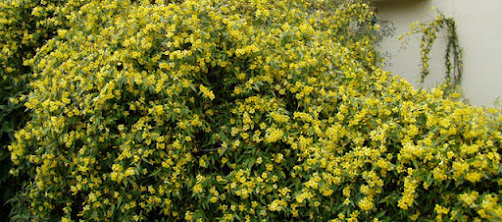
Do you have a chain link fence but would like to have greater
privacy? A vine might fill the bill. To grow on chain link, the vine
should have a twining habit. For reliable privacy, the it should be
evergreen. These are among the best choices, and they're all native. One caveat, though. Make sure you plant them only on your fence!
Carolina Jessamine – Gelsemium sempervirens. (Pictured above) It’s native from Virginia to Texas and southward. Because it’s evergreen, it provides a dense privacy screen year around. Carolina Jessamine is cold-hardy in USDA climate zones 7 through 9. It flowers best in full sun, but will grow in full sun or shade in well-drained soil with average to poor fertility. Recommended soil pH covers a wide range: from 5.5 to 8.5. Plants are drought tolerant when established, and deer resistant. Flowers are fragrant.
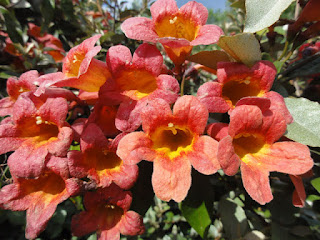
Crossvine – Bignonia capriolata. This one’s a vigorous vine that’s native to the southeastern United States. It climbs by tendrils which cling to anything for support. It thrives in many different soil types, but prefers rich, organic, well-drained soil. While it grows in sun or shade, more flowers are produced if grown in full sun. Crossvine is cold-hardy to USDA climate zone 6a.
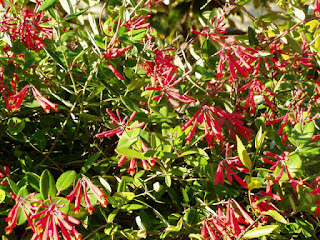
Trumpet Honeysuckle – Lonicera sempervirens. Here’s another vine that’s native to the eastern United States. Red, yellow or coral colored, trumpet-shaped flowers are produced intermittently on evergreen vines from spring to fall. It thrives in acidic soil in USDA climate zones 5 to 10.
All three of these vines flower prolifically, grow quickly, fill in densely, and require very little maintenance.
Return to GoGardenNow.com.
Thursday, August 5, 2021
How To Grow Ivy (Hedera spp.) Indoors

Ivy is one of the most adaptable plants that can be grown indoors. For some plant enthusiasts, indoors might be the best place for it.
A matter of perspective
Let’s face it. Ivy can be a wonderful ground cover, or the bane of one’s existence. It depends on perspective. When I refer to Ivy, I’m speaking of the Hedera species. These include Algerian Ivy (H. algeriensis, aka H. canariensis), Persian Ivy (H. colchica), English Ivy (H. helix), Irish Ivy (H. hibernica), Nepal Ivy (H. nepalensis), Russian ivy (H. pastuchovii), and Japanese ivy (H. rhombea). Of these, the first three species are most readily available. Within the species, there are several varieties each.
What’s good about it?
Ivy is known for glossy green foliage, few maintenance requirements, drought tolerance, climate adaptability, deer resistance, pest resistance and ground cover potential. It’s hard to kill. Ivy does what a ground cover is supposed to do; it covers ground. For those reasons, English Ivy was brought from Europe by early settlers. Though it’s ubiquitous, it’s not native to these shores.
What’s not good about it?
That Hedera is such a tough plant – i.e. it’s hard to kill – along with its ground cover potential can make it undesirable. But let’s get this straight; English ivy does not kill trees. It is not parasitic. However, the sheer weight of ivy in a tree that is dead or dying can certainly bring it down.
Enjoy ivy indoors
If you want to enjoy the best of ivy’s attributes and avoid its liabilities, grow it indoors as a houseplant. It’s not difficult to do if you meet its basic needs.
- Bright light. Hedera species need plenty of light, though not necessarily full sun. Windows facing any direction will work, though you might want to draw your plants away from direct sun. Not that ivy can’t take it outdoors, but plants grown indoors tend to lose some of their ability to withstand harsh sunlight. If grown in too little light, plants tend to get “leggy.”
- Appropriate moisture. Ivy does not like wet soil. If soil is constantly wet, your plants will rot. Allow your plants to dry between watering. The pot should provide excellent drainage.
- Fertilizer. Use a slow-release or water-soluble fertilizer once per month during the growing season, e.g. spring through summer. Follow label instructions.
- Good hygiene. Remove dust from foliage with occasional wiping or brief showers. This will also help prevent any pests that might come along. If grown outdoors, occasional rains will wash dust and insects from the leaves. When grown indoors, you’ll have to do the part.
There are very many varieties among the Hedera species. Characteristics include variegation, fancy leaves, and even slower growth rates. Check GoGardenNow.com for some of them. You can also inquire of the American Ivy Society for some of the more unusual varieties.
Indoor ivies are very decorative as topiaries or trailing from containers. The smaller, fancy-leaf varieties are best for topiaries. Growing ivy indoors can become a very rewarding hobby for those of us who just can’t get enough of plants.
Return to
GoGardenNow.com.
Friday, March 20, 2020
"I Know A Hill Where Periwinkle Grows"
Just outside my window

As noted in Driscoll’s poem, periwinkle is an evergreen ground cover vine. It may be found growing nearly world-wide. Though no one is sure, it’s believed the word, Vinca, is derived from a Latin word meaning "to bind." Vinca is a trailing plant, and the runners root as they extend. The long, tough runners were used in some cultures to form rope.
Mature height as a ground cover is usually from 8" to 18". Flower colors range from blue to white or burgundy, depending upon the cultivar. Vinca prefers moist soil in partial shade to full shade, but will also tolerate sun and drought. It is deer resistant.
There are two species of Vinca commonly available: Vinca major and Vinca minor. Louise Driscoll wrote about V. minor.
Vinca minor is commonly known as dwarf periwinkle, creeping myrtle, or death myrtle. It does contain toxic substances. I’m sure that’s why the name figured in the Harry Potter story with the ghost, Moaning Myrtle.
Vinca foliage is about 3/4" wide and 1" long. Mature height is about 4". Foliage is deep green and shiny. It is hardy in USDA climate zones 4 through 8. Soil pH should range from 6.1 to 7.8.
Find Your USDA Plant Hardiness Zone By Zip Code
 As a ground cover, vinca is effective for erosion control on hillsides. If planting it for erosion control, try to mitigate the water flow until the plants are established, otherwise the water might dislodge them.
Periwinkle does well in shallow soil, even where tree roots render it difficult to cultivate. But, if possible, prepare the planting bed by cultivating about 4" deep, removing all traces of weeds. Composted manure may be incorporated into the soil. Plant 6" to 12" apart. If fertilizer is used, incorporate 10-10-10 fertilizer at a rate of no more 2 lbs. per 100 square feet into the top 4" of soil. Avoid synthetic fertilizers contacting any part of your plants.
Periwinkle can be planted any time of year, even bare root plants. Even so, you should water occasionally until the plants become established to avoid drought stress. Maintenance is minimal. Periwinkle has few pest and disease problems, and tolerates poor soil.
Because it is so common, folks often overlook it, unless it’s found growing where they don’t want it. As I’ve often said, “it does what a ground cover is supposed to do; it covers ground.” Periwinkle is popular precisely because it is so effective, attractive, and requires practically no maintenance.
Return to Vinca at GoGardenNow.
Wednesday, July 31, 2019
Here Are 5 Vines That Will Attract Birds To Your Garden

As I noted in a previous article, bird-watchers who want to see them up close usually attract them with bird feeders, houses and baths. There are, however, other ways of enticing them that shouldn't be overlooked. The landscape can be transformed into a bird sanctuary by including plants that provide food and shelter. Ornamental vines are important components of such a plan.
Here are 5 ornamental vines that birds find irresistible.
A Clarion Call For Hummingbirds
Trumpet Vine (pictured above) or Trumpet Creeper (Campsis radicans) is a climbing deciduous vine native to the southern United States. Travelers may have noticed it growing up and over fences and signposts along the highway. Large, bright yellow, orange to red trumpetshaped flowers appear from midsummer to fall. Campsis is popular world-wide for its stunning flowers, and because it attracts hummingbirds.
Yellow Garlands of Spring
Gelsemium sempervirens – known as Carolina Jasmine, Carolina Jessamine, Yellow Jasmine, and whatever else comes to the viewer’s mind – is another great native plant that provides nectar for the birds. It’s grown mostly for its glorious early spring flowers. Southerners wax nostalgic about it. Unfortunately, it is cold hardy only in USDA climate zones 7 through 9. The flowers usually appear before the hummingbirds arrive, so is best planted as a nectar source for other species. I’ve written much more about it in a blog article, Carolina Jessamine – The Yellow Garlands of Spring.Wild and Wonderful
 Most of us think of English ivy and all its varieties as a rampant but boring evergreen covering, or worse. But look closer and you’ll find a plant with lots of interesting variations that can not only provide mass ground- or wall covering, but also shelter and an ornamental food source for birds.
Some folks dislike ivy for it's vigorous growth habit. The very characteristic that makes it a fine ground cover can render it unwelcome; it covers ground. It's true that ivy can be troublesome if completely unchecked, but ivy does not damage trees or sound structures. It isn't a parasite. It cannot harm a mature tree, but it could outlive an old one. It cannot collapse a sound building. Ivy is a major food source for many birds, and the fruits ripen up just in time to fatten them before winter arrives. Hedera ivies also provide abundant shelter.
It Keeps Institutions From Crumbling
 Boston Ivy - Parthenocissus tricuspidata - is native to east Asia, not Massachusetts. Each leaf is composed of three lobes. In juvenile foliage, each lobe is very distinct. It is a vigorous climber, as anyone who has seen it on a wall knows well. Fall brings bright colors of yellow, orange, red or burgundy. The walls it adorns seem draped in a majestic tapestry. It is also widely used to cover trellises, pergolas, and as an ornamental ground cover for erosion control. Small flowers appear in July or August followed by fruits in October or November, and birds love 'em.
Boston ivy grows in any fertile, well-drained soil, and thrives in USDA climate zones 48. In other words, it'll probably perform well in your garden.
A Native With Great Possibilities

Virginia Creeper thrives USDA climate zones 3-9, a broader range than Boston ivy will tolerate. Its fruit and dense growth habit make it very attractive to birds for food and shelter.
These suggested vines, along with many bulbs, perennials, annuals, shrubs and trees will be welcome additions to your landscape from the birds' points of view.
Remember to think outside the bird feeder when you plan to feed the birds.
Thursday, May 25, 2017
FAQ: We want to cover walls with evergreen plants to hide the brick.

 |
| Photo of Trumpet Creeper roots |
Boston ivy is often used to cover walls of buildings and highway sound barriers, but it is a species of Parthenocissus which has little discs at the ends of modified roots that look like suction cups. They vines are very difficult to remove from a wall once attached (if you ever decide to remove the vine). It is deciduous.
Friday, January 18, 2013
Behind A Garden Wall: Armstrong Atlantic State University Arboretum

I don't think I've visited the campus more than twice during the last forty-some years since I matriculated there. When I arrived at Armstrong Atlantic State University, I was a bit confused. Some drives had been closed, others had been re-directed, I couldn't find a legal place to park, and I couldn't find the arboretum. I found the University Police Office to ask.
Providing me with a map, the officer pointed to visitor parking areas and the "location of the arboretum." Unfortunately, the map didn't clearly show a route re-direction, so I drove about confused. I finally hailed a university pickup truck to ask the driver where I might find the arboretum. The man with the graying ponytail said, "You're in it. The entire campus is the arboretum."
Have you ever noticed that unless you intend to visit for 15 minutes or less, visitor parking at universities tend to be in inconvenient locations? Of course, administrators' parking spaces are very near their office doors, faculty and staff might be in the vicinity of their classrooms; student parking is way beyond that. I found a parking space on the outskirts and set out on foot to enjoy the arboretum.
There is no particular place to begin a visit to the Armstrong Arboretum. No matter where you park you're in the arboretum. Walk to whatever catches your eye, but "Please Stay On Sidewalks."
I began humming, "sign, sign, everywhere a sign..." When I was in college, students were warned repeatedly to stay off the grass. But faculty didn't stay off grass, so there wasn't a convincing reason to comply.
Though sidewalks existed, most of us took short-cuts across lawns to our classrooms creating dirt trails (sometimes blocked by signs, ropes or chains), over which laborers would eventually pour more concrete walks where they should have been in the first place. Armstrong Arboretum's landscape designer has creatively solved the problem in the Quad by establishing expansive beds planted with large shrubs and cleverly obstructed by chains.
As in most arboreta, species are identified with permanent signs. But, unless one ignores the signs to stay on the sidewalk, some plant labels can't be read. I didn't stay on the sidewalks. I was prepared to answer any challenge saying, "That doesn't apply to me now. I'm an alumnus, and a professional."
Developed areas of the Armstrong Atlantic State University Aboretum make good use of native species including live oak (Quercus virginiana), southern magnolia (Magnolia grandiflora) and yaupon holly (Ilex vomitoria), as well as introduced species from around the world. There is, however, the International Garden which only majors on plants from Asia and Australasia. Species include Kerosene Bush (Ozothamnus ledifolius), Lomatia myricoides, Bauhinia yunnanensis, Akebia trifoliata, Camellia sinensis and Pawlonia tomentosa.
The Conifer Garden is worth a visit. Surrounded by native pines, there are interesting varieties of Chamaecyparis obtusa and C. pisifera, Thuja, Juniperus, Pinus and Cryptomeria. Juniperus conferta 'All Gold' and Cryptomeria japonica 'Black Dragon' are two of my favorites.
|

It seems that every available wall is draped with flowering vines. Remarkable specimens include Blue Glory (Thunbergia battiscombia), Brazilian Golden Vine (Mascagnia macroptera), Bauhinia, Glory Vine (Clerodendrum x speciosum), Coral Vine (Antigonon leptopus) and Orchid Vine (Mascagnia lilacina).
The Camellia Garden was just beginning to bloom when I visited, but it should be spectacular now in January. Camellia sasanqua brightens the landscape late September through November. Camellia japonica steals the show in December through February.
The Fern Collection includes some fine examples. The display should excite any shade gardener or collector of hardy ferns with selections such as Sechuan Ribbon Fern (Lepisorus bicolor), Dixie Wood Fern (Dryopteris x australis), Maiden Fern (Thelypteris kunthii), Hart's Tongue Fern (Pyrrosia lingua), Tassel Fern (Polystichum polyblepharum), Macho Fern (Nephrolepis biserrata) and Oriental Chain Fern (Woodwardia orientalis). Peacock Spikemoss (Selaginella uncinata) made a fine ground cover in the Fern Garden.
One small section was particularly fascinating. I don't remember what it was called. It looked arid and desolate like a Salvador Dali landscape, warmed by Anise Marigold (Tagetes lucida), with starkly shaped plants. Representatives included Monkey Puzzle Tree (Araucaria araucana), Cryptomeria japonica 'Araucaroides', Coontie (Zamia pumila), Cloverleaf Fern (Marsilea macropoda) and Chinese Nutmeg Tree (Torreya grandis). Gardeners with unusual plant preferences would be inspired.
|

The Ginger Garden moved my senses from the stark to the lush. Protected by shade and sheltering walls, wonderful gingers thrive. Among them are Hidden Ginger (Curcuma 'Scarlet Fever'), Mauve Dancing Girl (Globba winitii), Yellow Dancing Girl (Globba schomburgkii), Hardy Ginger Lily (Hedychium 'Elizabeth'), Peacock Ginger (Cornukaempferia aurantifolia 'Jungle Gold') and Red Tower Ginger (Costus barbatus).
Every hour or so during my visit, students would swarm out of some buildings and into others. Then I would be alone again to stroll and snap pictures.
With so many lovely distractions, there's every reason to pause and enjoy the campus of Armstrong Atlantic State University Arboretum, unless one's in a big hurry to class.
Note: As of 2018, Armstrong is a campus of Georgia Southern University.
Return to GoGardenNow.com
Wednesday, May 5, 2010
Donna's Garden

When the McKenna's moved from backcountry Maine to southeast Georgia, they thought they had reached civilization at last. But Brooklet is one of the quietest towns I know. It's the slow, gentle pace of life that gives one time to work in the garden, think and be creative.
Donna, the lady of the house, is known for her thrift and exuberance. Her well-known book, The $30 a Week Grocery Budget, first published in 1991, is a favorite of prudent homemakers. She admits that the budget might be increased to $50 a week, but probably won't. That's thrift. Donna's exuberance shows in her hospitality with the table nearly groaning under the weight of food. How does she do it?
Her garden reflects her character. Nearly every plant was obtained for free, or propagated. She, in turn, generously gives plants away, especially Jerusalem artichokes (Helianthus tuberosus).
Her husband, John, is a plant enthusiast. Having worked around nurseries, he has brought home all kinds of seeds, bulbs and cuttings. John, native to New Jersey,has been a licensed tour guide in Savannah, Georgia. I bet he's always peeking into gardens en route.
 Most of her acquisitions are old-fashioned varieties, their names often unknown to her. Attractive weeds like spiderwort (Tradescantia virginiana) and Viola species grow in wild profusion along with cannas, crocosmia, daylilies, iris, roses and yarrow (Achillea spp.). English boxwoods (Buxus sempervirens 'Suffruticosa') line paths paved with recycled brick. Snowrose (Serissa foetida) softens and fills bare corners. Mock orange (Philadelphus lewisii) beckons the nose.
 Flower bulbs including shamrock (Oxalis spp.), Amaryllis (Hippeastrum cvs.), narcissus, lilies and bluebells (Hyacinthoides) pop up everywhere. Escaped house plants (Setacea and Saxifraga stolonifera) have made themselves at home outdoors. Conifers such as cedars (Cedrus deodora) and Italian cypress (Cupressus sempervirens) punctuate the landscape. Trumpet vine (Campsis radicans), chocolate vine (Akebia quinata), creeping fig (Ficus pumila), wisteria (Wisteria sinensis), and Confederate jasmine (Trachelospermum jasminoides) drape from porches, trellises and trees. It's a joyful sight.
As we walked to the vegetable and herb garden, Donna had to show me what they had uncovered: spicebush (Lindera benzoin). I explained how to make tea from it.
The raised bed vegetable garden is planted with garlic, arugula and rhubarb, along with more conventional plants. Of course, herbs are grown not only in the herb garden, but in clay pots, decorative containers, and tucked into every imaginable crevice. Mint seems to be Donna's ground cover of choice.
Whimsical sculptures, fountains and furnishings express Donna's effervescence. A rain barrel is a sign of her care.
In another town, you might pass a garden like Donna's without noticing it. Very old camellias screen some of it from the street. But this is Brooklet, GA where everyone drives slowly. So if you pass the McKenna house, you'll certainly be tempted to wonder what grows behind that evergreen wall.
Return to GoGardenNow.com.

Saturday, April 3, 2010
Peaches' Garden

Southern tradition, hospitality and comfort flourish in the home and garden of Roland and Peaches Barnes. One senses it even when passing by. Magnificent Deodar Cedars bathe the front lawn in cooling shade during the hottest days of summer, and the inviting glow from indoors spreads its welcome at evening. Near the street, a little plaque that Roland inherited designates this place as "Happy Forest." And it's about as good as it gets. Theirs is a life together of sowing, sewing, nourishing and enjoying the fruit of good work.
We have enjoyed their friendship for many years. Our children have grown up together. In fact, we all have grown up together, and can attest to their faithfulness and care.
Roland is the Senior Pastor of Trinity Presbyterian Church (PCA) in Statesboro, GA, which he planted in 1981. Peaches is an artist, specializing in "french hand-sewn" couture. Her work has been featured in well-known magazines including Veranda, Victoria, Sew Beautiful, Southern Accents, Southern Lady and Secrets of the South. Peaches is one-of-a-kind, as is each of her creations. She crafts each with her own hands, using only the finest materials, meticulous with the smallest details. Many of her masterpieces have already become treasured family heirlooms. You can learn more about her work at peachesbarnes.com.
Peaches is also a gardener, most interested in heirloom varieties traditional to the South. I visited recently. Accompanied by her grandson, she showed me about.

 Hers is a garden for children. The garden wall, softened with Magnolia grandiflora Little Gem, provides safety and places to hide. An antique playhouse invites her grandchildren, as it did her own children, to practice and play in a domain of their own. Raised-bed vegetable gardens are nearby to tend. After all that hard work, Peaches' salt-water pool beckons them for a swim. A classic pergola, accented with topiaries, provides a shady place to picnic or serve tea. Stone bunnies and squirrels nestle among ground covers and peek from behind shrubs.
Peaches collects plants that are deep-rooted in Southern tradition. Though not considered rare, they are more often neglected as gardeners desire newer selections. So, in her garden you'll find old-fashioned camellias and indica azaleas, spirea and irises, daylilies, hydrangea, ajuga, aucuba and nandina.

We could have visited longer, but baby Roeland crawled into his push car and begged to "go fast." So, off they ran for a quick lap or two around the yard.
Peaches' garden is not picture perfect. It's a living space. As we all know, happy forests are not always tidy, but they are comfortable and home to many.
Return to GoGardenNow.com.
Wednesday, July 22, 2009
Jeepers, Creepers! Virginia Creeper and Boston Ivy
 Parthenocissus is a genus of woody, creeping plants that, depending upon the species, are native to parts of Asia and of North America. The name comes from the Greek meaning "virgin ivy." Parthenocissus belongs to the grape family.
The plants may grow as ground covers, but will climb if they meet an obstacle. As they ascend, they attach themselves to the surface by small adhesive disks. Mature height may be 40' or more.
The two most common species in cultivation include Virginia Creeper (Parthenocissus quinquefolia) and Boston Ivy (Parthenoscissus tricuspidata).
 Virginia Creeper, also known as Woodbine, is native to many parts of the U.S. and Canada. Each leaf is composed of five dark green leaflets. It is a vigorous climber and will cover whatever it grows upon. If allowed to grow over shrubs, its dense foliage can rob the lower plants of sunlight and weaken them. Fall brings bright colors of yellow, orange, red or burgundy. The depth of fall color seems to depend upon available sunlight. Virginia Creeper is widely used as an ornamental ground cover, but its fall color and ability to cover walls, trellises and pergolas makes it popular as well.
Virginia Creeper is cold hardy in USDA climate zones 3 through 9. It prefers average, well-drained soil with pH ranging from 6.1 to 7.8, but is tolerant of poor soils. It will grow in partial shade to full sun, is heat and drought-tolerant. Pests are limited to a few that nibble the leaves. It is disease-resistant. Birds love the fruit, but the berries are toxic to mammals. The plants can cause allergic reactions in sensitive persons.
Boston Ivy, also known as Japanese Ivy or Woodbine, is native to east Japan, Korea and eastern China. Each leaf is composed of three lobes. It is also a vigorous climber. Like Virginia Creeper, fall brings bright colors of yellow, orange, red or burgundy. It is also widely used as an ornamental ground cover, but is used to cover walls, trellises and pergolas. Because it has been very popular in Boston, it bears the name of that city.
Boston Ivy is cold-hardy in USDA climate zones 4 through 8. The foliage colors best in full sun, but it will tolerate partial shade. Plant in well-drained soil with average to poor fertility.
Prepare the planting bed for Parthenocissus by cultivating at least 6" deep, removing all traces of weeds. Compacted soil should be cultivated to 12" deep. Add enough soil to raise the bed at least 4" above the surrounding ground level. This will help to promote good drainage. Composted manure may be incorporated into the soil. Fertilizer may be used. If you choose to do so, incorporate 5-10-15 fertilizer at a rate of no more 2 lbs. per 100 square feet into the top 4" to 6" of soil. Avoid synthetic fertilizers contacting any part of your plants.
Plant Parthenocissus 12" to 36" apart. Dig planting holes into the cultivated soil a little less deep than the depth of the growing container. If you are planting bare root vines, the roots should be spread out in the hole. Do not plant them any deeper than they grew previously. You should be able to see a difference in the plant tissue at the previous soil line. Place the plants into the holes and back-fill, watering as you go. Press soil around the roots. If you are planting container grown stock, do not cover the root balls with soil. The tops should be slightly exposed. Add a top-dressing of mulch around the plants, not on top of them, about 2" deep.
If the plant is stressed during planting, it will usually drop its leaves as a protective measure. While it is unsightly and may be worrisome, maintaining proper soil moisture will encourage new leaves to sprout.
You might wonder whether it can be easily removed from walls, pergolas and such. It depends upon how you go about it. If you just start pulling them off a painted surface, the adhesive pads will probably pull off paint, especially if the paint is flaking. Because they do not attach themselves by means of penetrating roots, they will not damage brick or stone by pulling. The best way I've found to remove them is to sever their vines near the base, or spray foliage within reach with glyphosate herbicide. When the plants die and dry, the vines can be removed more easily.
Both popular species of Parthenocissus cover ground and buildings, and do it well. The fall colors are fantastic, and the plants are basically trouble-free.
Return to GoGardenNow.com.
Tuesday, July 21, 2009
Carolina Jessamine - The Yellow Garlands Of Spring
 Our native Carolina Jessamine, Gelsemium sempervirens, is a spectacular ornamental vine that is well-known throughout the South. Its range is from Virginia to Texas and southward through Mexico. Another species, Gelsemium rankinii, also known as Swamp Jessamine, is native to the Southeast. A relative, Gelsemium elegans, also a climbing vine, is native to India, parts of China and Southeast Asia. Gelsemium sempervirens translated from Latin means "evergreen jasmine". The common name, Jessamine, is a variant spelling of Jasmine. "Jasmine" is of Persian origin, meaning "God's gift." It must be noted, however, that Gelsemium species are not among what some consider to be "true jasmine" of the genus Jasminum.
Carolina Jessamine foliage (about 1" to 4" long) is elongated. Whether it is evergreen depends upon the climate. It is semi-evergreen in northern parts of its range. Beautiful fragrant yellow flowers, 1-1/2" long and tubular, appear in early spring and sometimes in fall creating elegant garlands of yellow on arbors and pergolas. Motorists are sure to notice it as they travel along our highways as Jessamine festoons trees and shrubs. Mature height as a ground cover is only 24", but when allowed to climb, it will just keep on going.
Carolina Jessamine is cold-hardy in USDA climate zones 7 through 9. It flowers best in full sun, but will grow in full sun or shade in well-drained soil with average to poor fertility. Recommended soil pH covers a wide range: from 5.5 to 8.5. If planted in shade, it will find something to climb until it enjoys sunlight. Plants are drought tolerant when established, and heat-loving.
Because the flowers are beautiful and abundant, Gelsemium is usually planted with that purpose in mind. Unlike some other ornamental vines, it does not attach itself permanently to its support. Gelsemium ascends by twining around the support. For that reason, if grown on a wall, it will need a trellis to climb upon. If necessary, it can be pruned back drastically in order to maintain supporting walls, trellises, pergolas, arbors, mail boxes and light posts.
Gelsemium can be effective as a ground cover for erosion control in small to large areas. If allowed to grow as a ground cover, it will certainly do so, but will climb the first chance it gets.
It must be noted that in spite of its loveliness, Carolina Jessamine is highly toxic if eaten. So don't. The good news is that it is deer-resistant.
Prepare the planting bed for Gelsemium sempervirens by cultivating at least 6" deep, removing all traces of weeds. Compacted soil should be cultivated to 12" deep. Add enough soil to raise the bed at least 4" above the surrounding ground level. This will help to promote good drainage. Composted manure may be incorporated into the soil. Fertilizer may be used. If you choose to do so, incorporate 5-10-15 fertilizer at a rate of no more 2 lbs. per 100 square feet into the top 4" to 6" of soil. Avoid synthetic fertilizers contacting any part of your plants.
Plant at 24" to 48" spacing. Dig planting holes into the cultivated soil a little less deep than the depth of the growing container. Place the plants into the holes and back-fill, watering as you go. Press soil around the roots. Do not cover the root balls with soil. The tops should be slightly exposed. Add a top-dressing of mulch around the plants, not on top of them, about 2" deep.
To encourage plant density and more profuse bloom, prune Gelsemium occasionally, especially if grown as a ground cover. Edging around the perimeter of the ground cover bed and shearing the top is very effective. Though Carolina Jessamine vines are capable of growing 20' high, they can be grown in containers on trellises of 3' to 4' and maintained by pruning.
Carolina Jessamine is one of my favorite flowering vines. It can be grown high or low, over your mailbox or under it. The deep yellow garlands in the trees drop lovely blossoms on the forest floor below, golden mantles drape garden walls, and the fragrance is wonderful.
Return to GoGardenNow.com.
Trumpet Creeper -The Hummingbird Clarion
 Trumpet Creeper (Campsis radicans), also known as Trumpet Vine and Cow-Itch Vine, is a climbing deciduous vine native to the southern United States. Its only relative, Campsis grandiflora, is native to China. The latin name, Campsis radicans, refers to its somewhat pendulous flowers, like tubular bells, and the fact that it climbs "by the roots". A vigorous climber, Trumpet Creeper develops prominent aerial roots as it matures. Older vines can be as thick as your arm. The common name, Cow-Itch Vine, refers to the fact that it can cause skin irritation to sensitive persons, but so can tulip bulbs. I've never experienced any irritation myself.
If you have ever traveled through the South, you may have noticed it growing up and over fences and signposts along the highway. Large, bright yellow, orange to red trumpet-shaped flowers appear from mid-summer to fall. Trumpet Creeper is popular world-wide in those areas where it can be grown for its flowers.
Foliage of Trumpet Creeper is pinnately compound, meaning that each leaf, up to 12" long, has leaflets that grow off to the side of the "stem". Vines will climb anything up to 40' high, attaching themselves so tightly that if removed they take some of the structure with them. That shouldn't be a problem as long as the plant is intended to cover permanently. Surfaces that may require maintenance, such as wood requiring paint, should be kept free of Trumpet Creeper.
Campsis radicans is cold-hardy in USDA climate zones 4 through 10. It flowers best in full sun, but will grow in full sun or shade in well-drained soil with average to poor fertility. If planted in shade, it will find something to climb and keep going until it enjoys sunlight. Plants are drought tolerant when established and heat-loving.
Because the flowers are exceptionally attractive to hummingbirds, it is usually planted with that purpose in mind. It is best planted next to a permanent structure. A solid wood post, masonry wall, dead tree trunk or living tree will do just fine. I've seen it planted beside a vertical post so that it engulfs it, forms its own support and looks like a tree itself.
Trumpet Creeper can be effective as a ground cover for erosion control in large areas, but it needs room to grow. If allowed to grow as a ground cover, it will certainly do so, but will climb the first chance it gets.
Prepare the planting bed for Trumpet Creeper by cultivating at least 6" deep, removing all traces of weeds. Compacted soil should be cultivated to 12" deep. Add enough soil to raise the bed at least 4" above the surrounding ground level. This will help to promote good drainage. Composted manure may be incorporated into the soil. Fertilizer may be used. If you choose to do so, incorporate 5-10-15 fertilizer at a rate of no more 2 lbs. per 100 square feet into the top 4" to 6" of soil. Highly fertile soil will cause Trumpet Creeper to grow like a rocket. Avoid synthetic fertilizers contacting any part of your plants.
Plant Trumpet Creeper 18" to 36" apart. Dig planting holes into the cultivated soil a little less deep than the depth of the growing container. If you are planting bare root vines, the roots should be spread out in the hole. Do not plant them any deeper than they grew previously. You should be able to see a difference in the plant tissue at the previous soil line. Place the plants into the holes and back-fill, watering as you go. Press soil around the roots. If you are planting container grown stock, do not cover the root balls with soil. The tops should be slightly exposed. Add a top-dressing of mulch around the plants, not on top of them, about 2" deep.
If the plant is stressed during planting, it will usually drop its leaves as a protective measure. While it is unsightly and may be worrisome to the novice, maintaining proper soil moisture will encourage new leaves to sprout, and away you go.
If planted in an appropriate area, Campsis radicans is a fine plant that is very effective as an ornamental vine and hummingbird lure.
Return to GoGardenNow.com.
Monday, July 7, 2008
Wild and Wonderful Ivy

All Hedera, regardless of species, have many things in common. Its foliage is alternate, 3-5 lobed or entire, often variegated. There are various cultivars and growth habits. The leaves range in color from creamy white to deep green with uncounted natural and hybridized variations. It produces umbels of tiny, 5-lobed greenish flowers followed by berry-like fruits in fall. The fruits are toxic to humans but not to animals.Hedera have two distinct growth phases. A young, juvenile plant often has lobed, minutely hairy leaves, adventurous rootlets, and climbs. The older, mature plant has larger, mainly broadly ovate leaves without lobes. Mature plants produce flowers and fruits. This latter phase is seldom seen when the plant is grown indoors. Mature unlobed ivies grown vertically often produce lobes, so pay attention if that is a concern of yours. Lobing is also affected by seasonal variation. This plant mutates readily and is generally hardy to USDA climate zone 5. Zones 6-10 are ideal. Climate zones 7-10 are best for variegated cultivars. Your nearby Cooperative Extension Service office can help you determine your soil pH by a very inexpensive soil sample.
While ivy grows in full sun, exposure to wind can cause leaf burn. It's ideal for shady gardens because it thrives in dark shade. Ivy makes an extensive root system that is tough and deep. Digging it out is a real chore. But, if you decide to remove an established plant it will not return from roots left in the ground once the major stems and leaves have been eliminated.
Be careful when deciding whether to plant ivy outdoors; the same qualities that make them a quick solution for covering up "problem areas" in your garden can make them quick weeds. The very characteristic that makes it a fine ground cover can render it unwelcome: it covers ground. Ivy can be troublesome if completely unchecked, but it’s nothing like kudzu. Ivy does not damage trees or sound structures. It isn't a parasite. It cannot harm a mature tree, but it could outlive it and therefore give the impression that it's killing it when actually the tree is just old. It cannot collapse a sound building. If it’s not pruned it can get into gutters or under shingles and dislodge them under its own weight. A mass of ivy can pull off stucco that's old or not firmly attached, but the plant itself will not do structural damage. In fact, it can protect a building from weather and provides extra insulation.
There are many Hedera species and I am going to describe 6 of them. The ones most common in the U.S. are the first three in the list, H. helix, H. canariensis, H. colchica.
Helix, which means "twining", refers to the way the ivy leaf attaches to the stem. H. helix has several subspecies (helix- English ivy, hibernica- Irish ivy, poetarum-Italian ivy, to name a few) but in general any ivy that starts with “H. helix” is often called English ivy. Brought to North America by colonial settlers, this plant grows easily in many types of soil and in sun or shade and is hardy from Zones 5-9. English ivy is fairly drought-tolerant once it is established. Its two to four inch leaves are alternate and simple or entire (unlobed). Juvenile plants’ leaves have 3-5 lobes and adult leaves are ovate to rhombic (diamond-shaped). Mature plants bear pale green flowers and produce berry-like fruit in fall clusters. English ivy can out-compete grasses, herbs and trees because it is a vigorous climber. In the south, H. helix can grow throughout the year. It mounds up to 1’ tall and climb up to 50’.
H. canariensis (African ivy, Algerian ivy, Canary Island ivy, Madeira ivy or Elephant Leaf ivy) is native to north Africa and the Iberian peninsula. It is distinguished by red leaf stems and 4-8” long heart-shaped or 3-lobed glossy emerald-green leaves. A variegated form is also available. A vigorous climber, this tropical or sub-tropical plant is damaged if temperatures fall below 20F (-6.6C). Growing only in Zones 8 - 10, it is adaptable to various soils and pH, but prefers rich, moist soil in partial sun to shade. It establishes and grows rapidly. If you live in Zone 7 or cooler, African ivy makes a good houseplant.
H. rhombea (Japanese ivy) is native mainly to Japan and Korea. In the U.S. it thrives in Zones 6-9. Characterized by unlobed ovate or triangular leaves only 2" long, Japanese ivy is generally expensive and hard to find.
H. azorica is native to the Azores and thus known only as Azores ivy. Fan-shaped light green leaves grow 3" long on this fast climber. New growth is white and hairy.
H. nepalensis, or Nepal Ivy, has elliptic lobes with 3-6 “teeth.” Native to Himalayas, Afghanistan and western China, it has weak vigor.
I love ivy because it can be elegant, whimsical or purely functional depending on the variety. Fortunately, my Hedera wish list is almost complete. Here are my favorites so far:
H. helix 'Gold Child'- Variegated flat, palmate green leaves are splashed with gray and broad green-gold margins. Hardy from Zone 5 to 9.
H. helix 'Needlepoint'- Its delicate willowy leaves are under 1" long and look like a bird’s foot, but is hardy from Zone 5 to 9.
H. helix 'Telecurl'- Grows in Zones 5-9 and has a green ruffled leaf is curled between 5 lobes.
H. helix 'Anne Marie'- Variegated flat, hand like leaves have creamy colored lobes.
H. helix 'Ivalace' aka ‘Wilson’- Rippled 5 lobed dark green leaves have crimped margins that curve upward. Hardy in Zones 5-9.
H. helix ‘Teardrop’- 2002 Ivy of the Year. Mostly unlobed foliage that elongate to a point. Slow growing and stiffly branched. Has survived - l5 degree F temperatures.
H. canariensis Gloire de Marengo'- Zones 6-9. Heart-shaped or triangular foliage with wide white margins and grayish centers.
H. colchica 'My Heart'- It's hardy in USDA climate zones 5 - 10. Needs some shade in zones 7-10. You'll love its particularly large, green heart shaped leaves.
H. colchica 'Dentata Variegata'- won three awards from the Royal Horticultural Society (1907, 1979, and 1984). Large triangular leaves with a green center and light green edge have sharper points than usual at the end of its lobes. Hardy from Zones 6-9 and can take greater cold than ‘Gloire de Marengo’.
Hedera can have various pests and problems. Avoid the most common (root and stem rots and leaf spot) by not over irrigating. If you’ve got a rampant leaf spot problem use a fungicide. Spider mites are the most serious pests, usually on plants grown indoors. Treatment requires pesticides that are specifically developed for spider mite control (miticides or acaricides). Because most miticides do not affect eggs, a repeat application at an approximately 10- to 14-day interval is usually needed for control. Aphids can be controlled chemically, but also tend to kill other good bugs in the area. Try spot treatment first. Mealybugs have never destroyed ivy, but if they bother you try using the thumb and forefinger. If they’re really doing damage try Malathion. Whiteflies; I hate them but they’re easy to control. If your ivy is grown inside, try a white fly trap. If the ivy is outside an insecticidal soap is the least toxic material that can also get rid of them.
To sum up:
- Plant Hedera at the same level it grew previously; don’t bury it.
- Plant 18” apart.
- Let the ground dry between irrigations.
- Hedera is typically hardy between Zones 5-9.
- Monitor the borders of the desired growth area to prevent escape.


 Posts
Posts

