Showing posts with label invasive species. Show all posts

Tuesday, January 16, 2024

Bad-mouthing Ground Covers?


Lamiastrum galeobdolon

Bad-mouthing Groundcovers?

Embrace Them, Instead

Gardening articles frequently appear in magazines and newspapers complaining about “invasive”, “aggressive”, “opportunistic” or “energetic” plants that gardeners should avoid. The authors might be well-intentioned, but their opinions are almost entirely based upon personal, subjective experiences which are sensationalized, ill-informed, poorly considered, or they are parroting others. Nevertheless, their alarms are read by other gardeners and accepted as gospel-truth. Consequently, many fine solution plants are shunned, especially groundcovers.

Here’s a list of some that we are told to avoid:

Ajuga reptans - Bugle Weed
Carex spp. -
Sedges
Dichondra argentea -
Silver Dollar Weed
Euonymus fortunei -
Wintercreeper
Ficus pumila -
Creeping Fig
Gelsemium sempervirens -
Carolina Jessamine
Hedera spp. -
Ivy
Hemerocallis fulva -
Ditch Lily
Hydrocotyle spp. -
Pennywort
Hypericum calycinum -
St. John's Wort
Lamiastrum galeobdolon -
Yellow Archangel
Laurentia fluviatilis -
Blue Star Creeper
Lespedeza spp. -
Bush Clover
Liriope spicata -
Creeping Lily Turf
Lysimachia clethroides - Gooseneck Loosestrife
Lysimachia nummularia -
Moneywort
Mazus reptans -
Creeping Mazus
Nassella tenuissima, aka Stipa tenuissima -
Ponytail Grass
Ophiopogon japonicus -
Mondo Grass
Pachysandra terminalis -
Japanese Pachysandra
Rubus calycinoides -
Ornamental Raspberry
Trachelospermum asiaticum -
Asiatic Jasmine
Sedum spp. -
Stonecrop
Veronica spp. -
Speedwell
Vinca major -
Big Leaf Periwinkle
Vinca minor -
Periwinkle

Yada yada yada. The list goes on and on.

What those “experts” are ignoring is that these plants do what effective groundcovers are supposed to do; they cover ground. Without them, we are left with the kinds of problems that bare soils present us – wind and water erosion, soil compaction, weed infestations or bare spots where nothing else will grow, parched earth or boggy soils, and just plain ugliness.

Choose wisely.

Rather than eschew such solution plants, they should be adopted happily, planted selectively and maintained appropriately. Recognize from the start that ground covers, just as any other group of garden plants, serve particular purposes which others may not. Erosion, soil compaction, weed infestations, dense shade, arid and boggy soils can be solved with appropriate plant choices. Groundcover plants are in high demand as lawn grass substitutes, and what grass substitute is worth planting if it doesn’t spread rapidly and extensively.

Set limits.

Know that ground covers will do just that – cover ground. With that in mind, define their limits and stick to them. Physical barriers such as steel, brick or concrete edging are usually effective. Mechanical edging with power tools also works very well, sometimes in combination with physical barriers. 

Maintain them.

Nearly every plant in the landscape requires maintenance. Fertilizing, pruning and occasional mowing might be needed. Gardeners should assess their own willingess or abilities, and select their groundcovers accordingly.

Briefly said, take those exaggerated alarms about ground covers with a grain of salt.

Return to GoGardenNow.

Tuesday, December 14, 2021

Invaders To Be Banned In South Carolina

No hate scrabble


Hate has no home here?

The State of South Carolina has officially banned the trafficking of certain foreign types within its borders. Some were formerly imported by none other than U.S. government agencies.

The federal government of the United States has a long history of introducing or promoting alien species in our country. Others were conveyed by private sponsors. Many are now despised, having brought infectious diseases, displaced natives, contributed to environmental and economic hardship, or become nuisances, at best.

In 1876, kudzu was brought to the United States Centennial celebration in Philadelphia by representatives from Japan. Was it a nefarious plan? We might never know, but the federal government began to promote it through the USDA and the Civilian Conservation Corps. Kudzu now covers vast areas of landscape and is known as “the invasive vine that ate the South.”

A list of hated species could be extensive. 

The Callery pear is one of latest to be identified and will be banned by officials in South Carolina. At least one other state – Ohio – has done so, and others will likely follow.

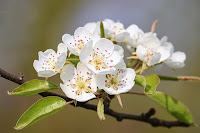
Callery pear is native to southeast Asia and Japan. An “improved” variety – Bradford – was introduced by the USDA in 1963. It was attractive, grew quickly, believed to be fruitless, and widely promoted for residential and commercial landscape planting. Since then, it has proven to be structurally weak, covers itself in stinky white flowers, and – surprise, surprise, surprise – bears loads of fruit when pollinated by other pears. Of course, the seeds are sown widely by wildlife, and Callery pear has overtaken the American landscape. “It has all the characteristics of a noxious weed,” said David Coyle, Clemson University’s assistant professor of Forest Health and Invasive Species.

Consequently, Callery pear has been added to the State Plant Pest List. Once place on the list, trafficking of such plants are banned immediately. But since several varieties of Callery pear are currently sold in the state, officials decided to phase out the trees over the course of a few years to mitigate adverse effects upon industry. As of October 1, 2024, however, the ban will go into full effect.

Clemson Extension has instituted a Bradford Pear Bounty program which seeks to educate consumers, convince them to plant better trees, and get rid of the pear trees in their landscapes. But since the public will often choose not to comply with government edicts, the State of South Carolina will ban their sale.

At the same time as Callery pear was included, three species of Elaeagnus were added to the plant pest list. For an extensive list of plants banned in South Carolina, check out the State Plant Pest List.

If you do not live in South Carolina, you should refer to the plant pest list in your own state. I’m sure yours has one. You’ll probably find a few species that you should avoid, as well.

Return to GoGardenNow.com.

Thursday, July 29, 2021

Ooops! They did it again.


Clemson News, published by the College of Agriculture, Forestry and Life Sciences; Public Service and Agriculture announced “South Carolina will become only the second state in the United States to ban the nursery sale of Bradford pear trees and any other pear trees grown on the commonly used Pyrus calleryana rootstock.” This does not mean that it will be illegal to own them, but the authorities would be thrilled if you would destroy any in your landscape.

Why? 

“It has all the characteristics of a noxious weed,” said David Coyle, assistant professor of Forest Health and Invasive Species at Clemson.

“Bradford pears were once touted as sterile, but it turns out that if pollen from any other Pyrus species gets into Bradford pear flowers, the trees can make viable seeds. Those seeds are then eaten by birds and other animals and spread across the Southeastern landscape, contributing directly to one of the worst invasive plant species in the region — the Callery pear.”

It’s about time. I’ve never liked them anyway. The angles at which the limbs grow upward make them prone to splitting, and the flowers stink. None of the other Callery varieties promoted for their improvements over the ‘Bradford’ have been any better. Though its usefulness is short-lived, 'Bradford' is a curse that keeps on giving. So, yes, it’s time for them to go. Past time, in fact.

But, wait. There’s something else you should know. The U.S. Department of Agriculture, The New York Times, and even Lady Bird Johnson promoted 'Bradford' pear. It was released for commercial use by the U.S. Department of Agriculture in January 1960 and distributed to nurseries from New York to California. Think about that when you’re driving through the countryside and seeing them dominating the landscape.

The USDA duly noted, “The Bradford will not, under most conditions, fruit when planted—

  • More than 200 feet from pear trees of any kind.
  • Next to other Bradfords, the common pear (Pyrus communis), or the Hansen pear {P. sp. Hansen).

“The tree will fruit, however, when planted within 200 feet of other selections of the Callery pear tree or such rarely used minor species as the Manchurian pear {P. sp. Manchurian) or the Forostovsky pear.”

Did anyone consider that pollination vectors such as wind and insects can travel farther than 200 feet, and that thousands of homeowners and landscapers would line their driveways and streets with them?

Should we be surprised? This is the government agency that promoted Kudzu as a “wonder plant” for erosion control and even for shade, and Bahia grass for pastures and lawns. Then 'Bradford' was touted. Ooops! They did it again.

Has the USDA benefited agriculture? Sure it has, but it’s difficult for me to remember any particular instance when I see ‘Bradford’ et al, Kudzu vines and Bahia grass infesting the country.

Return to GoGardenNow.com.

Tuesday, July 28, 2020

Residents Warned Not to Plant Unsolicited Foreign Seed Shipments

Photos of seeds sent to Virginians unsolicited/VDACS (Source: Virginia Department of Agriculture and Consumer Services)

Various news sources are warning residents not to plant any seed they receive unsolicited from unknown sources "because they could be a pathway for introduction of invasive species, insects and plant diseases." Apparently, these seed shipments are part of a massive international internet scam possibly originating from China.

If you live in North Carolina, Kentucky, Virginia or Georgia, you've probably seen this warning in the news. It seems to be making the rounds. I suspect, however, that the scam is not limited to those states. So let this be a warning to you.

For more information, check out the following sources:

https://vscnews.com/north-carolina-residents-plant-unsolicited-foreign-seeds/

https://www.vdacs.virginia.gov/press-releases-200724-seeds.shtml

Return to GoGardenNow.com.