Monday, June 26, 2023

The Gardener's To-Do List for July

Cancer zodiac constellation

July is upon us. At this time of year, many garden chores are common to all regions of the United States. Here they are, though this is not an exhaustive list.

For all gardens

  • Get ready for fall!
  • Start flower and vegetable seedlings for transplanting to your fall garden.
  • Fertilize when needed. Check for yellowing leaves and slowed growth.
  • If using synthetic granular fertilizer, water your garden first, apply fertilizer to moist soil, then water again. This will help to incorporate the amendment into the soil and reduce the risk of fertilizer burn.
  • Good garden hygiene is essential for healthy gardens. Remove dead and dying material to the compost bin.
  • Add soft-tissue plant clippings to your compost bin.
  • Check your irrigation to make sure you are watering wisely and conserving as much as possible. Adjust as needed. This is especially important in arid regions.
  • Refresh mulch in your garden beds to conserve water.
  • Add compost to your garden beds.
  • Turn your compost pile, again.
  • Keep a sharp eye out for pests – sucking aphids, chomping beetles, munching larvae, hornworms, and the like. Pick them off and destroy them, if you can find them. Otherwise, opt for targeted organic solutions rather than using indiscriminate chemical applications.
  • Water all plants before applying synthetic or organic chemicals to avoid tissue damage. Dry plants are more susceptible to damage.
  • Keep your garden tools clean, dry and sharp to lengthen their lifespan and make your work easier.


For vegetable gardens

  • Plant vegetable seedlings or starter plants for another round of production before summer ends.
  • Keep pruning your vegetable plants. Tomatoes, cucumbers and other trellised plants will produce better crops if suckers are pinched off and unnecessary growth is removed.
  • When removing tomato suckers, stick them in quart containers with fresh, moist potting soil. Keep them in the shade. They’ll root and you can transplant to your garden.
  • Check your fruiting vegetables, (e.g. okra, tomatoes, eggplants, cucumbers, squash, pumpkins and melons) for fruit. If the plants are developed enough, but not setting enough fruit, they might not be getting sufficient pollination from bees. If you are watering with an overhead sprinkler, this could keep the bees from working. Instead, irrigate with a watering wand at the base of your plants.
  • Pick some types of fruiting vegetables before they fully mature to prevent the plants from ceasing production. This is especially true of cucumbers!
  • Stake tall plants to prevent wind damage or structural collapse from heavy yields.
  • Squirrels, rabbits and groundhogs can dig in your soil, uproot your plants and eat your veggies. Trap and remove them (humanely) or cover your crops with netting.
  • Remove spent vegetable plants and compost them.


For flower gardens

  • Fertilize your roses, again.
  • Stake tall plants to prevent wind damage.
  • Deadhead flowers to keep the plants producing.
  • If you’ve been deadheading your garden mums, you can stop now. This will allow them to produce more in fall.
  • Prune geraniums (i.e. Pelargoniums), stick the cuttings in fresh, moist potting soil and place them in the shade where they can root and be transplanted to your garden or containers.
  • Remove spent annuals and compost them.
  • Sow seeds of biennials such as Alcea, Bellis, Campanula, Digitalis and Viola now for next year’s bloom.
  • Cut and dry flowers and herbs for later use.
  • Seeds can be gathered from dried flowers such as Coreopsis, Echinacea and Rudbeckia to be scattered in your little wildflower meadow-ette for future enjoyment.


For lawns

  • Keep your lawnmower blades sharp. Dull blades damage grass leaves, enable disease entry, and make your lawn look UGLY!
  • Water deeply only once or twice per week. Frequent shallow watering encourages shallow root penetration and causes the plants to need more frequent watering. Add watering days if the lawn looks stressed.
  • Do your mid-summer fertilizing.
  • Watch for fungus diseases. If you can’t identify them, take samples or photos to your nearby Cooperative Extension Office for diagnosis and recommendations.


For shrubs and trees

  • Don’t forget to water them DEEPLY during dry spells. This is especially true of newly planted items.
  • Watch for borers. If you discover them too late, you should remove the infected plants and burn them to prevent the borers from migrating to other plants.
  • Remove and burn dead wood.
  • Prune flowering shrubs soon after blooming.


Return to GoGardenNow.com.

Friday, June 16, 2023

A Brief History of The Trustees' Garden - Savannah, GA


Map of Florida


Before the Colony of Georgia was founded in 1733, the Margravate of Azilia was conceived. The territory was to be ruled by a military governor, i.e. a margrave. 

Sir Robert Montgomery and Colonel John Barnwell proposed this venture in 1717 for lands south of Carolina.

It was disputed territory. Spanish, French and English had claimed it. French incursions had probed the east coast from Port Royal, SC, southward. The Spanish had pretty much established themselves in La Florida since 1513 and were well-rooted in St. Augustine. 


Map of St. Augustine Florida environs


England and Spain agreed by treaty that whichever should actually settle the land would possess it. In fact, though, Spain had withdrawn to positions south of the St. John’s River, and the Carolina Proprietors were having a hard time controlling the southern territory. So, possession of the area between Charles Town and St. Augustine was contestable.

Here’s when Montgomery and Barnwell entered the picture. Sir Robert, 5th Scottish Baronet of Skelmorlie, applied for permission to settle the area between the Savannah and Altamaha rivers. It would serve as a buffer colony between Florida and Carolina, i.e. between the English and the Spanish. The Carolina Proprietors agreed, so long as it didn’t cost them anything. Royal approval, however, was never granted. 

Plan of Margravate of Azilia


To sell the idea to investors and settlers, Montgomery published a booklet, A Discourse Concerning the Design’d Establishment of a New Colony to the South of Carolina, in the Most Delightful Country of the Universe. Though he never visited the area, Montgomery, like any real estate developer, wrote the most glowing descriptions to promote it.

There’s no record of Barnwell ever visiting, either.

To begin, Montgomery assured his readers of his integrity. “It has been commonly observ’d, that gay Descriptions of new Countries raise a Doubt of their Sincerity. Men are apt to think the Picture drawn beyond the Life, to serve the Interest of the Representer.” Not in this case. He assured them that he’d learned from the most reputable sources, and that his motives were purely in service of his fellow man.

It lies in the same Latitude with Palestine Herself, That promis’d Canaan, which was pointed out by God’s own Choice, to bless the Labours of a favourite People; It abounds with Rivers, Woods, and Meadows. Its gentle Hills are full of Mines, Lead, Copper, Iron, and even some of Silver; ‘Tis beautified with odoriferous Plants, green all the Year. Pine, Cedar, Cypress, Oak, Elms, Fruit or Timber Trees grow every where so pleasantly that tho’ they meet at Top, and shade the Traveller, they are, at the same Time, so distant in their Bodies, and so free from Underwood, or Bushes, that the Deer, and other Game, which feed in Droves along these Forests, may be often seen near half a Mile between them.


“The Air is healthy, and the Soil in general fruitful, and of infinite Variety; Vines, naturally flourishing upon the Hills, bear Grapes in most luxuriant Plenty. They have every Growth, which we possess in England, and almost every Thing that England wants besides. The Orange, and the Limon thrive in the same common Orchard with the Apple, and the Pear-Tree, Plumbs, Peaches, Apricots, and Nectarins, bear from Stones in three Years growing. The Planters raise large Orchards of these Fruits to feed their Hogs with, Wheat Ears have been measur’d there seven Inches long, and they have Barly, Beans, Pease, Rice, and all our Grains, Roots, Herbs, and Flowers, not to speak of Numbers of their own, which we can find no Names for; Beef, Mutton, Pork, Tame Poultry, wild Fowl, Sea and River Fish, are all there plentiful, and most at lower Rates, than in the cheapest Parts of Wales, or Scotland.”


James Edward Oglethorpe
General James Edward Oglethorpe

For various reasons, the Margravate of Azilia didn’t get off the ground, but the idea of a buffer colony established around trade and agriculture settled by hard-working farmers and merchants ready to bear their arms against the Spanish gained traction. Within 16 years, General James Edward Oglethorpe arrived with his band to settle the colony of Georgia.


Savannah Georgia 1734

The Trustees' Garden was established in 1734 on a ten acre plot just to the east of the Savannah settlement to explore agricultural possibilities. Something somewhat akin to the Chelsea Physic Garden was envisioned, but with emphasis on commerce. Several high-value crops were tested. 


Mulberry and silk worm
Morus alba and Bombyx mori


Silk. Since luxurious silk was in such high demand and commanded high prices, it was hoped that domestic sericulture would become a profitable enterprise in the American colonies. All that was needed were silk worms (Bombyx mori), mulberry trees and the right climate. The potential for silk seemed logical since red mulberry (Morus rubra) was native to the continent from Vermont to south Florida. White mulberry leaves (Morus alba), the preferred food of silkworms, was imported and did quite well. It eventually naturalized in North America.

According to an article by L. O. Howard, Ph. D. published in the USDA Yearbook of 1903  “Silk culture is said to have been introduced into New England about the year 1660 by a Mr. Aspinwall, who had nurseries of the mulberry at New Haven and on Long Island. Some trees were transplanted in Manslield, Conn., and Mr. Aspinwall furnished the inhabitants of that town with the eggs of the silkworm. Reverend Doctor Stiles, an early president of Yale College, aided Mr. Aspinwall in his efforts to introduce the culture in Connecticut.” Silk was also grown in Virginia and South Carolina, so it wasn’t far-fetched to try silk culture in Georgia. But despite those early and subsequent efforts, silk production didn’t take off in Georgia.
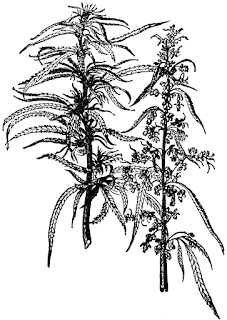

Cannabis sativa
Cannabis sativa

Hemp. Note that Cannabis sativa, aka hemp, is of two types: industrial and “medicinal.” Industrial hemp is high in fiber and low in psychoactive THC. “Medicinal” hemp might contain from 3% to 30% THC. It has been grown for millennia, principally in China, India, and Arabia, but eventually spread to Europe and the Americas. Both types were grown extensively in early America without much distinction between them.

Cannabis has been highly valued for its many uses. Fiber has been used in cordage and clothing. Seeds have been used for food and oil. The leaves had their own, special application. Hemp was useful for trade, barter, and even for paying taxes. No wonder, then, that it was included as a crop in the Trustees' Garden. For governments, cannabis has been a bane and then a boon.
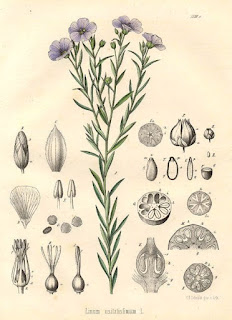

Linum usitatissimum

Flax. Linum usitatissimum was another desirable commodity known to have been used for about 30,000 years in the manufacture of linen fabric. From underwear to bed sheets, linen would always be in demand. Investing in the linen trade was a sure-thing like buying stock in toothpaste production; it was always in use, needed to be replaced, and necessary for everyone.
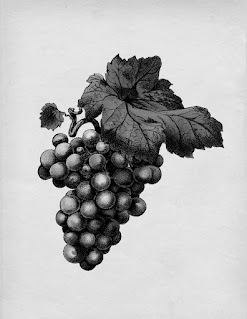

Grapes
Vitis spp.

Grapes. When colonists first arrived on these shores, they found grapes growing practically everywhere. How fortuitous! Take a walk through our southern woodlands and you’ll see something like what they discovered. Cultivation began immediately. In fact, the oldest grape vine on the continent is thought to be The Mother Vine, Vitis rotundifolia, on Roanoke Island, NC. Perhaps it was dug from the forest and transplanted by settlers of The Lost Colony about 400 years ago. Life back then was tough, but joys could be found. As the Preacher of Ecclesiastes instructed, “Go, eat your bread with joy, And drink your wine with a merry heart; For God has already accepted your works.” Colonists took it to heart. I can find no mention of the species and varieties grown in Trustees' Garden, but grapes were among the crops.


Olive
Olea spp.

Olives. Since Georgia lay in the “same Latitude with Palestine Herself, That promis’d Canaan” and olives (Olea spp.) were abundant in the Holy Land, they were tested in the Trustees' Garden. For whatever reason, olives did not become an important commercial crop in Georgia, but as of this writing olives are making something of a comeback. Olives are showing up in yards, gardens and orchards. Olive oil is now produced in limited batches in the southernmost part of the state.
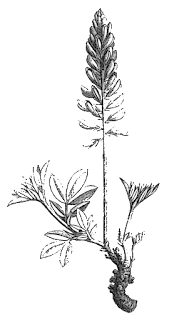
 

Indigo plant
Indigofera spp.

Indigo. Indigofera, native to India, was an important cash crop wherever the local climate would allow it to be grown. Unless one wanted to dress in shades of gray and brown, dye was needed. Indigo was such a source.

Almost as soon as colonists set foot in North America, they set about to grow indigo. Crops were tested from New York to Louisiana. By the 1730s, efforts were made in South Carolina beginning with seeds sent to Charleston from Antiqua by 16 year old Eliza Lucas, a budding botanist. Before long, the indigo industry began to take off. Nearby Savannah, Georgia got into the action when seeds were planted in the Trustees' Garden.

Indigo cultivation, like most agriculture of the day, was labor intensive. The White people in the upper ranks of society didn’t think they were cut out for that kind of work. So slaves were imported to carry "The White Man’s Burden". Rudyard Kipling scathingly denounced such servitude about 200 years later. As a matter of fact, slavery was outlawed in Georgia UNTIL laborers were needed to expand and sustain the indigo industry, then altruism was tossed out the window. There were also cotton and rice enterprises to expand. 


James Henry Hammond
James Henry Hammond

Cotton. This was the first place in North America where cotton was planted for potential commercial production. Enough is known about cotton that nothing needs to be written about it here. Needless to say, though, it became and continues to be immensely important. It was James Henry Hammond (1807-1864) of South Carolina who coined the phrase, “Cotton is king” in a speech before the U.S. Senate in 1858.

No, you dare not make war on cotton. No power on earth dares to make war upon it. Cotton is king.

Just so you know, Hammond was not a nice person, to put it mildly. A reading of his Secret and Sacred diaries will reveal plenty.


Cochineal

Cochineal. This exotic crop was also tested at the Trustee’s Garden. Cochineal (Dactylopius coccus) is a little “bug” that produces carminic acid, which is actually a deterrent to its enemies. But it is a valuable dye used to color textiles, cosmetics, and food.  Feeding on some species of cactus, these little critters are cultivated, harvested and mashed to extract the red colorant.

Cochineal extract is non-toxic. Just think, though. When you put on that lipstick, it might be made of bug juice.

Since south Georgia is home to native Eastern Prickly Pear Cactus (Opuntia humifusa), it seemed that it would be a likely place for a cochineal industry to flourish. It didn’t. Cochineal production is now limited mainly to Peru and other Central and South American countries. But maybe cochineal can come into its own in Georgia as the new olive industry attests.

Now that your interest in Savannah’s Trustees' Garden has been piqued, wouldn’t you like to see it?


Trustees' Garden site

That’s it. As Joni Mitchell sang,

“Don't it always seem to go
That you don't know what you've got 'til it's gone
They paved paradise, put up a parking lot.”


The Trustees' Garden served its purpose and was abandoned to be occupied by a fort and businesses including Kehoe’s Iron Works and Savannah Gas Light’s facility for converting coal to gas. The site now serves a multi-use entertainment/cultural facility and the Pirate’s House restaurant.

Return to GoGardenNow.com.

Tuesday, May 30, 2023

The Gardener's To-Do-List for June


June is here. These are some things to do for your garden.

No matter where you live, you should:

Keep a sharp eye out for pests – sucking aphids, chomping beetles, munching larvae, hornworms, and the like. Pick them off and destroy them, if you can find them. Otherwise, opt for targeted organic solutions rather than using indiscriminate chemical applications.

Keep pruning your vegetable plants. Tomatoes, cucumbers and other trellised plants will produce better crops if suckers are pinched off and unnecessary growth is removed.

Northeast

  • Plant cucumbers, squash, pumpkins and melons outdoors.
  • Fertilize your roses, again.
  • Turn your compost pile, again.
  • Watch out for June bugs.
  • Remove dead flowers from spring bulbs.
  • Plant eggplants and tomatoes outside.
  • Add mulch if necessary.

Mid-Atlantic

  • Squirrels, rabbits and groundhogs can dig in your soil, uproot your plants and eat your veggies. Trap and remove them (humanely) or cover your crops with netting.
  • Plant curcurbits (squash, cucumbers, pumpkins, etc.) outside.
  • Time to plant your tomatoes and eggplants.
  • Divide spring-flowering bulbs.
  • Add mulch if necessary.

Mid- and Lower South

  • If you don’t have any extra, stop by a local nursery for seedlings and till in any empty spaces.
  • Remove and compost early season root vegetables that are starting to go to flower.
  • Keep watering your garden.
  • Add compost to your garden.
  • Turn your compost pile and add more to it.
  • Fertilize roses, again.
  • Check for pests and diseases.
  • Squirrels, rabbits and groundhogs can dig in your soil, uproot your plants and eat your veggies. Trap and remove them (humanely) or cover your crops with netting.

Midwest

  • Plant cucumbers, squash, pumpkins and melons outdoors.
  • Squirrels and rabbits can dig in your soil, uproot your plants and eat your veggies. Trap and remove them (humanely) or cover your crops with netting.
  • Fertilize your roses, again.
  • Turn your compost pile, again.
  • Watch out for June bugs.
  • Remove dead flowers from spring bulbs.
  • Plant eggplants and tomatoes outside.

Pacific Northwest

  • Plant cucumbers, squash, pumpkins and melons outdoors.
  • Fertilize your roses, again.
  • Turn your compost pile, again.
  • Watch out for June bugs.
  • Remove dead flowers from spring bulbs.
  • Watch for fungus diseases.
  • Plant eggplants and tomatoes outside.

West Coast

  • Plant cucumbers, squash, pumpkins and melons outdoors.
  • Fertilize your roses, again.
  • Turn your compost pile, again.
  • Watch out for fungus diseases and insect pests.
  • Remove dead flowers from spring bulbs.
  • Plant eggplants and tomatoes outside.

Southwest

  • Check your irrigation to make sure you are watering wisely and conserving as much as possible.
  • Mulch your garden beds to conserve water.
  • Add compost to your garden beds.
  • Fertilize your roses again.

Return to GoGardenNow.com.

Saturday, May 27, 2023

Debbie's Charming Cottage Garden


Seen nestled behind a pecan grove, you’d think this charming cottage was built at least 150 years ago. But it’s much newer, built in 1990. Debbie moved to south Georgia over 40 years ago, but felt homesick for the place of her childhood in East Tennessee. After a few years in the area, she came upon a design that reminded her so much of her mountain home.

Her antique furnishings, décor and collectibles are in keeping with the homespun design. Visitors feel like they’ve stepped back into a simpler age. You’ll have to imagine it, though. The interior is not on display here.

While we stopped by to deliver some strawberries, Debbie allowed me to mosey around her little garden and take a few photos. I’m sharing them with you.

One of the joys of gardens, at least to me, is smelling the fragrance of flowers, and crushing the leaves of aromatic herbs for savoring. Debbie's roses, dianthus, verbena, achillea and bay delight the senses.

Her little place reminds us that delightful gardens needn't be large or ostentatious to be satisfying. They can be comfortable, small and intimate.

Follow me and see what grows in Debbie's garden.

Multiflora rose


Rosa 'The Fairy'

Verbena 'Homestead Purple'

Rosemary and Bay

Mutliflora rose

Achillea millefolium

Rosa 'The Fairy'

Oxalis

Dianthus and Oxalis

The cottage garden

Magnolia grandiflora

Return to GoGardenNow.com.


Saturday, May 13, 2023

How I started worm composting, and you can, too.


Compost worm image by Chesna from Pixabay

First of all, what is worm composting? I'm glad you asked. It’s the practice of intentionally enlisting the aid of earthworms in composting your organic yard and kitchen waste to use in your garden.

If you have an open compost pile or bin in your garden, earthworms have likely found their way to it.

As I wrote in “The Not-So-Magical-Experience of Composting”, the compost pile is “like a big bash going on down the street, nearby residents and passersby take notice. Flies breeze by and drop off bacteria. Single-cell creeps with hardly half a brain between them arrive and begin to cling. Fun-guys (fungi) appear from nowhere and make themselves at home. Mites pick at this and that, including other guests. Millipedes stroll and stroll and stroll, sampling a bit of everything. Sowbugs eat stuff mashed on the floor. Snails and slugs, never socially adept, slime their way among the crowd munching left-overs. Spiders entrap and roll the unsuspecting. Centipedes and beetles knock over spiders and other party-goers. Earthworms work their way around, and somehow everything comes out right from their ends."

I never gave earthworms much thought. They just showed up, and I expected that they always would.

This year I bought a couple of Vego 17" Tall 9 In 1 Modular Metal Raised Garden Bed Kits. With them came a promotional gift package containing two of their In-Ground Worm Composters


Vego In-Ground Worm Composter

I installed one in an unplanted garden bed. At once, I began adding some soil and kitchen scraps to the bin. That’s how it started.


Vego In-Ground Worm Composter installed

One can’t have a worm composter without worms. Being the impatient fellow that I am, I bought a bag containing 500 red wigglers from Uncle Jim’s Worm Farm. They arrived safely and earlier than expected. They are now happily housed in their new digs. (I guess they’re happy. They’re not actually smiling like Uncle Jim’s website shows. But who can tell with worms?) Now I divide our fruit and vegetable kitchen scraps between my worm composter, compost barrel and “swamp water” composter. (The “swamp water” composter is another story.)

In short order, I expect the worms to do their job decomposing the scraps. The compost should feed the garden bed, and the worms might wander around improving the soil.

So far, I recommend the Vego In-Ground Worm Composter. It’s a simple contraption compared to some others I’ve seen on the market. But I started thinking that there must be an even cheaper way.

It seems to me that one could use a simple plastic laundry basket with a lid, remove handles, partially sink it in the ground, then add soil, scraps and worms. The lid, I believe, would be essential to keep neighborhood cats and raccoons out. It might not even keep the raccoons out unless the lid was secured somehow. 


Laundry baskets


I’ll try it myself when I need another worm composter, but if you try it before I do, let me know how it works for you.

By the way! Vego Garden and Uncle Jim’s Worm Farm do not know I’m posting this article. They certainly haven’t paid me for this mention, nor do I expect them to. Rest assured that this is entirely honest and unsolicited.

Return to GoGardenNow.com.

Thursday, April 27, 2023

The Gardener's To-Do List for May


Taurus Image by Dorothe from Pixabay

Wow! April seemed to pass so quickly.

May is upon us, so here are some things to do in and around your garden.

Surely you've taken a soil sample to your nearest County Extension Service office for testing. You have, haven't you?

You should be keeping a garden journal. Record what you planted where, when and how. Note your successes and failures, weather conditions, etc. This might help you repeat your successes and avoid failures in the future.

 Northeast

Get rid of those weeds. Either pull them, hoe them or mulch deeply to suppress them.
If the threat of frost is past, plant tomatoes, peppers, okra, pumpkins, beans, corn, squash and other heat-loving crops. Otherwise, wait.
If frost is still a possibility, start seeds for those plants indoors.
Get your perennial herbs in the ground.
Harvest rhubarb and asparagus.

Mid-Atlantic

Finish planting trees, shrubs, perennials and fruits. Hot weather will be coming soon.
Add compost to your garden.
Plant your flower beds with summer annuals.
Water your garden to keep your beets and other root crops growing.
Fertilize roses.
Divide older established perennials if needed.

Mid- and Lower South

Direct-sow more vegetable seeds in your gardens and raised beds.
Begin to thin radishes, beets and other crops closely sown.
Keep watering your garden.
Add compost to your garden.
Turn your compost pile and add more to it.
Fertilize roses, again.
Check for pests and diseases.

Midwest

Start seeds indoors for cucumbers, squash, pumpkins and melons.
Fertilize your roses, again.
Turn your compost pile, again.
Remove some of the mulch applied last fall so new growth can emerge.
Divide perennials, if necessary.
Plant beans, squash, corn, peppers, and tomatoes, if danger of frost is past.

Pacific Northwest

Stay on top of your weed situation. Don’t let them get out of control.
Divide perennials.
Plant peppers, tomatoes, eggplant, squash, and melons once your soil has warmed to 70 degrees F.
Plant summer-blooming bulbs, perennials and perennial vegetables.
Turn your compost pile.
Add finished compost to your garden beds.
Fertilize your roses, again.
Continue pest control in your orchard.

West Coast

Finish harvesting cool weather crops.
Fertilize trees, shrubs and roses.
Plant summer-blooming bulbs, perennial and root vegetables.
Add compost to your garden.
Prune roses and shrubs that bloom on fresh wood.
Remove excess mulch.
Refresh mulch, if necessary.

Southwest

Plant summer-flowering bulbs.
Finish harvesting cool weather crops.
Plant outdoor vegetables and warm season annuals.
Add compost to your garden beds.
Fertilize your roses again.

Return to GoGardenNow.com.

Wednesday, April 26, 2023

Are you thinking about becoming food self-sufficient?


Vegetable image by Devon Breen from Pixabay

Are you beginning to think you should become food self-sufficient?

You've seen significant price increases at the grocery store. It seems there's no end in sight.

The USDA predicts, “Food prices are expected to grow more slowly in 2023 than in 2022 but still at above historical-average rates. In 2023, all food prices are predicted to increase 6.5 percent, with a prediction interval of 4.9 to 8.2 percent. Food-at-home prices are predicted to increase 6.6 percent, with a prediction interval of 4.4 to 8.8 percent. Food-away-from-home prices are predicted to increase 8.2 percent, with a prediction interval of 7.3 to 9.0 percent.”

But that's not all the bad news.

Fertilizer production seems to be at risk

A recent dairy farm explosion destroyed 18,000 cattle. That's got to have an impact on the food supply.

In January, 2023, 100,000 chickens died in a Connecticut egg farm fire.

In 2022, 18 weather and climate disasters, each with damages exceeding $1 billion struck the U.S. coast-to-coast.

More than 500,000 US farm animals died in barn fires in 2022. Most fires occurred in the Upper Midwest and Northeast.

This FDA website lists the following recent food recalls:     

  • Recalls of Food Products Associated with Peanut Butter from J.M. Smucker Company due to the Potential Risk of Salmonella,
  • Recalls of Food Products Associated with Onions from ProSource Produce LLC and Keeler Family Farms due to the Potential Risk of Salmonella.
  • Recalls of Food Products Associated with Onions from Thomson International, Inc. due to the Potential Risk of Salmonella.
  • Recalls of Vegetable Products Associated with Mann Packing Co., Inc. due to the Potential Risk of Listeria monocytogenes.
  • Recalls associated with Almark's recall of hard-boiled egg products.

We hear news too often about some fresh vegetable being recalled due to contamination. ABC News recently warned, "Check your fridge for these salad kits and lettuce recalled due to listeria concerns."

The Market Realist reports, "In May (2022), there was a fire at a commercial egg farm in Minnesota that left thousands of chickens dead. Fortunately, the fire incident didn't lead to the loss of human lives. The egg farm fire comes at a time when some areas have been witnessing an egg shortage. What caused the fire at Forsman Farms? Was it an accident or intentional?"

Eat This, Not That! recently listed 12 Major Food Recalls You Need To Know About Right Now.

There's more, but you get the idea.

Dependence on the system sometimes seems precarious. So, you might have the urge to do something for yourself. Some of us have the time and places to garden, raise poultry or rabbits and such, but I expect that most folks do not. So, what do you do if your resources are very limited?

Start small.

Assess your space, time, physical ability and any other limiting factors. Write them down.

Make a list of vegetables that you like to eat a lot of: beans, radishes, lettuce, eggplant, tomatoes, chard, okra, peas, squash, onions, garlic, shallots, turnips, mustard, peppers, etc. Don't forget your herbs and spices: thyme, parsley, rosemary, oregano, marjoram, basil, dill, ginger root, turmeric and such. How about fruits? Strawberries, anyone?

Do a little research to learn which of them are easy to grow in your area. Are they prone to pests, or not? Will your neighbors mind? How much sun should they receive? How much water? Can they be grown in small spaces? Will they thrive in containers? Can any be grown indoors on a windowsill or under a grow-light? 

Let's say, for example, you love radishes and you can't do without them. Radishes are easy-peezy to grow. They take up very little space, germinate quickly, mature for harvest in a few short weeks, and then you can start all over again. Eat radishes fresh or pickle them. It might not seem like a lot, but you can easily become self-sufficient in radishes.

Is that all you can manage? Okay. If not, add another plant to your list.

How about thyme? You can grow thyme indoors year around. It's compact, delicious and has many health benefits. Set your mind to growing it and you might never need to buy thyme again.

There are many such things you can grow to eat fresh, dry, preserve, can and store for future use.

There's no way that most of us can be self-sufficient in everything we need. But we can become self-sufficient in something. If you can become self-sufficient in only one or two foods, you won't feel so helpless. You'll feel safer, good about yourself and your accomplishment, and you'll save some money, too.

Return to GoGardenNow.com.

Friday, April 14, 2023

How To Make A Simple Composting Barrel


Compost Image by Joke vander Leij from Pixabay

Composting happens all the time without human intervention. Leaves fall, grasses die, wood rots and the circle of life from a seedling to a plant’s final end returns the basic building blocks of life to the soil for another go-round.

Gardeners can use this process to their benefit by gathering and confining the organic material to an easily accessible location for the process to occur. It can be in an open pile or contained in a box, barrel, bucket or bin. The choice is yours. The end result is COMPOST – black gold for the garden.

For the organic material to be useful, it must be decomposed. For it to be useful sooner, it must decompose faster. The key to faster decomposition is turning – turning the material over and over so that all the ingredients are exposed to the insects, worms and micro-organisms for digestion and decay.

We’ve tried every basic method – open piles, boxes and bins. Some were flimsy. Others were not very durable. Some were simply inconvenient to manage. I’ve seen the manufactured barrels that rotate on metal or wooden stands, or those on rollers for kicking over and over. I was sold on the concept, but not the products on the market, so I decided to try composting in a barrel of my own making.

I paid a visit to The Barrel Man. He’s just down the road from me. He sells all kinds of used barrels at very reasonable prices. I selected this 60-gallon plastic, flat-sided barrel with a screw-on lid. It also has an inner lid for better sealing.

Blue barrel

“What was it used for?”, I asked.

“Meat processing by-products”, he said.

I opened it up to sniff. It smelled clean enough; not offal.

“Oh, it’s been cleaned”, he informed. “It’s food-grade plastic.”

So, I paid him, loaded it into my pickup truck and headed home.

Why did I choose a flat-sided barrel? I’m glad you asked. I don’t intend to mount it on a stand, but to push it over on its side and kick it around several times to mix the ingredients, and maybe turn it upside-down, too. I figure the flat sides will do a better job of shifting and mixing the material inside for faster decomposition. It can’t get any simpler than that.

The only tools needed were a power drill, a 1” hole saw, a 2” hole saw, and a big, black, felt-tip marker.

I began by marking the ribs on all four sides where I’d drill the aeration holes. These holes were drilled with the 1” inch hole saw.


Compost barrel process

Then I turned the barrel upside-down. I used the 2” hole saw to penetrate the very center, and the 1” hole saw to make four more drainage holes around the circumference. When the barrel is filled, I hope these drainage holes will also provide entry ways for earthworms and other busy critters when the barrel is in direct contact with the ground.


Blue barrel bottom


Important tips: 1) the bottom is thicker than the sides, so takes longer to penetrate; 2) take your time cutting with a firm hand, 3) better do your work over a tarp so you can gather the plastic shavings and dispose of them properly.

It wasn’t long before I had the barrel mostly filled with leaves, vegetable and fruit scraps, coffee grounds and torn paper filters, shredded documents in layer upon layer. I could see that it wouldn’t be long before my barrel would be maxed-out. So I headed back to The Barrel Man for more barrels. These flat-sided composters can be easily lined up near the garden, all in different stages of decomposition, taking less space than round barrels.

 That’s all there was to it. You can do it, too.

To see a YouTube video of this process, click here.

 Return to GoGardenNow.com.

Saturday, April 8, 2023

Grow Your Garden Anywhere


Bucket Garden Image by Peter Bauer from Pixabay

Some form of gardening seems to be in everyone’s blood. It might be for the love of beauty, fascination with the world of plants, the feeling of accomplishment or for health benefits. Yet, many feel defeated before they begin simply because they don’t think they have the right space to garden.

Don’t despair. Let me assure you, THERE’S ALWAYS A SPACE TO GROW. From the smallest window sill to the back forty acres, successful gardens can be established. Plants “know” this instinctively. They can take root in the smallest, most inhospitable places and thrive. 


Grass in crack Image by Shepherd Chabata from Pixabay

Whatever the situation, there are plants to fill any nook, cranny, pot, box, room or yard.

To begin, define your needs, interests and limitations. Are you casting about for ideas? Take a walk through your neighborhood or city to see what others are doing. 


Container gardening Savannah

Visit public gardens, or make friends and visit their private spaces. Browse the internet. Do you just want something green? Do you crave beauty? Do you want to eat your plants? Write these things down.

Do you prefer certain plant types such as tropicals, succulents, herbs, bulbs, bulbs, or veggies, for example? Make your list. If your space is very limited, make it a short one.


Urban gardening Image by Markus Spiske from Pixabay

Which brings us to assessing your available space. Account for the size, light and temperature exposure, and accessibility. While you’re at it, assess your own limitations. You might not have a lot of time to care for plants, or the mobility to do so. Seek advice. Record your evaluation. You can always find something to satisfy the needs.

With all those things in mind, and having narrowed your scope, select your plants. Browse the internet, thumb through plant catalogs, visit local garden shops, BUT DON’T BECOME DISTRACTED. Keep your plan in mind and your list in hand. Focus, FOCUS, FOCUS!


Image by PublicDomainPictures from Pixabay


Next, purchase the appropriate supplies: containers, soils, fertilizers and tools.

Oh, and don’t forget to ask for help or do a little research to find answers to your gardening questions. Your local Cooperative Extension office should have plenty of brochures, and the experts there might give personal insights. Blogs like this one are packed with info. Folks sometimes reach me by phone or email through GoGardenNow.com for assistance. YouTube is crowded with videos and insights offered by “half the free world and China.” You won’t be at a loss for help.

From there on out, you’ll have success, make some mistakes, learn more, and have fun. 


Raised bed Image by Ulrike Mai from Pixabay

So Go Garden Now

Friday, March 31, 2023

The Gardener's To-Do List for April


Along with the coming of April come more garden tasks. Here are some suggestions organized by region.

If you didn’t get around to it last month, take a soil sample and send it to your nearest County Extension Service office for testing. It amendments are required, add them.
 

Northeast

Sow cool-season vegetables and flowers.
Divide perennials if they’ve grown too thickly..
Remove some of the mulch that you laid on thickly in fall so new perennial growth can emerge easily, but check your weather forecasts to see if severe cold is coming before doing this.
Begin to harden off cool-season veggies and flowers that you started earlier.
Complete maintenance of your garden tools.


Mid-Atlantic

Prune your roses and shrubs that produce on new wood before it’s too late.
Finish planting trees, shrubs, perennials and fruits if danger before hot weather sets in.
Add compost to your garden.
Plant your flower beds with summer annuals.


Mid- and Lower South

Direct-sow vegetable seeds in your gardens and raised beds.
Plant those vegetable and herb sets.
Add compost to your garden.
Fertilize roses.
Prune azaleas and camellias when they’ve finished blooming.
Spray for citrus scale in southern-most areas.

Midwest

Plant and divide perennials.
Fertilize roses.
Turn your compost pile.
Remove some of the mulch applied last fall so new growth can emerge.
Plant trees, shrubs and vines.

Pacific Northwest

Divide perennials.
Plant summer-blooming bulbs, perennials and perennial vegetables.
Add compost to your garden beds.
Fertilize your roses.
Plant bare-root and container grown shrubs and trees.
Continue pest control in your orchard.


West Coast

Fertilize trees, shrubs and roses.
Plant summer-blooming bulbs, perennial and root vegetables.
Add compost to your garden.
Prune roses and shrubs that bloom on fresh wood.
Remove excess mulch.
Refresh mulch, if necessary.


Southwest

Plant summer-flowering bulbs.
Plant outdoors vegetables and warm season annuals.
Add compost to your garden beds.


Hawaii

Spray for citrus scale.
Fertilize shrubs and trees.
Continue weed control.


Saturday, March 25, 2023

Consider the benefits of raised-bed gardening.

Raised-bed garden image by congerdesign from Pixabay

What with the current economic situation in the U.S., inflation and supply chain disruptions, we’re thinking more about supplementing our foods with home-grown fruits, vegetables and herbs. Self-sufficiency is not possible for most folks, but container- and raised-bed gardening is well within the reach of the vast majority. Even those with plenty of growing space can benefit from these techniques.

So, what are the benefits of container- and raised-bed gardening? I’m glad you asked.

There are fewer weeds to control. Because raised-bed gardeners usually buy soil and humus or produce their own compost, fewer weeds are imported than if native soil is used. This reduces a whole lot of labor.

Watering and soil management are better controlled. Because plants are grown closer together and every inch of space is used to its best advantage, less water is wasted watering those spaces between the rows one finds in traditional gardens. If you’re not on a private well, this represents a big savings in water bills.

Soil compaction is eliminated since you won’t be walking through your raised beds.

Raised-beds allow for intensive gardening with closer plant spacing, therefore producing higher yields in less space.

The soil in containers and raised-beds warms earlier in the season and stays warm longer resulting in longer growing seasons.

Soil pH is easier to control.

Soil erosion is reduced by the confinement of the containers. Rainfall and irrigation waters stay put.

You can “customize” your garden soil to suit the needs of your crops because the influence of native soil is reduced dramatically or eliminated entirely.

No tilling is required!

You can set up your garden almost anywhere. A few square feet on a balcony or patio can accommodate several containers. Close quarters around buildings in urban settings can be transformed into verdant gardens.

Raised beds are very accessible, so are ideal for senior citizens and disabled persons.

So, if you desire to plant a garden but feel that you don’t have the space or ability to do it, raised-bed gardening might be just right for you.

Return to GoGardenNow.com.

Monday, March 13, 2023

Soil Tests – The Why and How

 Soil Image by Jing from Pixabay

No doubt you've learned somewhere that soil tests provide essential guidelines for gardening. Perhaps the "why" and "how" have eluded you. This article might help.

You’ve probably noticed that different types of plants grow in different places. That’s because they are either native or adapted to distinct habitats. Drive through the countryside and you’ll see what I mean. On one side of a hill you might find a hardwood forest. The other side might be predominantly native pine. In another place there will be a grassy meadow. Farther along you might see a bog with sedges and alders. Each area has its own soil type, nutrient levels, drainage and chemistry. The lesson here is that plants thrive in locations and conditions that meet their needs.

Garden spaces are sometimes not so easy to judge. Further inspection and discovery will probably be necessary. Follow a similar exercise to your drive in the country when garden planning. Walk around your landscape taking note of drainage, sun exposure, slope and the plants that are thriving. Even moss and weeds can tell a story, but we'll delve into that some other time.

There are a couple of ways to determine your soil type, chemistry and condition. The first is to take a soil sample for testing. The second is to utilize the USDA Web Soil Survey tool. Taking a soil sample is easy enough. Using the USDA Web Soil Survey tool? Not so much.

A basic soil test will tell you three things: the soil pH (acidity or alkalinity), phosphorus (P), and potassium (K). Nitrogen (N) is not so easy to determine, so test results probably won’t show it. Advanced soil tests can reveal organic content and some minor element content. Keep in mind that a single soil test only provides a “snapshot” in time. Some of the element levels can change over the seasons.

Obtain a soil sample bag or bags from your local Cooperative Extension Service office. Fill in the blanks with your name, address and contact information. Check off the tests you want performed. Collect soil samples from various comparable places around your garden or landscape to provide a soil “profile.” Before taking samples, remove leaves and other debris from the immediate site. Scrape down to the actual soil. Mix the samples thoroughly in a clean plastic bucket. Transfer the mix to the soil sample bag, and return it to the office. A report should be mailed to you.

Using the USDA Web Soil Survey tool is another matter. You might find it here:

https://websoilsurvey.nrcs.usda.gov/app/

I can’t walk you through the steps. It wasn’t intuitive for me. You’ll just have to play around with the website until you figure it out for yourself. Nearly every square foot of the United States is included in the survey. No doubt you’ll find your square feet.

Here’s an example. Zeroing in to a delineated area on my property shows that it consists of two soil types: Pelham loamy sand (5.4% of the area) and Tifton loamy sand (94.6% of the area). What does that mean? According to the USDA, “The Pelham series consists of very deep, poorly drained, moderately permeable soils that formed in unconsolidated Coastal Plain sediments. These soils are on nearly level broad flats, toe slopes, depressions and drainageways.” “The Tifton series consists of very deep, well drained soils that formed in loamy marine sediments. Tifton soils are on interfluves. Slopes range from 0 to 8 percent.” Understanding these characteristics helps me figure out what to plant and where, especially if drainage is important.

With such facts in mind, the gardener can choose suitable crops and where to plant them. Obviously, this isn’t so vital if one is planting in containers or raised beds. However, when the homeowner is planning landscape plantings of trees, shrubs, perennials and vines, they are essential considerations.

You might have some particular plants in mind. If so, read the plant descriptions and learn about their soil requirements. Choose those that seem most compatible with your conditions.

If soil test reports indicate that amendments are necessary, make them weeks or months ahead of planting time to allow them to be incorporated into the soil and take effect.

It’s far easier to select plants appropriate to your situation than it is to dramatically change or amend your native soil to accommodate unsuitable plants of your choosing. Be realistic. Make it easy on yourself. Work with nature, not against it.

Return to GoGardenNow.com.

Thursday, March 9, 2023

How To Plant Perennials From 2-1/2” or 3-1/2” Pots

 Working in the garden - Image by Maria from Pixabay

It's not uncommon for folks to visit their garden shops at the first breath of spring, buy a few plants, then wander about the yard looking for some place to put them. That's not the way to go about it.

Before you purchase your plants choose them with your site conditions in mind. Site conditions include your USDA climate zone, sun exposure, soil moisture, soil texture, soil chemistry (soil pH) and those constraints that limit the types of plants you can grow.

Ideally, you should’ve begun preparing the planting bed before your plants arrived. If you haven’t begun preparations yet, set your plants aside out of the sun, wind, extreme heat or cold. Get started.

Have a soil sample tested. Drop by your nearest Cooperative Extension Office for some soil sample bags. Follow instructions on the bag. Your report should arrive in a few days. Follow instructions in the report. Plant your perennials with other plants having similar cultural requirements.

Prepare the planting bed by cultivating at least 8" deep, removing all traces of weeds. Compacted soil should be cultivated to 12" deep.  Amend the soil according to the Cooperative Extension Service report.

As a general rule, though, compost may be incorporated into the soil.  Incorporate 5-10-15 fertilizer at a rate of no more 2 lbs. per 100 square feet into the top 4" to.  6" of soil. Avoid synthetic fertilizers contacting any part of your plants.

Space plants in 3-1/2” pots about 12" to 18" apart. Space plants in 2-1/2” pots about 8” to 12” apart. Plant spacing is not an exact science. Sure, you must consider the mature sizes and growth rates of your plants, but spacing is as much a matter of your budget and patience.

Dig planting holes into the cultivated soil a little less deep than the depth of the growing container. Place the plants into the holes and back-fill, watering as you go. Press soil around the root balls. Do not cover entirely the root balls with soil. The tops should be slightly exposed. Add a top-dressing of mulch around the plants, not on top of them, about 1" deep.

Fertilize sparingly and allow soil to dry slightly between watering.  Few plants like to be waterlogged, though there are exceptions – particularly those that thrive in bogs and along water features.

Having done that, periodically remove weeds from the planting bed. Fertilize your plants as required.

What’s next? Enjoy the results of your labor!

Return to GoGardenNow.com.